Art Problems: If I Have a Day Job, Am I a Real Artist?
Ever been shamed for having a nine-to-five job as an artist? Paddy Johnson can relate.
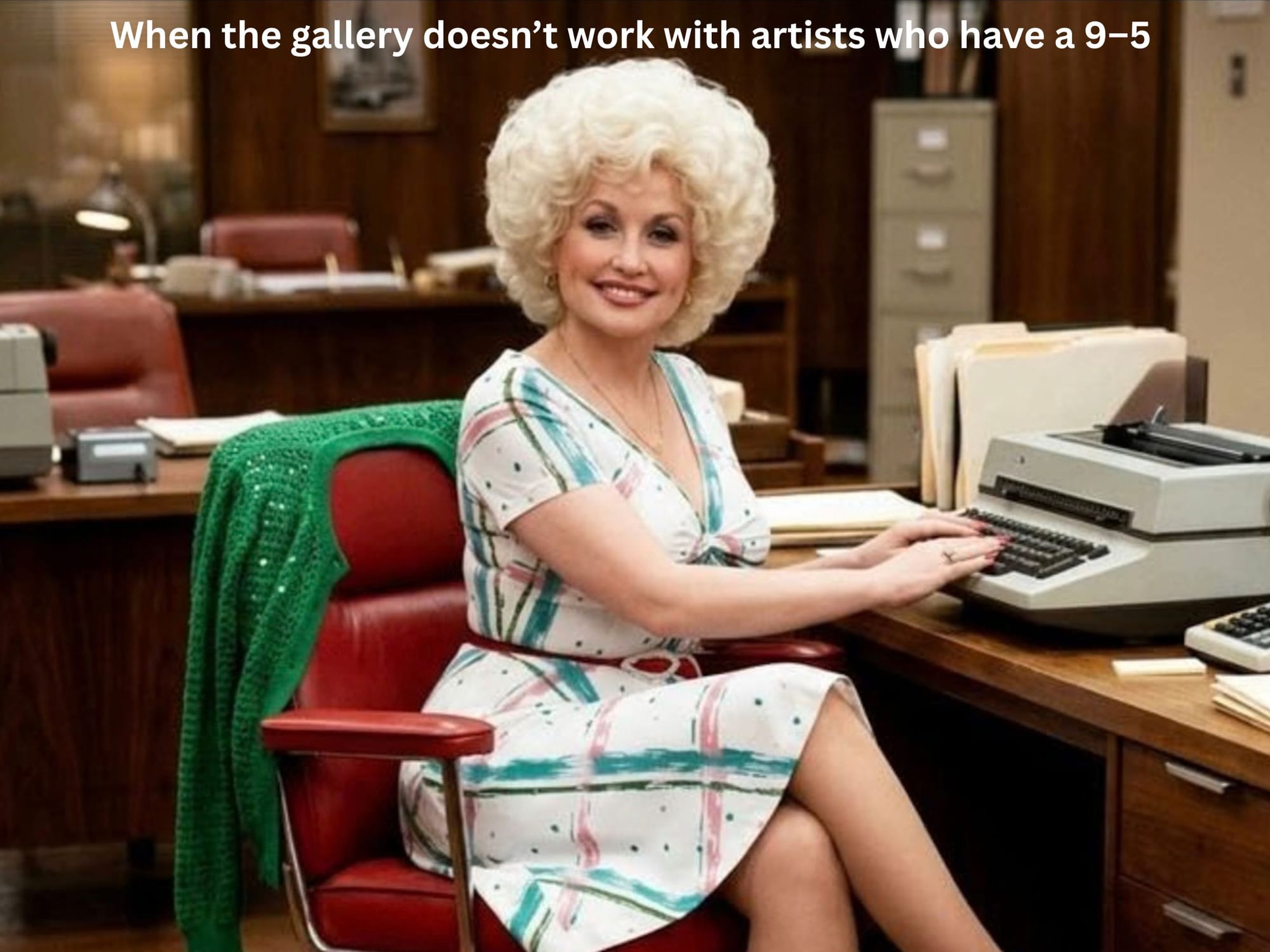
The question "If I have a day job, am I a real artist?" echoes through the minds of artists worldwide. Imagine a plumber working a conventional job while fixing pipes after hours. Surely, one wouldn't question their plumbing abilities. Yet, for artists, the lack of a reliable income and established apprenticeship makes their profession seem less legitimate.
Artists grapple with arbitrary and illogical tests to evaluate their worth. Owning a studio outside the home, possessing an Ivy League degree, or teaching at a prestigious institution are considered serious indicators of an artist's dedication. Conversely, lacking a traditional job earns artists the title of the most serious of them all.
These markers, however, revolve around wealth and class. Establishing a separate studio entails rent payments, while securing a teaching position demands the right connections, degrees, and often involves adjunct exploitation. Artists relying on day jobs often resort to sales or seek financial support from family members.
Artists who manage to sell their work frequently hail from circles where friends possess buying power. Those who engage in contract work are often perceived as more serious due to the increased studio time they afford. In theory, this is the case. However, in reality, artists are left with less financial stability, with no benefits to cushion their income.
The gig economy, once hailed for offering freedom, has stripped away the few part-time jobs that could sustain artists. Now, it has transformed into a burden, leaving artists more exposed financially without any support.
Written by urgent.news from Hyperallergic's reporting — not their text. Machine-written — may contain errors; check the original before relying on it.