A father remembered
RIYADH — History remembers King Abdulaziz bin Abdulrahman Al Saud as the founder who unified Saudi Arabia. His children remembered another side of him.They remembered a father.Their recollections, preserved by the King Abdulaziz Foundation for Research and Archives, known as Darah, offer a rare view inside the royal household and reveal the values King Abdulaziz sought to instill in the next…
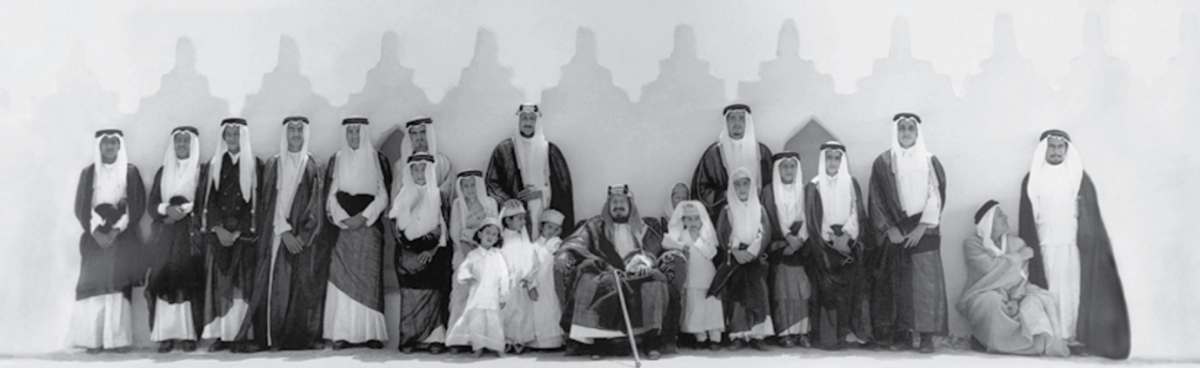
History recalls King Abdulaziz bin Abdulrahman Al Saud as the visionary who united Saudi Arabia. However, those closest to him recall a different facet to his character - that of a devoted father. The King Abdulaziz Foundation for Research and Archives, known as Darah, safeguards their recollections, providing an intimate glimpse into the royal household and unveiling the values the monarch intended to pass onto future generations.
At Al-Murabba Palace, where the King resided, life was governed by a strict regimen of order and accountability. The King demonstrated a keen interest in the upbringing of his offspring, prioritizing their education and religious education. Far from being isolated from the responsibilities of leadership, their learning was seamlessly woven into the discipline expected of them from a young age.
Prayer held a prominent position in the family's daily routine. The King's children remembered their father's insistence on performing prayers and his attention to ensuring that they also adhered to these practices. Their recollections portray a household where religious devotion was an integral aspect of everyday life, rather than being restricted to formal occasions.
Education was accorded the same significance. King Abdulaziz closely monitored his children's studies and surrounded them with teachers who imparted knowledge in the Qur'an, religious matters, and various other subjects. The unwavering expectation was that being the sons of the King entailed a higher level of accountability. These recollections also shed light on the delicate balance between the King's public duties and his private life.
Beyond the confines of Al-Murabba, the King was managing the affairs of an expanding nation, meeting with citizens and officials, and overseeing government matters. However, at Al-Murabba, he remained deeply invested in the upbringing of his children.
The distinction between the King's public and private spheres was not absolute. The values he promoted within the household - faith, discipline, learning, and responsibility - mirrored many of the principles he held dear outside its walls. As such, Al-Murabba Palace is more than a royal residence; it was a family home and a hub of education. The children grew up within the same complex from which their father oversaw the governance of the Kingdom.
These memories are invaluable precisely because they are deeply personal. Official documents record decisions, newspapers chronicle events, and photographs capture occasions, but memories preserve a different set of details - the expectations of a father, the rhythms of a household, and the lessons children carry long after their childhood has ended.
Through these memories, the founder emerges not only as the architect of a state, but as a father committed to equipping his children with the tools they needed to meet the challenges that lay ahead.
Written by urgent.news from Saudi Gazette's reporting — not their text. Machine-written — may contain errors; check the original before relying on it.