A Cold War 'city of ice' hints at US's ambitions in Greenland
The US wants army bases in Greenland. Previous attempts have already left behind abandoned radar stations and nuclear waste.
The United States is reportedly planning to establish two new military bases on the strategic island of Greenland, marking a shift from its presence during the Cold War. The newly proposed sites are Narsarsuaq and Mestersvig, which are a part of a deal that is expected to be finalized with Denmark and Greenland later in the day. This move comes as Donald Trump has had his eye on Greenland for security reasons since the beginning of his second term as the US president.
Currently, only the Pituffik Space Base remains standing on the island, but its history is filled with tales of ambitious US military endeavors. During the Cold War, the island was a key location due to its strategic position in the Arctic, which was the shortest route between the US and the Soviet Union. The US government constructed several military bases on Greenland during the era, with Camp Century being one of them.
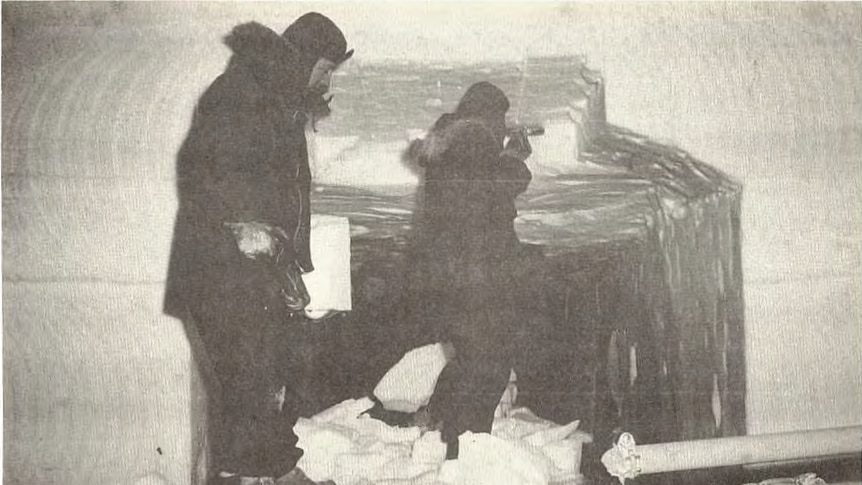
Established in 1959, 200 kilometers from the coast, Camp Century was initially built as a base for scientific research but eventually evolved into a nuclear missile testing site, known as Project Iceworm.
The camp, comprised of frozen tunnels as long as 300 meters, was equipped with a nuclear reactor and rail tracks to deploy up to 600 nuclear missiles. However, the project was deemed too costly to maintain and was abandoned in 1966. The tunnels collapsed, and the project was deemed financially impractical to resume. It is believed that when the ice covered the tunnels, it sealed them for decades, keeping their existence hidden from the public until recently.
Beyond Camp Century, Greenland holds remnants of other forgotten US military ambitions, such as ghost towns and abandoned radar stations. An example of this is the 5,800km Distant Early Warning (DEW) Line, which stretched from Alaska to Greenland. The line was aimed at providing early warning of a nuclear strike from the USSR and consisted of four sites divided Greenland, one on the west coast, one towards Iceland, and two on the ice cap.
Many of these stations resembled offshore drilling rigs, balanced on steel columns above icy surfaces. Like other abandoned Cold War infrastructure, the DEW Line sites were left behind when modern technology took over, leaving behind eerie scenes of untouched buildings and items left behind by the departing personnel.
Written by urgent.news from ABC News AU's reporting — not their text. Machine-written — may contain errors; check the original before relying on it.