14th-century woman in China lost her nose to amputation — likely as punishment for stealing or adultery
A face-down burial of a middle-aged woman who died around 700 years ago in China is the world's first evidence of punitive nasal amputation.
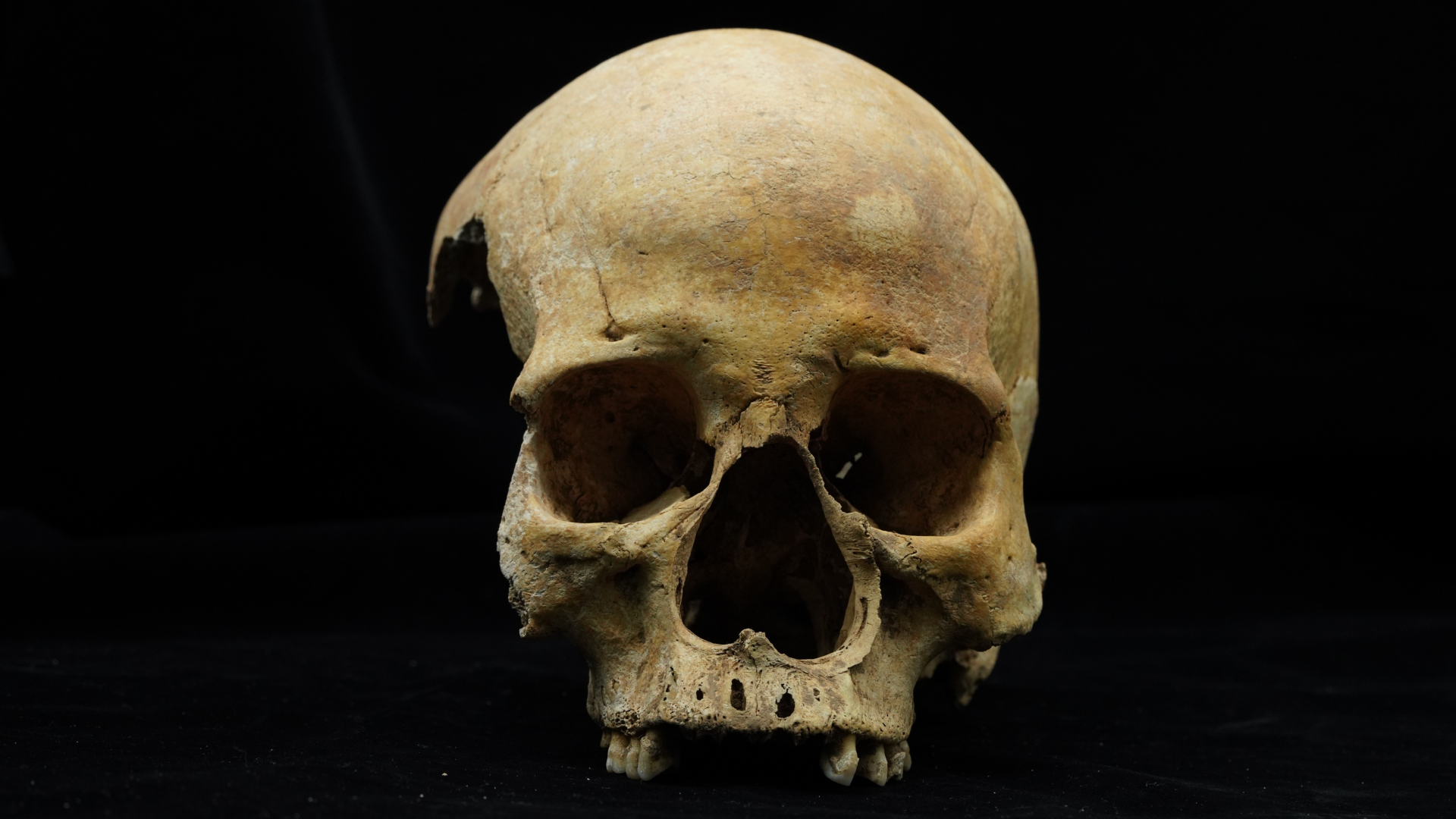
In 2019, a 700-year-old female skull was unearthed in China's Sanzhiyuan cemetery located in the eastern province of Henan. This extraordinary find has been identified as the world's first archaeological example of punitive nose amputation. The middle-aged woman survived the brutal punishment, which may have been inflicted for acts of theft or adultery.
Her burial, face-down in a wooden coffin, suggests a discriminatory attitude, as she was buried alone in a place without her family or community. The woman's skeleton was discovered among 300 others and radiocarbon dating revealed she lived between 1298 and 1404, corresponding to either the Yuan dynasty or the early Ming dynasty.
Upon closer examination, researchers found that the woman's bones within her nose indicated healing, suggesting she lived for several years after the punishment. The most striking sign of the punishment is the enlarged piriform aperture, the anatomical term for the nose opening, and the partial amputation of the woman's nasal bones, leaving only about half of the bridge of her nose.
Several bones inside her nose had been broken with signs of healing at the edges, giving her face a hollow appearance. While other possible explanations for her facial disfigurement were considered, the researchers concluded that the most likely cause was a case of nasal amputation as punishment for a crime. During the final years of the Yuan Dynasty, theft of livestock such as cattle and donkey was punishable by nasal amputation.
Written by urgent.news from Live Science's reporting — not their text. Machine-written — may contain errors; check the original before relying on it.