Why Egypt Is Looking Beyond Its Trade Deficit With China
Trade access matters, but investment can also change what Africa produces, where it produces it, and which markets it can serve.
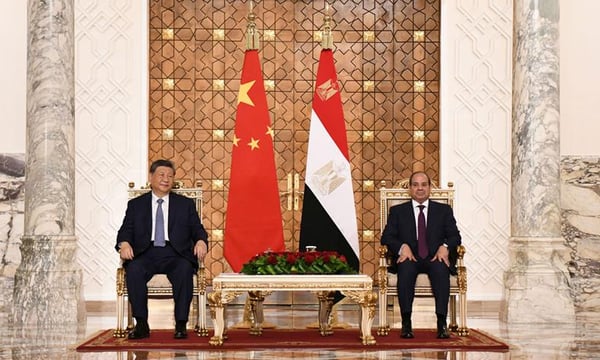
Despite recent attention on China's security role in the Middle East, Egypt's relationship with China extends beyond mere trade deficits. Established in 1956, Egypt was the first African and Arab nation to initiate diplomatic ties with China, and their relationship was upgraded to a Comprehensive Strategic Partnership in 2014. However, China remains Egypt's most significant trading partner, with a trade balance heavily favoring China.
During the first half of 2026, Egypt exported $596 million worth of goods to China, while imports totaled $11.2 billion, resulting in a substantial trade deficit. Yet, the focus on this imbalance overlooks the broader investment relationship between the two nations. China's direct investment in Egypt has grown consistently since 2017, reaching $1.4 billion in 2024.
A key factor in Egypt's appeal to Chinese investors is the Special Economic Zones (SEZ), particularly the Suez Canal Economic Zone (SCZONE). Spanning 461 square kilometers across six ports, the SCZONE offers port access, duty arrangements, and a central location connecting producers to Europe, the Gulf, Africa, and Asia. With 305 operational establishments, 14 industrial developers, and $18 billion in total investment costs, the SCZONE has attracted substantial investment from China.
Notably, Chinese stakeholders have played a significant role in projects within the SCZONE, such as China Jushi's fiberglass facility. The influx of Chinese investment into Egypt is expanding beyond SCZONE, with a growing trend of new investments in various sectors. This trend suggests that Egypt's attractiveness to Chinese investors is rooted in structural advantages like its connectivity, market access, and industrial platforms, rather than solely dependent on individual investment cycles.
Written by urgent.news from The Diplomat's reporting — not their text. Machine-written — may contain errors; check the original before relying on it.