What could the US do next as tensions with South Africa escalate?
Washington has cut aid, imposed tariffs and introduced visa restrictions against South Africa. Here are the next measures the US could consider — and the limits of its leverage.
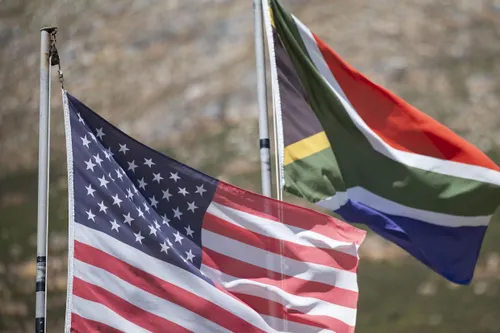
As tensions between the United States and South Africa escalate, Washington continues to impose restrictions in response to what it perceives as race-based discrimination, land seizures without compensation, and incitement of violence. South African President Cyril Ramaphosa asserts that South Africa will defend its sovereignty while maintaining engagement with the US.
Ramaphosa stated, "We are quite willing and prepared to continue engaging with the United States as we engage with all other countries in the world. Where there are challenges, we will go in with our dignity, with our sovereignty, to engage with those countries without bowing our heads and treating those nations respectfully and expecting them to treat us also respectfully."
The US has already taken several concrete measures against South Africa, including visa restrictions announced on September 15, a pause and cut in development assistance, the expulsion of the South African ambassador to the US, and the introduction of a 30% tariff on South African goods. The US has also pressured Pretoria over its foreign-policy positions, such as its relationship with Iran.
South Africa has rejected these characterizations of its policies, asserting its right to determine its domestic and foreign policy independently.
As tensions continue to rise, the US could implement additional measures. Secretary of State Marco Rubio has announced visa restrictions against individuals linked to South African laws or policies enabling racial discrimination, land seizures without compensation, or incitement of violence. These restrictions are seen as the first step in a series of escalatory measures, potentially impacting more individuals and possibly extending to broader immigration measures.
The US has also imposed a 30% tariff on South African imports and investigated South Africa under Section 301 of the US Trade Act.
Further escalations could include additional or targeted tariffs based on the outcome of the trade process. Cutting US assistance to South Africa, including HIV-related funding, is another possibility. Isolation has already occurred to some extent, as South Africa was excluded from the G20 summit in Miami, despite being a G20 member.
Washington could potentially reduce high-level diplomatic engagement, exclude South African officials from selected US-led meetings, and encourage closer alignment among US partners on specific issues involving Pretoria.
However, it is important to note that the US cannot force South Africa to change its laws or foreign policies. As a sovereign state, South Africa regards issues such as land reform, employment equity, and foreign-policy positions as matters for its own government and Parliament. Despite these restrictions, South Africa and the US are still negotiating, with Trade and Industry Minister Parks Tau stating that US and South African officials are due to meet to discuss trade.
Written by urgent.news from IOL's reporting — not their text. Machine-written — may contain errors; check the original before relying on it.
This story
This is one outlet's version. Read the fullest account.