Trump-Xi summit outlook: U.S. stocks and sectors to watch
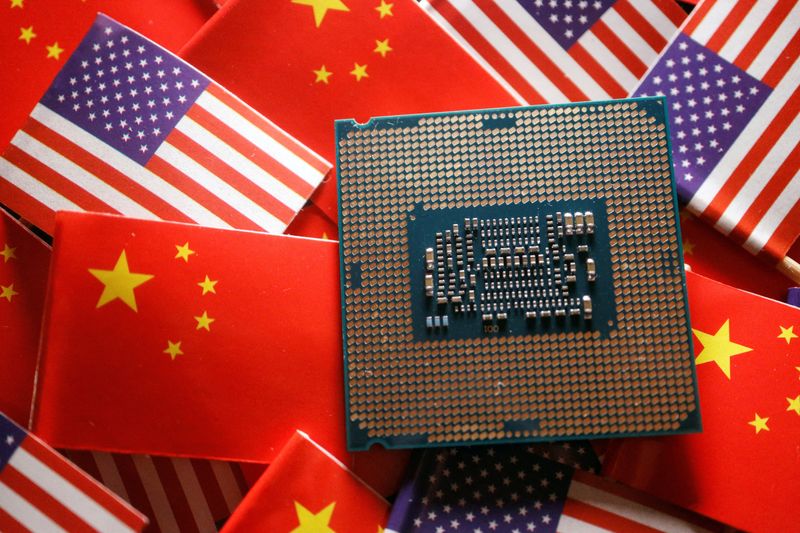
The upcoming Xi Jinping state visit to Washington arrives with a critical deadline; the existing trade truce, which caps tariffs at around 20%, expires in early November. Consequently, Thursday becomes the final clean window for a deal before tensions escalate once more. Goldman Sachs does not anticipate a breakthrough, but rather a delay: both parties will likely extend the truce and refrain from extreme stances.
A ceasefire, rather than a definitive treaty, is already priced in. However, the possibility of either a concrete multi-sector agreement or a complete breakdown is not. Three key figures will be closely monitored when the communiqué is released: soybean purchase volumes, semiconductor licensing language, and auto/battery localization commitments. Further insights can be found in InvestingPro, currently offering up to 50% off select stocks.
Boeing (BA) is the summit's most direct binary trade. China had pledged 200 aircraft at the previous Beijing summit, but the details on these transactions remain unconfirmed. Following the summit, Boeing's stock closed at $198.20 on September 18, with after-hours trading at $199.49, marking a 0.65% increase as of September 21. The year-to-date performance shows a 9.15% decline, and the stock is well below its 52-week high of $254.35. Boeing is up for consideration due to the binary nature of the trade.
MP Materials (MP) also features prominently in the summit's outlook. The rare earths subplot has taken a notable turn, with China Rare Earth Group reportedly in discussions to acquire Shenghe Resources, a significant MP Materials shareholder. MP Materials closed at $47.26 on September 18, with after-hours trading at $48.46, representing a 2.54% increase as of September 21.
The stock has dropped over 21% in the past month and more than 35% over the past year. A framework deal on supply access could act as a sharp reversal catalyst, while the lack of agreement would leave China in control of its rare-earth card for the next round.
Ag processors have already been impacted by China's soybean purchases, with the country buying approximately 1 million tons of U.S. soybeans in the week of September 10 alone. This move brings China closer to meeting its annual commitment through 2028. YTD gains of 48% for ADM and 30% for Bunge reflect the extent of pre-meeting inventory already purchased.
The question post-summit will be whether China commits to additional soybean and corn volumes or if momentum stalls. This is the most sensitive sector, and any shift in export-control language could move the group by multi-percentage points in a single session.
The Bessent-He pre-summit talks in New York specifically highlighted AI chip licensing on the agenda. Intel's 6-month run of +147.5% makes it particularly sensitive to any changes in the export-control regime. A softening on advanced AI accelerator access would be a direct tailwind for U.S. chipmakers with exposure to China, while tighter rules would impact the entire cohort rapidly.
Ford Motor (F) serves as a direct policy barometer, utilizing Chinese supply-chain partnerships while lobbying against Chinese vehicle competition. A summit that facilitates supply-chain cooperation would benefit Ford's partnership model, whereas stricter localization demands could have the opposite effect. Ford's stock is near flat YTD, having experienced a rough month, presenting an opportunity for movement in either direction based on summit headlines.
Written by urgent.news from Investing.com's reporting — not their text. Machine-written — may contain errors; check the original before relying on it.
This story
This is one outlet's version. Read the fullest account.