Trump traded more securities than all Congress; backs stock-buying ban for all lawmakers
A majority of Americans support prohibiting lawmakers from trading stocks. President Donald Trump himself backed a ban that would restrict members of Congress but leave him outside its scope.
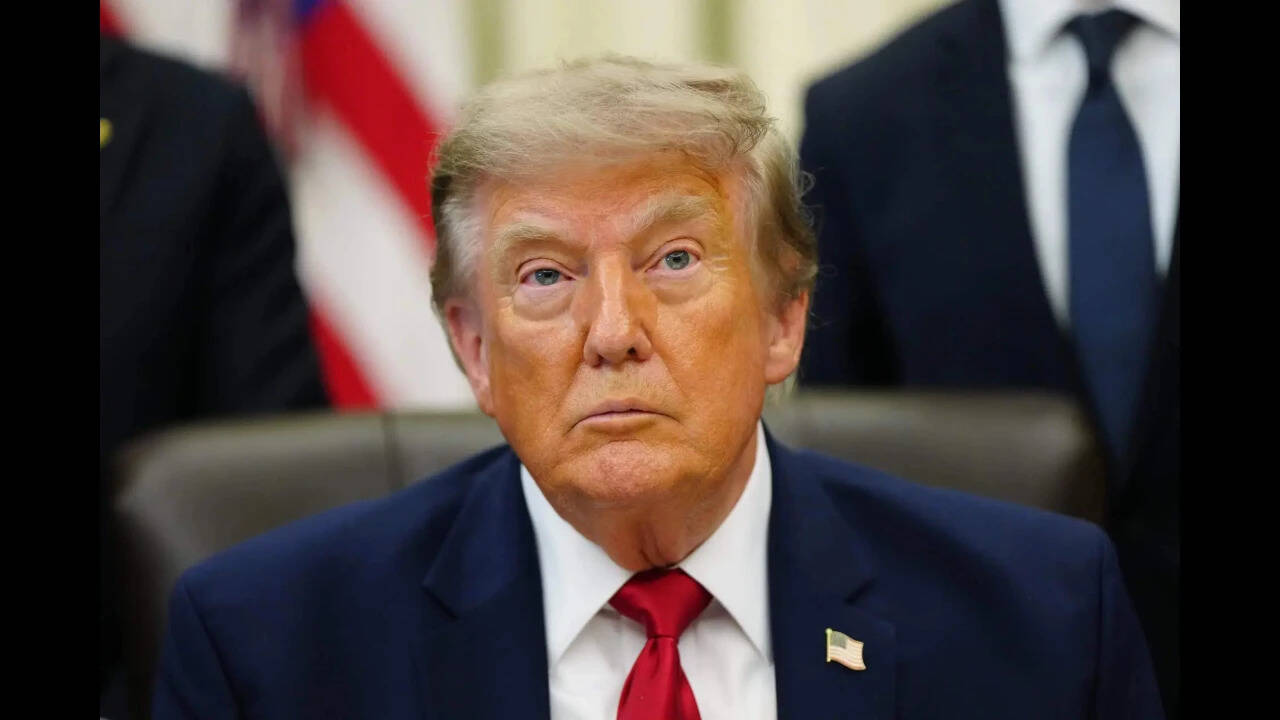
Since resuming office in January 2025, President Donald Trump has engaged in more securities transactions than all members of Congress combined. Notably, he advocates for legislation that would prohibit lawmakers from buying and selling stocks, while exempting himself from the restriction.
According to a Bloomberg analysis of financial disclosures, Trump or his financial team executed approximately 28,700 trades over the 17 months following his second inauguration up until June 2026. In contrast, congressional representatives reported roughly 22,200 transactions within the same timeframe.
The surge in presidential trading has reignited concerns about possible conflicts of interest. While some argue that lawmakers could exploit non-public information during their trades, Kedric Payne of the Campaign Legal Center contends that the issue extends beyond that. He explains, "Even if they’re not trading the stock on non-public information, they still create the appearance of a conflict of interest because they can still influence the value of the stock through their official duties."
Republicans are capitalizing on opposition to congressional stock trading to push a campaign angle ahead of the upcoming midterm elections. Representative Anna Paulina Luna stated during a Republican convention, "The American people deserve to know that those they elect to public office actually serve the American people and not their own wallets."
The House Republican-backed prohibition applies solely to lawmakers, their spouses, and dependent children. The president remains outside its scope, allowing Trump to continue trading securities despite possessing access to extensive intelligence and the power to shape entire sectors through executive actions and social media statements.
Trump has expressed support for the House legislation, urging Congress to pass it without delay during his State of the Union address. However, he has not indicated whether he supports extending the stock-trading ban to himself. White House spokesperson Davis Ingle clarified that Trump's investments are overseen by independent financial institutions, with computer-based model portfolios tracking relevant indexes.
Trump has previously criticized lawmakers who have advocated for extending restrictions on stock trading to the presidency. He dismissed Senator Josh Hawley's legislation that would have applied the ban to the president and vice president, accusing him of being a "pawn" playing into the hands of Democrats.
Trump has also called for an investigation into stock trading by former House Speaker Nancy Pelosi and her husband, whose tech-focused portfolio has often outperformed the broader market. This issue served as the basis for Hawley's legislation, initially titled the Preventing Elected Leaders from Owning Securities and Investments Act, or PELOSI Act.
Trump is the first US president in the current century to have disclosed individual stock trades, averaging around 80 trades per market day. His financial disclosures during his first term primarily consisted of illiquid real estate assets and privately held businesses. His current portfolio includes thousands of positions across various asset classes, including stocks, bonds, and cryptocurrencies.
During the first quarter of this year, Trump purchased up to $1.38 million worth of DoorDash Inc. shares. In April, DoorDash delivered a McDonald's order to Trump at the White House, which gained significant attention on social media and provided DoorDash with a lobbying advantage. Trump has also endorsed various companies shortly after acquiring stakes in them, such as Nvidia Corp., Tesla Inc., and nineteen others within a week of acquiring positions in them.
Despite the growing support for a stock-trading prohibition on lawmakers, the measure faces significant obstacles. The House-backed bill, attached to a voter identification law, was deemed a "poison pill" by Senate Democrats. While Hawley was the only Republican to support his own bill, many Republicans dismissed the proposal as a "publicity show" and "legislative demagoguery."
The most substantial overhaul of congressional financial ethics rules in recent years occurred with the 2012 Stop Trading on Congressional Knowledge Act.
Written by urgent.news from Times of India's reporting — not their text. Machine-written — may contain errors; check the original before relying on it.