The US-China tech war has evolved since the last Xi-Trump summit. Who has the edge now?
When the presidents of the United States and China meet in Washington, the world will be watching to see whether their two countries can make good on their agreement to work towards “constructive strategic stability”. In the fourth part of this series, Sylvia Ma looks at the economic and technological levers available to both in their protracted rivalry. For years, Huawei Technologies has served…
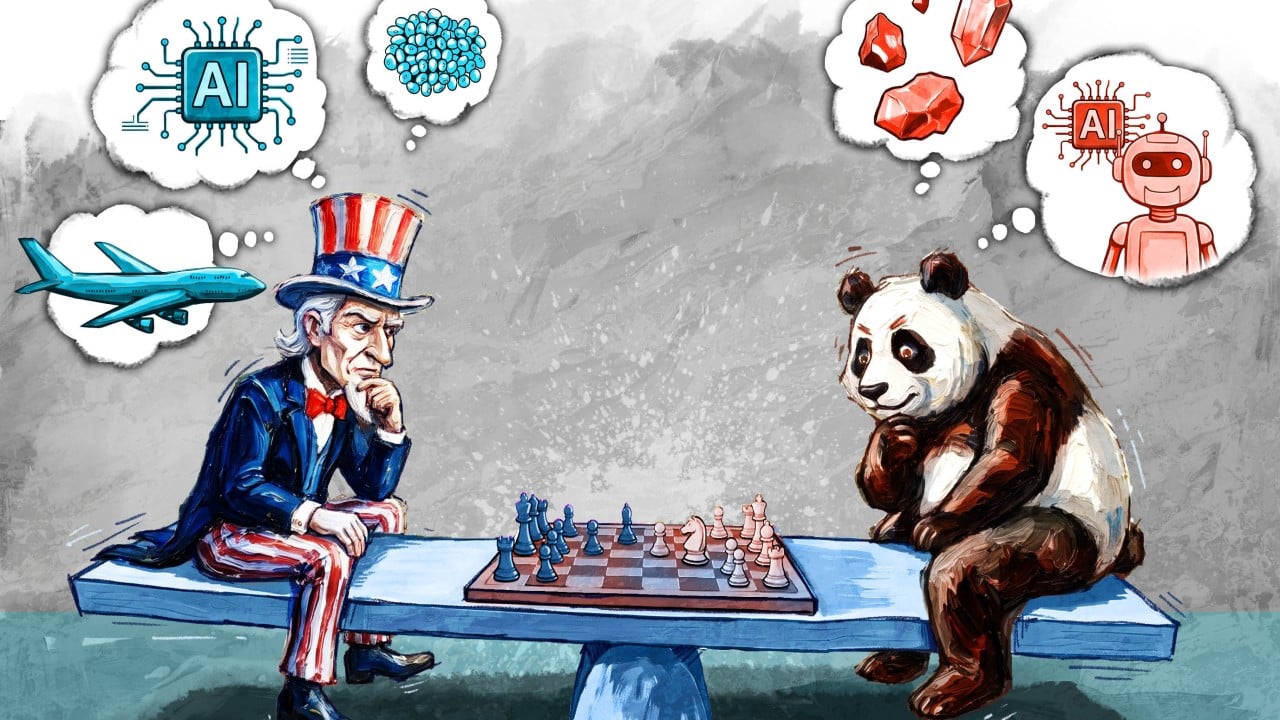
Since the last Xi-Trump summit, the US-China tech war has shifted from economic sanctions to technological innovation. Huawei Technologies has become a central battleground, now aiming to "become Nvidia" by developing capable processors. Days before the summit, Huawei announced a breakthrough in enabling up to 1 million processors to operate as a single computer, backed by the Tau Scaling Law and LogicFolding architecture.
These advances were made without relying on advanced lithography tools, which remain restricted for sale to China.
Ahead of the summit, Huawei's rotating chair Xu Zhijun hoped for coexistence and peaceful coexistence between the two superpowers. However, geoeconomic competition has reshaped relations, with traditional economic levers like aircraft pledges almost flatlining. Both countries are now increasingly aware that their leverage is reciprocal, with neither side holding a decisive advantage without incurring significant costs.
The US still leads in advanced chips, but it is treating this advantage as a bargainable asset rather than an unyielding barrier. China, on the other hand, is focusing on domestic hardware ecosystems to reduce reliance on US chips. Chinese AI developers are increasingly combining powerful open-weight models with domestic hardware to reduce dependence on Nvidia chips.
The US has accused six Chinese AI firms of using distillation to extract capabilities from American-developed models, but China has rejected these allegations as groundless. While the US leads in proprietary models, Washington is increasingly concerned with how Chinese developers gain access to these capabilities.
Written by urgent.news from South China Morning Post's reporting — not their text. Machine-written — may contain errors; check the original before relying on it.
Also reported by 1 other outlet
- The summit won’t break the US-China stalemate semafor.com