The devastating Nepal floods highlighted the danger of glaciers. Here's where the next disaster may occur.
The glacial collapse that killed 1,400 people in Nepal in August highlighted one epicenter for such disasters — but there are other hotspots that experts are worried about.
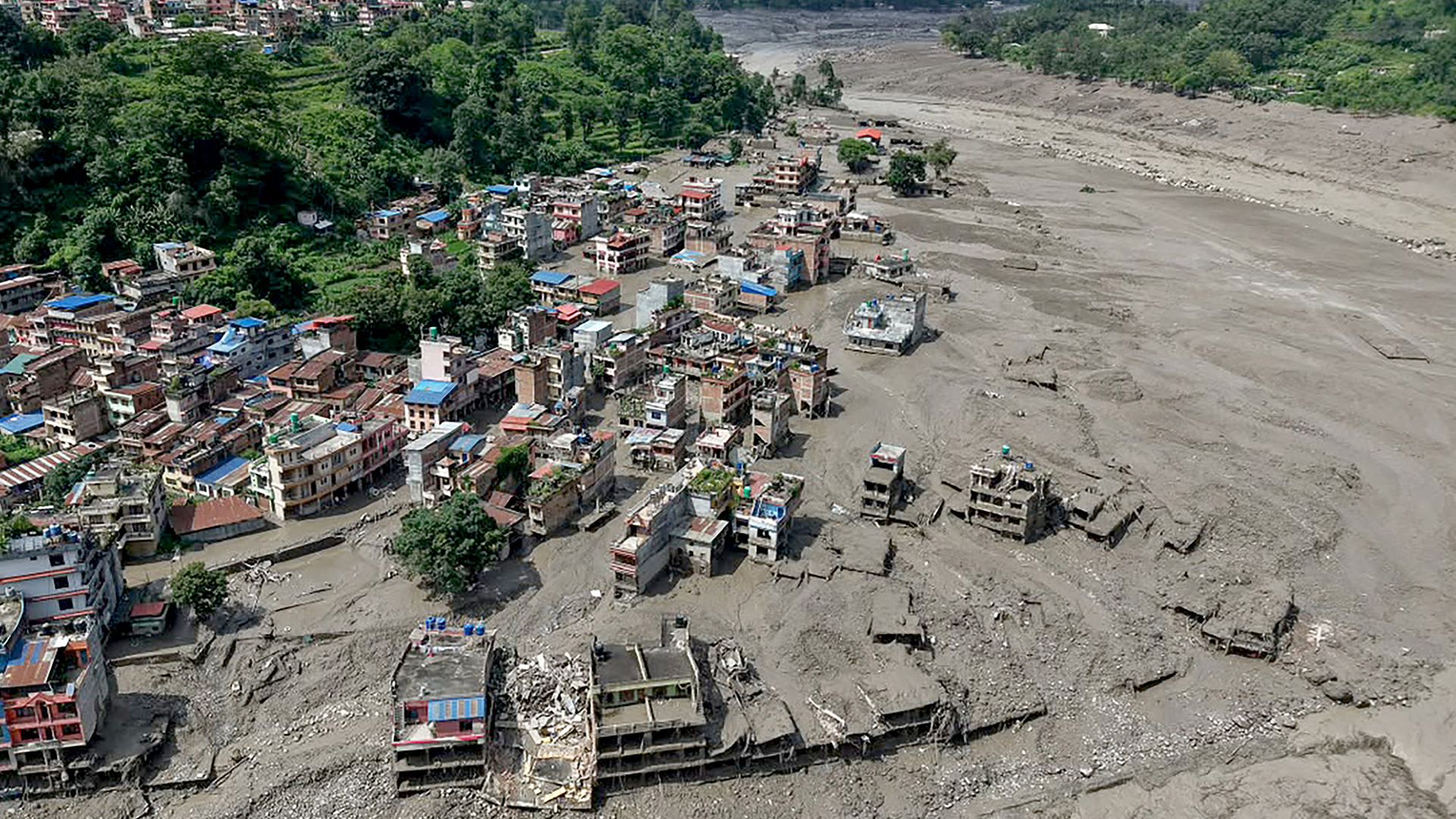
The Nepal-Tibet flood that struck on August 26, 2023, underscored the perilous nature of glaciers and the risks they pose. As of September 16, the disaster had claimed at least 1,400 lives, with over 6,000 people still missing. The Himalayas, characterized by steep slopes and rapidly melting glaciers, were identified as a high-risk area.
However, it was revealed that numerous regions worldwide are susceptible to glacier-related disasters. One such tropical region, particularly at risk due to climate change, was highlighted by experts.
In the Nepal-Tibet disaster, a large mass of bedrock and glacial ice broke away from the mountainside, causing the ice and rock to slide down at a rapid pace, reaching speeds of 500 feet per second. This powerful force, descending 6,500 feet, devastated the Lhende River in Tibet. The combination of the landslide's scale, the volume of water it carried, its speed, and the number of people and structures in its path, made this event particularly devastating.
The Himalayas and the broader High Mountains Asia region, encompassing parts of China, Afghanistan, Nepal, India, Pakistan, Bhutan, Kazakhstan, Uzbekistan, Kyrgyzstan, and Tajikistan, are among the primary epicenters for future glacier-related disasters. With over 9 million people at risk from glacial outbursts, this region is nicknamed the "third pole" due to its third-largest ice reserve globally.
The steep slopes and narrow valleys in this region facilitate rapid movement and extensive travel of water, debris, and ice, which can inundate downstream valleys with significant population densities.
The Himalayas also exhibit high seismic activity, where glaciers are prone to weakening due to tremors, leading to avalanches, glacial lake outburst floods, or glacial collapses. As permafrost and glacier cover diminish, mountain slopes become less stable, increasing the risk of avalanches and other hazards. Moreover, the construction of large dams in seismically active regions of the Himalayas and the Tibetan Plateau introduces new risks.
While the Himalayas are currently a hotspot for glacier-related disasters, another region, Peru, with 68% of the world's tropical glaciers, faces an equally significant threat. Peru has experienced glacial disasters for decades, with a notable incident in 1970 where 6,000 people died when Mount Huascarán was destabilized by an earthquake.
The same slope had previously failed in 1962, causing a massive rock-ice landslide that buried a community, killing about 2,000 people. Lake Palcacocha, situated in Peru, is another concern due to rapidly expanding glacial lakes, fueled by climate change, which could cause glacial lake outburst floods, endangering communities such as Huaraz.
The number of glacial lakes in the Andes has surged by 93% over the past two decades, a rate more than double that of High Mountains Asia.
In Europe and North America, regions like the Alps, Scandinavia, Alaska, and the state of Juneau are also at risk from glacial melting, landslides, and potential tsunami-like waves from glacier collapses. All areas with glaciers and coastal zones are susceptible to the potential inundation from glacier-related events.
Written by urgent.news from Live Science's reporting — not their text. Machine-written — may contain errors; check the original before relying on it.