Tech leads shares higher in Asia on AI demand; Wall Street futures edge up
Bond markets remain tense after a vicious sell-off
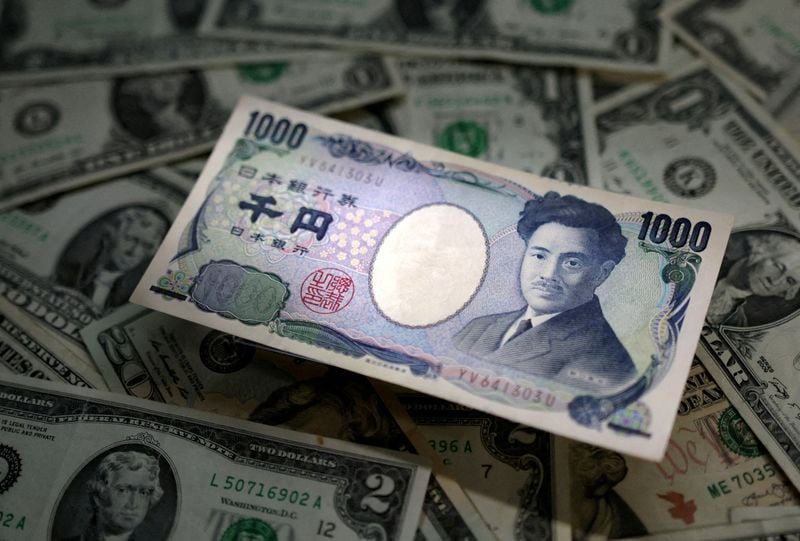
Asian stock markets edged upward on Monday, September 21st, driven by the escalating demand for chips as AI applications proliferate, while oil prices softened in anticipation of potential Saudi Arabia's increased oil production, following a Houthi attack on Riyadh. Market activity was sparse in Japan, which was observing a holiday known as Silver Week, thereby leaving the US dollar marginally stable at 157 yen.
Traders remained cautious, anticipating the Bank of Japan's possible intervention to bolster the currency. The yen experienced a slight uptick on Friday following Japanese authorities' currency market assessments, as per the Nikkei newspaper. Japan's Nikkei index was closed, but futures climbed by 0.5%, while South Korea's tech-focused index rose by 1.1%.
MSCI's comprehensive Asia-Pacific index (excluding Japan) increased by 0.3%. S&P 500 and Nasdaq futures both climbed by 0.3% and 0.4%, respectively. Meanwhile, in Europe, Eurostoxx 50 and Dax futures both climbed by 0.2%, and FTSE futures remained unchanged. Bond markets exhibited heightened volatility, with US 2-year yields surging 36 basis points in the last fortnight, peaking at 4.7604%, the highest level since mid-2024.
Analysts at Bank of America highlighted the cyclical tightening caused by the Federal Reserve's hawkish stance in its September 16th guidance, projecting a 56% likelihood of further rate hikes in October and a near certainty by year-end. BofA noted that consumer spending in the US soared by 6.3% year-on-year, surpassing the 5% threshold historically linked with core inflation exceeding its target.
Consequently, the Fed is compelled to curb demand, with analysts maintaining a forecast of only two additional rate increases by year-end. Other central banks in the EU, UK, Japan, Australia, and New Zealand are also anticipated to tighten monetary policy by year-end. The Swiss National Bank, Sweden's Riksbank, and Norges Bank are scheduled to meet on Thursday, but all are anticipated to maintain their current policies.
Bond markets have also been influenced by fiscal deficits, with France's sovereign debt witnessing a sharp spike in risk premiums on September 18th, reaching its highest level since the eurozone debt crisis. Germany's debt may face increased pressure following a disappointing electoral performance by Chancellor Friedrich Merz's conservative party on Monday.
This news caused the euro to stay flat against the US dollar at US$1.1477, following a decline of nearly 1% over the previous week as the greenback strengthened broadly. Oil prices remained above $100, with Brent crude falling 0.2% to $103.68 per barrel and US crude slipping 0.3% to $100.02. Reports indicated that Saudi Arabia intends to swiftly resume some oil exports through its primary east-west pipeline, which was struck by Houthi militants on September 10th, although specifics remain unclear.
Vivek Dhar, CBA's chief commodities trader, pointed out that the shutdown of the East-West pipeline has significantly impacted the oil market, estimating that global oil and refined product inventories might dwindle within five to 10 weeks, compared to an earlier projection of 15 to 20 weeks. This development would intensify pressure on Washington to reach an agreement with Iran, to restore some oil shipments through the Strait of Hormuz and ensure the Bab el-Mandeb strait stays open.
President Donald Trump is slated to attend the United Nations General Assembly this week, followed by a summit with Chinese President Xi Jinping on Thursday. In other commodities, gold, which does not pay interest, declined 0.2% to $4,370 per ounce due to the rise in yields.
Written by urgent.news from The Business Times - Companies & Markets's reporting — not their text. Machine-written — may contain errors; check the original before relying on it.