Success of Trump-Xi summit lies in what happens afterwards
Chinese President Xi Jinping is expected to meet US President Donald Trump in Washington this week, after the May talks in Beijing and before the November Apec summit in Shenzhen. This sequence of diplomacy will test if the commitment to building a “constructive China-US relationship of strategic stability” translates into practical arrangements. The Washington meeting faces clear limits.…
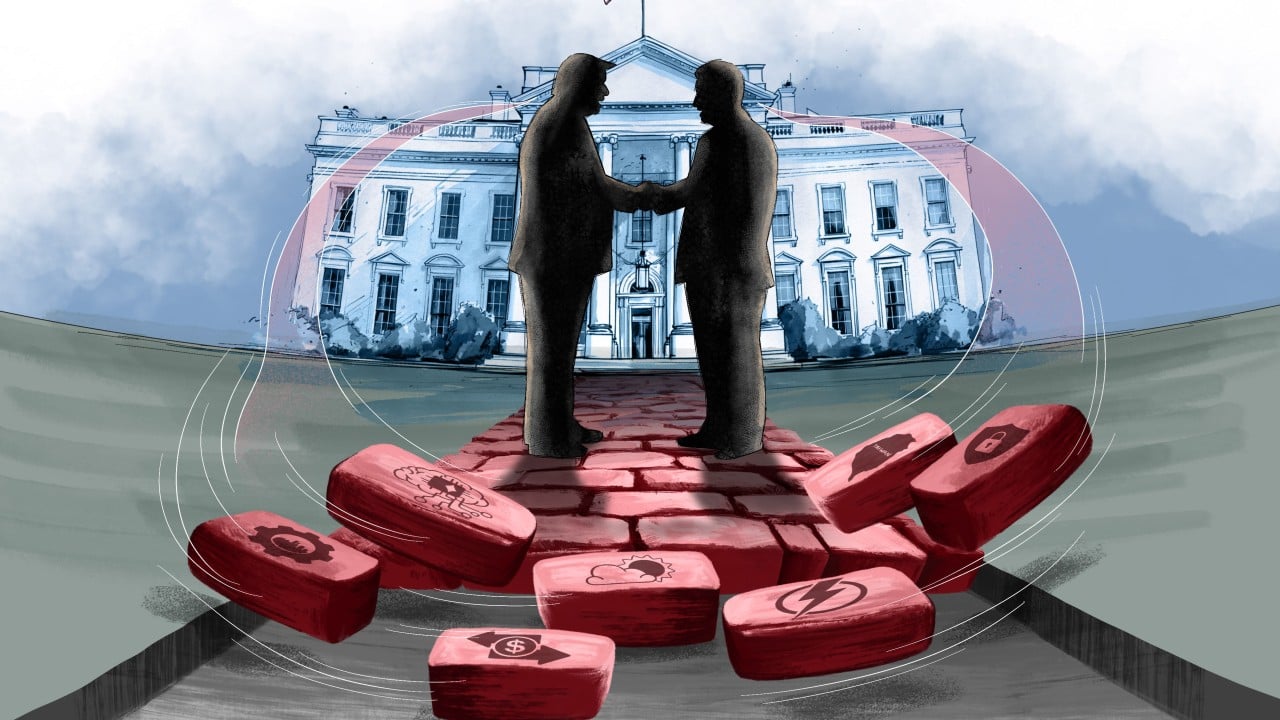
The success of the upcoming Trump-Xi summit hinges on the actions taken after the meeting. This week's summit in Washington and the November APEC summit in Shenzhen will determine whether the commitment to a "constructive China-US relationship of strategic stability" materializes into practical arrangements. The talks face significant challenges, including differences over trade, technology, industrial policy, Taiwan, and regional security.
Washington's priorities include tariff reductions, increased Chinese purchases of agricultural and energy products, reliable access to critical minerals, and new commercial contracts. Meanwhile, Beijing seeks greater consistency in US policy, particularly regarding Taiwan, technology restrictions, and trade measures.
Despite these obstacles, there is potential for a phased agreement that emphasizes reciprocity and addresses major concerns for both sides. Trade presents the most immediate opportunity, with both sides discussing a tariff reduction framework covering around $30 billion worth of goods. Successful implementation of agreements on product lists, implementation schedules, and market access could benefit businesses and alleviate some of the tariff-related pressure on Asia-Pacific supply chains.
However, the lasting value of any package depends on implementation, requiring clear timetables, working-level channels, and dispute management procedures. Taiwan remains a highly sensitive issue for China, representing one of its core interests, while for the US, it could potentially encourage competing interpretations across the region. Greater clarity and restraint in policy and military signaling would be more effective in reducing risk than ambiguous statements.
The South China Sea disputes necessitate similar caution, as more frequent maritime encounters, rising military activity, and US alliance commitments increase the risk of direct confrontation. Washington and Beijing must maintain rules for sea and air encounters, keep crisis communication channels open, and avoid treating every tactical incident as a test of strategic resolve.
AI should also be a focus of the discussions. While a comprehensive AI agreement remains elusive, the governments of both China and the US could establish regular contact, explore notification procedures for serious AI-related incidents, and commence discussions on the most dangerous military applications. This dialogue could complement the Asia-Pacific Economic Cooperation forum's work on digital and AI cooperation.
Ultimately, the outcome of the summit will have far-reaching implications. If the meeting produces workable economic arrangements and improved communication, it will strengthen the foundation for progress on trade, AI, energy, climate, and sustainable development at the APEC summit in Shenzhen. Conversely, if the results hinge mainly on the personal relationship between Xi and Trump, renewed bilateral friction could overshadow the regional agenda.
While Asia-Pacific economies acknowledge that China-US competition will persist, they are concerned about the economic costs, including disrupted investment, supply chains, heightened security pressures, and bloc politics constraining countries seeking productive ties with both China and the US. A more stable bilateral relationship would provide greater space for pursuing individual development and security interests.
Written by urgent.news from South China Morning Post's reporting — not their text. Machine-written — may contain errors; check the original before relying on it.
This story
This is one outlet's version. Read the fullest account.