Steam Frame's odd charging behaviour gets patched: cuts recharge times in half in some instances
I choose to believe I had an infinitesimally minor role in making this happen.
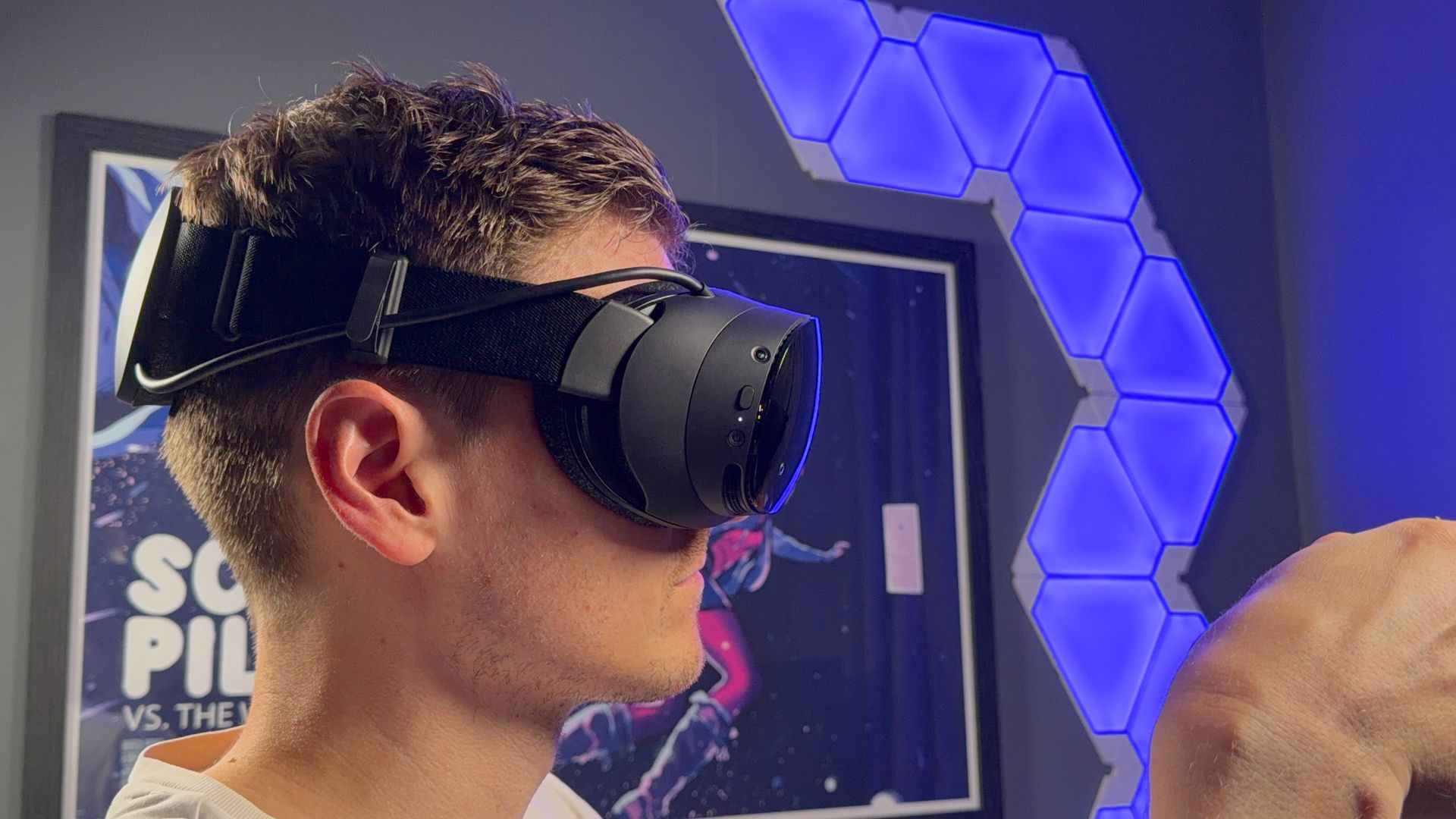
Valve has released an updated version of SteamOS for Steam Frame, addressing a charging issue discovered by early users. The new firmware cuts recharge times in half for some scenarios. Initially, users reported that the headset took over two hours to charge from empty to full, despite the official adapter's maximum output of 45 W. Valve clarified that the charging process is not linear, with fast charging occurring from 0 to 65% capacity.
However, the user's observations led to further investigation, revealing that leaving the device off during charging would significantly reduce the time required. After running the battery down to around 4% and then charging it, the headset reached 65% in 35 minutes, before dropping to 18 W for the final charge to 100%, totaling 75 minutes.
The latest SteamOS update (version 0.3.0) implements this faster charging behavior when the headset is off, improving power efficiency and reducing overall charging time.
Written by urgent.news from PC Gamer's reporting — not their text. Machine-written — may contain errors; check the original before relying on it.
This story
This is one outlet's version. Read the fullest account.