‘Secular, irreligious, or non-religious’: How Constituent Assembly debated UCC
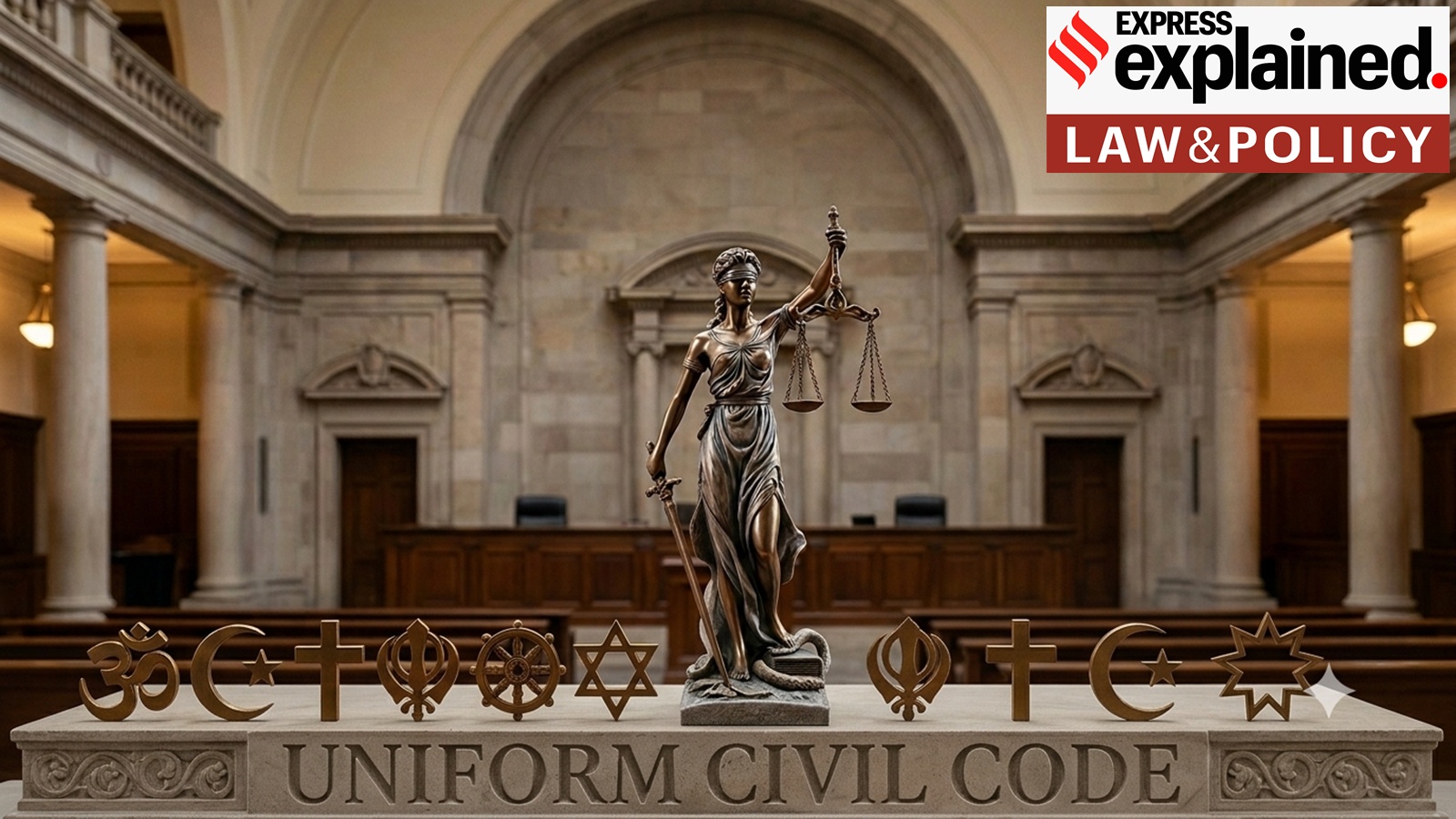
The Constituent Assembly debated the Uniform Civil Code (UCC) on November 23, 1948, during its discussion of then-draft Article 35. Mohammad Ismail Khan, a United Provinces Member from the Muslim League, argued that it was unnecessary to compel people to abandon their personal laws to achieve harmony. He stated that the secular state should not interfere with the way of life and religion of its people and cited precedents in European countries where personal laws were retained.
B Pocker, a Madras Member from the Muslim League, echoed this sentiment, asserting that a guarantee of the liberty to follow personal laws had been available under British rule. Naziruddin Ahmad, representing the Muslim League from West Bengal, disagreed, contending that interfering with personal laws violated Article 19 of the Draft Constitution, which protected freedom of conscience and the right to profess, practice, and propagate religion.
He argued that certain aspects of the British Civil Procedure Code had already infringed upon personal laws without affecting fundamental personal laws. Naziruddin also emphasized that a gradual approach was preferable, as the stage for uniform civil law had not yet arrived. Mahboob Ali Baig, representing Madras, clarified that "Civil Code" did not encompass strictly personal laws, such as those governing succession, inheritance, marriage, and divorce, which were deeply rooted in religion.
Syed Hussain Imam, from Bihar, highlighted that a secular state does not mean anti-religious but non-religious, urging for patience and the development of education and economic conditions before implementing uniform laws. KM Munshi, a Congress Member from Bombay, sought to clarify Article 19, stating that if a religious practice intersected with secular matters, Parliament could legislate without infringing on fundamental rights.
He argued that advanced Muslim countries like Turkey and Egypt had not permitted personal laws to obstruct the enactment of a Civil Code, suggesting that uniformity was essential for consolidating the community. Munshi emphasized that the primary objective was to unify the country's way of life and secularize personal laws, arguing that religion and personal laws were distinct from social relations and the rights of parties in inheritance or succession.
Alladi Krishnaswami Ayyar from Madras underscored that a uniform civil code sought to promote amity by creating a common legal measure, acknowledging that legal systems could influence each other but not to the extent of undermining fundamental rights.
Written by urgent.news from The Indian Express's reporting — not their text. Machine-written — may contain errors; check the original before relying on it.