Regional haze casts pall on ASEAN’s influence
The return of haze underscores a sobering reality: while ASEAN has policies designed to combat it, the problem continues to occur.
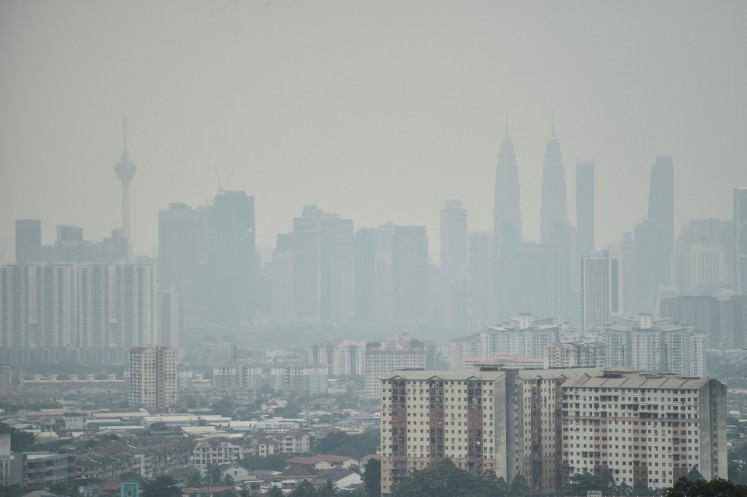
A recent resurgence of haze in the ASEAN region has once again raised concerns about the bloc's ability to effectively address the issue. While ASEAN possesses policies aimed at combating haze, the recurring occurrence of the problem highlights the need for improved enforcement and implementation. In recent weeks, thick smoke from forest and peatland fires in Indonesia has once again engulfed several ASEAN states, including the southern Philippines.
The haze has severely impacted visibility at Supadio Airport in Pontianak, preventing aircraft carrying Indonesia's forestry minister from landing. Early this month, ASEAN's Specialized Meteorological Center activated its highest alert level, Level 3, after detecting hotspots across Sumatra and Kalimantan. In response, Malaysia has sought Indonesia's permission to conduct cloud seeding over Indonesian territory, while Singapore has issued daily haze advisories to assist the public in planning activities and events.
The re-emergence of haze underscores a sobering reality: despite ASEAN's frameworks designed to prevent, monitor, and respond to the issue, the problem continues to persist. Since 1997, ASEAN has implemented the Regional Haze Action Plan, focusing on prevention, mitigation, and monitoring. In 2002, the ASEAN Agreement on Transboundary Haze Pollution (AATHP) was established as the region's first legally-binding agreement dedicated to the issue.
Since then, ASEAN has developed a comprehensive system for haze cooperation, including the ASEAN Specialized Meteorological Centre, which monitors hotspots, weather conditions, and smoke movement. The AATHP also provides a framework for joint responses and assistance when fires escalate.
However, the recurring haze episodes serve as a sobering test of ASEAN's credibility. Unlike many other transboundary challenges, the source of the haze – the fires that start and the smoke that drifts across borders – is predominantly an intra-ASEAN problem. The member states where the fires originate and those that experience the smoke are, with few exceptions, the same countries.
This distinguishes haze from challenges like water security in the Mekong River, which is shared by several ASEAN countries but originates from China, outside the ASEAN bloc. China's dam-building and water management decisions have significant implications for downstream communities and ecosystems, limiting ASEAN's influence over key decisions related to the river.
In contrast, haze is a problem that ASEAN's own members largely cause and largely suffer. This raises a crucial question: why has the region struggled to address haze through its own institutions?
Written by urgent.news from The Jakarta Post's reporting — not their text. Machine-written — may contain errors; check the original before relying on it.