NASA Discovery Reveals Complex Water Systems on Early Mars
When NASA’s Perseverance rover reached the inner edge of Mars’ Jezero Crater in September 2023, mission scientists were surprised by what they found. Called the “Margin Unit,” the geologic area stretches along the shoreline of an ancient Martian lake, so they expected sedimentary rocks, which would have formed as layers of sand piled on top […]
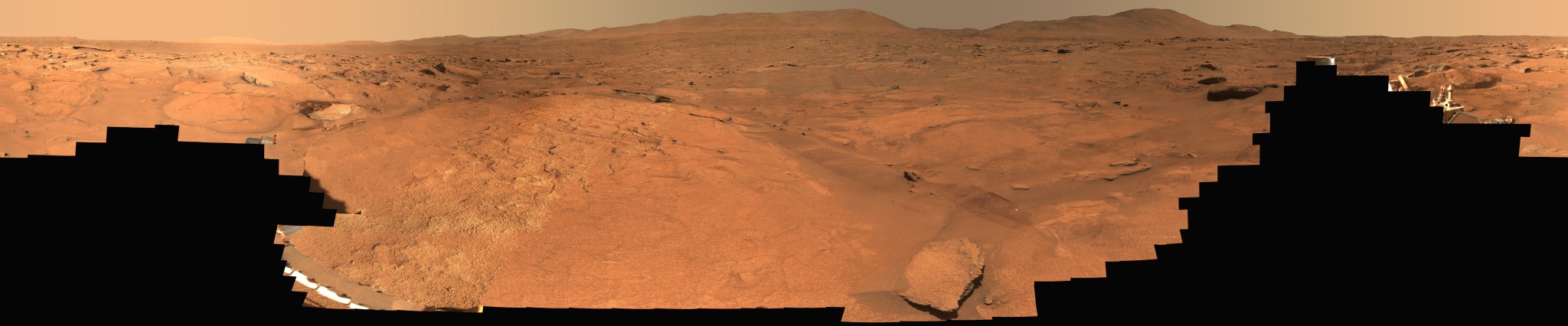
NASA's Perseverance rover discovered complex water systems on early Mars, challenging previous assumptions. The rover reached the inner edge of Jezero Crater's rim in September 2023, where it expected sedimentary rocks. However, the "Margin Unit" instead revealed igneous rock, indicating deep underground magma or volcanic activity.
The igneous rocks displayed signs of water interaction on at least three occasions, altering their chemistry and appearance. SuperCam, the rover's instrument, analyzed more than 185 bedrock targets in the Margin Unit. The findings, published in Communications Earth & Environment, suggest the Margin Unit became a crossroads for aqueous systems.
Initially, carbon-dioxide-rich groundwater reacted with olivine, forming carbonate ridges. Later, water related to the lake in Jezero Crater left behind silica. Lastly, a water event generated mineral veins of calcium sulfate and fluorite, indicating a heated underground-water event. This complex water history, with multiple episodes, could reshape understanding of early Mars' climate and habitability.
Written by urgent.news from NASA's reporting — not their text. Machine-written — may contain errors; check the original before relying on it.