Mobilitätskosten: Spritpreis stagniert nach Rückgang übers Wochenende
Nach den Rekorden der vergangenen Woche ist Tanken wieder etwas billiger geworden. Inzwischen stagniert der Preis aber.
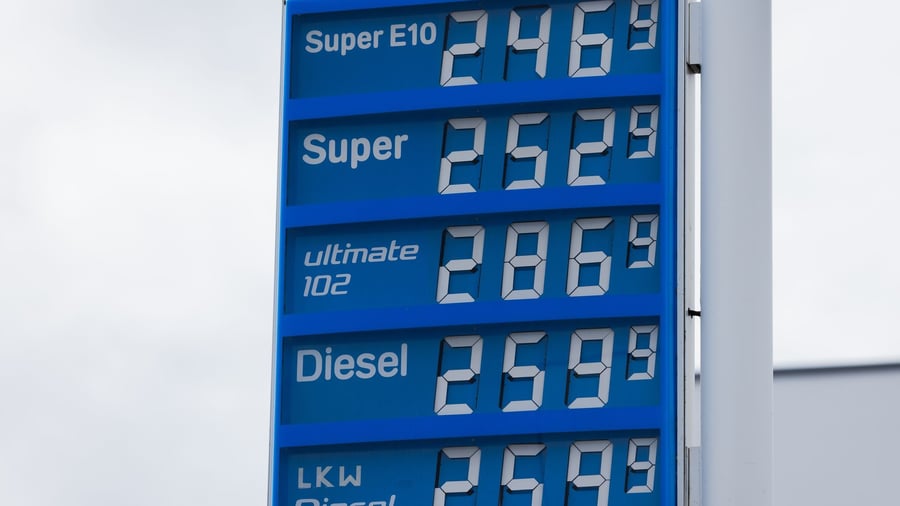
Spritpreise have stabilized after a weekend dip, according to the ADAC. On Sunday, a liter of Super E10 cost 2.279 euros, while diesel was 2.446 euros nationwide. This marks a 3.5 cent decrease for E10 since last Wednesday's record high and a 2.5 cent drop for diesel since its peak on Thursday. The decline was mainly due to Friday and Saturday.
The E10 price remained stable on Sunday, while diesel dipped minimally. Monday's figures from the "Tankerkönig" website show little movement, with prices only slightly higher than the previous day. However, the usual midday price surge typical since the introduction of the 12-hour rule was somewhat lower this week. Oil prices continue to signal benefits for motorists, having dropped on Monday until midday.
This was the fourth consecutive decrease. Oil price is typically the main driver of changes in fuel prices, along with transportation and refinery capacities. Diesel is also more expensive due to its higher taxation, despite being less taxed than petrol. Prices vary regionally and depending on the fuel station. Day-to-day fluctuations are also significant.
While premium fuel prices at highway service stations briefly reached over 3 euros following the midday surge, many inexpensive region stations offered E10 for well under 2.20 euros on Monday morning. The next fuel rebate is expected. The federal and state governments have agreed on a new fuel rebate from October to December. This includes a 14 cent reduction in the excise tax for both petrol and diesel, resulting in a relief of nearly 17 cents per liter.
A fuel price cap is also planned as of January 2027, but it is a crisis tool, not a permanent solution. Economists criticize the fuel rebate, arguing it is expensive, imprecise, and benefits those who don't need it. It also hampers the intended effect of high prices slowing demand for scarce goods. The German Association of the Mineral Oil Industry (en2x) is particularly critical of the fuel rebate, citing its costliness, inaccuracy, and its tendency to benefit those who don't need it.
It also argues that it dampens the desired effect of high prices slowing demand for scarce goods. The Association of the German Automotive Industry (ZDK) supports the plans for a fuel rebate and a temporary fuel price cap, stating that given the high fuel prices, action is necessary, not an unnecessary burden. The exact extent to which fuel rebates have reached consumers in the past is controversial.
The Bundeskartellamt, Monopolkommission, and Ifo Institute all concluded that the tax relief was not fully passed on to consumers in the summer. The fuel industry disputes this, while the Central Association of the German Automotive Trade (ZDK) welcomed the plans for a fuel rebate and a temporary fuel price cap. "At these fuel prices, action is not a luxury, but an absolute necessity.
That's why it's right and urgent that federal and state governments act together now," says President Thomas Peckruhn. There are currently nearly 59 million licensed vehicles in Germany that run on either petrol, diesel, or a combination of both, according to data from the Federal Motor Transport Authority. Around 2.6 million of these are electric vehicles, including nearly 2.4 million pure electric cars.
This includes passenger cars, trucks, agricultural machinery, and motorcycles. When considering only passenger cars, there are 29 million benzine-powered vehicles, 13.2 million diesel vehicles, 4.8 million hybrids, and 2.4 million electric vehicles.
Written by urgent.news from Handelsblatt's reporting — not their text. Machine-written — may contain errors; check the original before relying on it.
Also reported by 1 other outlet
- Mobilitätskosten: Spritpreis übers Wochenende gesunken handelsblatt.com