India-New Zealand FTA kicks in from October 20: Indian exporters get duty-free access from day one as both nations target Rs 35,000 crore trade by 2030
India-New Zealand FTA kicks in from October 20: The India-New Zealand Free Trade Agreement will come into force on October 20, giving Indian exporters duty-free access to New Zealand across all tariff lines from day one. The pact aims to double bilateral goods and services trade to around Rs 35,000 crore by 2030, while protecting sensitive Indian sectors such as dairy and several agricultural…
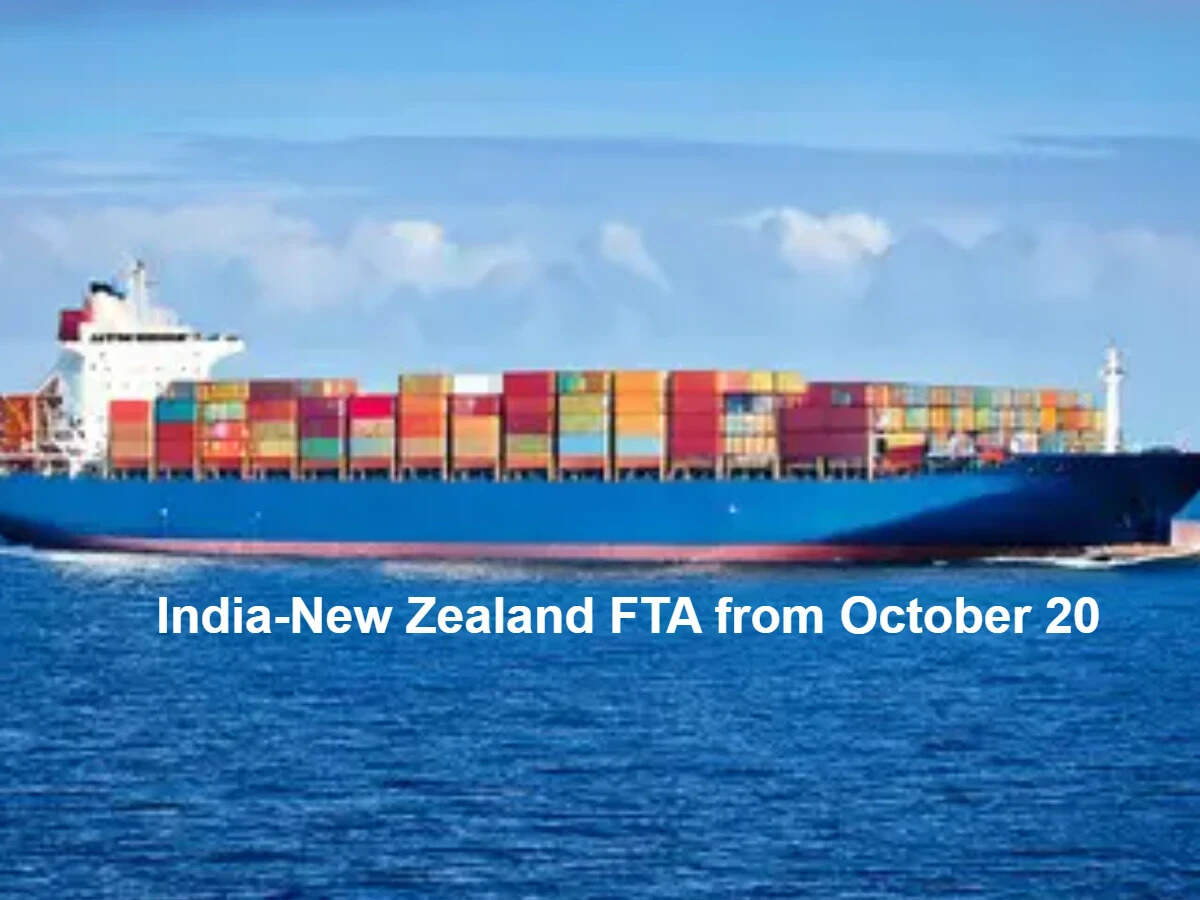
India and New Zealand's Free Trade Agreement (FTA) commenced on October 20, granting Indian businesses immediate duty-free access to the New Zealand market across all tariff categories. Commerce and Industry Minister Piyush Goyal announced the agreement, which aims to double bilateral trade in goods and services to ₹35,000 crore by 2030.
New Zealand, which imposed peak tariffs of up to 10% on key Indian products such as ceramics, automobiles, and auto parts, will now provide duty-free access to 57% of its exports to India initially, with that figure rising to 82% as the agreement fully takes effect. Conversely, tariff elimination or reduction will apply to 95% of New Zealand's exports by value.
Sensitive sectors remained outside the tariff concessions, including dairy and agricultural products like peas, onions, chickpeas, artificial honey, corn, almonds, and sugar. The New Zealand government intends to offer greater market access for kiwifruit, honey, and apples through tariff rate quotas and seasonal import windows, while safeguarding domestic farmers.
Following its approval by New Zealand's parliament on September 16, the FTA was hailed as a fair, balanced, and equitable agreement by Goyal. New Zealand's Trade Minister Todd McClay emphasized that the pact would create significant benefits for the citizens of both countries, particularly during a period of global economic uncertainty. The negotiations spanned eight months, with McClay visiting India multiple times.
Under the agreement, Indian exports of engineering goods, automobiles, auto components, aerospace, and defense-related products are expected to experience enhanced market access. Additionally, the pact provides greater access for Indian professionals and students, including a dedicated quota of 5,000 Temporary Employment Entry visas and expanded post-study work pathways.
Written by urgent.news from The Economic Times - Economy's reporting — not their text. Machine-written — may contain errors; check the original before relying on it.