Groundwater crisis in Punjab is widening social and economic divide, finds study
At 76.47%, Punjab has highest percentage of over-exploited groundwater blocks among all States; the State’s heavy reliance on groundwater for cultivating water-intensive crops, including wheat and rice, leads to rising costs for deeper wells, as well as land subsidence and deteriorating water quality
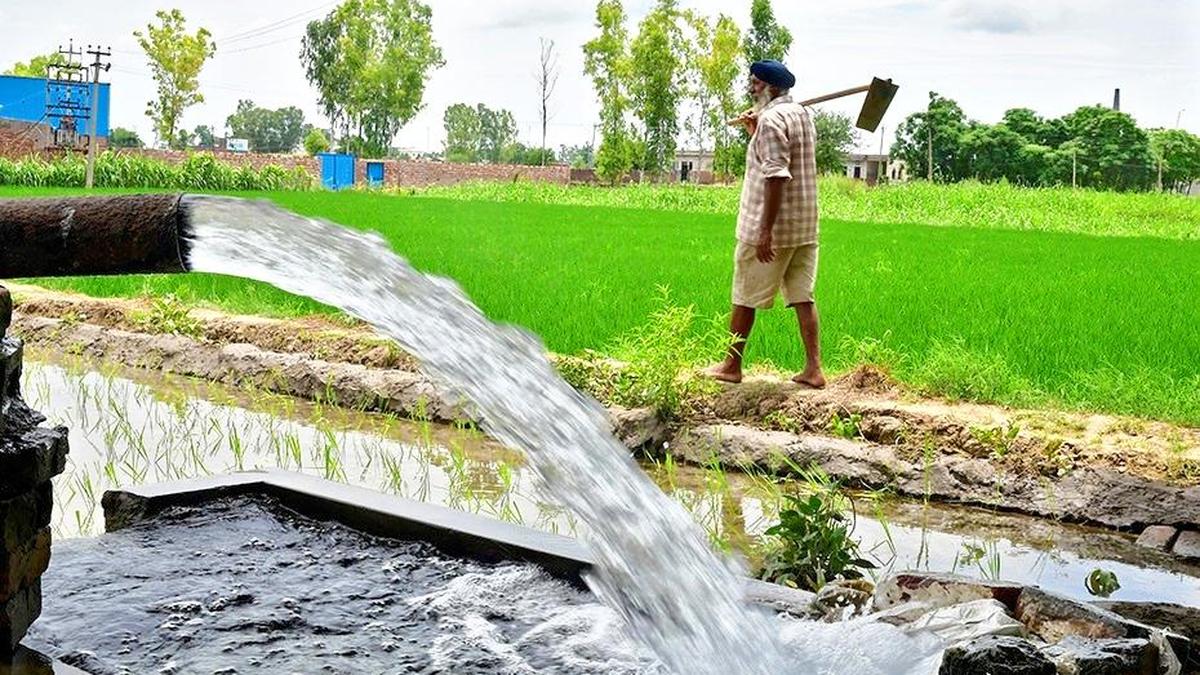
A recent study titled 'Unequal Burden of Groundwater Depletion in Punjab' reveals that the state's groundwater crisis is deepening social and economic inequality. With 76.47% of groundwater blocks classified as over-exploited and only 13.07% deemed safe, Punjab is grappling with one of the most severe water depletion crises in the country.
The primary culprit is the state's heavy reliance on groundwater for agriculture, particularly for water-intensive crops like wheat and rice. Unchecked extraction has rapidly depleted groundwater levels, compelling farmers to dig deeper wells at significant expense. The disparity is stark, with large, financially endowed farmers able to install more borewells and high-capacity pumps, accessing deeper groundwater and achieving higher returns per unit cost.
Conversely, small farmers, often leasing leased-in land, have fewer pumping motors per unit area, exacerbating economic inequality. Experts argue that the government's free agricultural electricity is exacerbating the issue, disproportionately benefiting wealthier farmers while forcing smaller farmers to buy water from them. To address this crisis, the study recommends incentivizing efficient irrigation practices, diversifying crop patterns, and implementing a more equitable groundwater access system.
Written by urgent.news from The Hindu's reporting — not their text. Machine-written — may contain errors; check the original before relying on it.
This story
This is one outlet's version. Read the fullest account.