Google smacks forehead, realizes $899+ thin-and-lights were what it was missing
'A new category,' insists the Chocolate Factory, not a premium Chromebook - yet some of the family resemblance remains
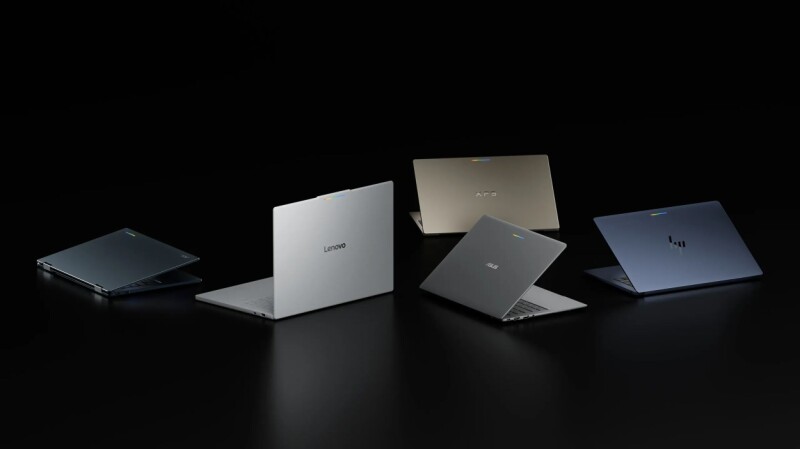
Google has unveiled a new line of premium laptops, dubbed Googlebooks, in an attempt to distance itself from the company's reputation for inexpensive and subpar hardware. Unlike traditional Chromebooks, these new devices are positioned as standalone laptops, not merely a rebranded or simplified version of ChromeOS. Google has collaborated with major manufacturers like Dell, HP, Lenovo, Acer, and Asus to bring these machines to market.
The Googlebooks feature a range of high-end components, including aluminum or magnesium alloy frames, carbon fiber, haptic trackpads, high-resolution touchscreens, and powerful processors like Intel Core Ultra 5 or Qualcomm Snapdragon X Elite. Many of these models offer 16GB of RAM and 512GB of storage, with some configurations reaching up to 32GB of RAM and 1TB of storage.
However, the starting price of $899 is only available for one Acer model, while other devices may cost as much as $1,299, placing them in the same price range as the MacBook Air.
While Googlebooks boast a baseline of 16GB of RAM, this configuration is currently the only one available for pre-order. Memory prices have reached record highs, making upgrades to 32GB of DDR5 and 1TB of storage likely to push these devices beyond the $1,500 mark. Despite the premium specs, ChromeOS device sales are expected to decline by 27.6% in 2026, as many users may find themselves unable to fully utilize the devices' capabilities without using web applications or Android apps.
Although Googlebooks can handle creative software like Adobe Photoshop and Lightroom, they are more suited for web-based tasks and Android apps. Gaming performance is also reliant on services like GeForce NOW rather than the onboard GPU. Google has also introduced several new software features for Googlebook, including application and web page handoff, native support for Android apps, and integration with Gemini AI for various tasks such as cursor locating, voice dictation, and creating custom widgets.
Written by urgent.news from The Register's reporting — not their text. Machine-written — may contain errors; check the original before relying on it.
This story
This is one outlet's version. Read the fullest account.