Freediving offers quieter, low-impact way to explore ocean, says expert
SEMPORNA: Freediving offers a quieter, lower-impact way to explore the ocean, allowing divers to minimise disturbance to marine life, says the Philippines’ top-ranked freediver Maria Noella Zosa.
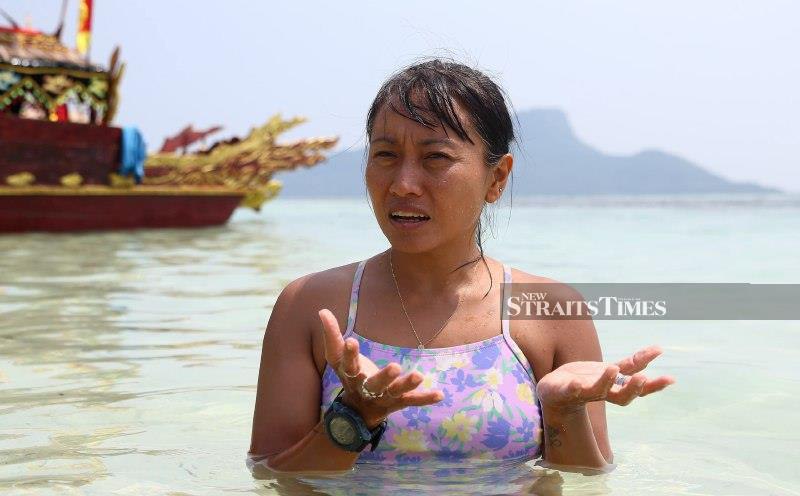
Maria Noella Zosa, the top-ranked freediver from the Philippines, argues that freediving presents a more environmentally friendly approach to exploring the ocean. She emphasizes that responsible diving is less about diving deeper and more about forming a stronger bond with the marine environment while acknowledging the impact of human activity on it. In contrast to scuba diving, freedivers have greater control over their movements and can minimize the production of bubbles, which can disturb marine life.
Zosa explained that freediving can be easily done using only a mask, snorkel, and fins. She added that it is a convenient activity that can be practiced by people of all ages. Speaking to the New Straits Times during the inaugural Pesta Igal-Igal festival in Semporna, she highlighted that freediving is not a new skill, as it's also practiced by the Bajau Laut community when they go fishing.
The 10-year veteran freediver shared that she had a documentary crew with the Bajau Laut people in the Philippines. The Sama-Bajau and the Bajau Laut in Sabah share similar cultural practices, including freediving for sustenance. She also discussed the potential for ocean communities to capitalize on their cultural heritage and traditional skills, such as wooden masks and diving fins, for tourism development.
This could include providing opportunities for these communities to directly benefit from protecting and showcasing their marine environment. The yoga instructor cited the Tagbanua community in Coron, Palawan as a prime example of indigenous people actively participating in managing tourism activities. The Tagbanua tribe, one of the oldest Indigenous ethnic groups in the Philippines, has recently been granted legal recognition of its ancestral domain, granting them rights and empowering its members to serve as traditional guardians of Coron's famous sacred lakes.
Moreover, Maria participated in a freediving showcase and an introductory lesson for festival-goers. Attendees also had the chance to try out bogo, a traditional wooden boat commonly used by the Bajau Laut community in Semporna for everyday activities like transportation, family travel, and coastal fishing.
Written by urgent.news from New Straits Times's reporting — not their text. Machine-written — may contain errors; check the original before relying on it.