For wild rivers like the Karnali, Nepal’s disaster is a warning and an answer (commentary)
Recently, a glacial collapse on the Tibetan Plateau sent a wall of water and debris roaring across the Nepal-China border. As of this publication, more than 1,000 people are confirmed dead and over 4,000 remain missing in Nepal and China combined. Rescue crews are still digging through mud to find hundreds of workers believed trapped […]
The recent glacial collapse on the Tibetan Plateau unleashed a torrential wave of water and debris across the Nepal-China border. As of now, over 1,000 lives have been lost and more than 4,000 people remain missing, both in Nepal and China. Rescue teams are still laboring through the mud to locate hundreds of workers who are presumed trapped within the tunnels of hydropower projects on the Trishuli River.
These tunnels, as wide as they could accommodate trucks, are now inundated with silt. This is not merely a natural disaster; it serves as a stark warning of the impending climate change effects on the Himalayas, and a clarion call for Nepal's relentless push to dam nearly every river in the nation.
Among those witnessing this catastrophe are two professionals who have spent three decades navigating rivers and establishing river-conservation movements from a basecamp in Kathmandu, and another who has devoted an equal amount of years defending rivers in the American West and internationally. Despite their diverse backgrounds and the rivers they champion, they have reached a unanimous conclusion: Nepal's flood disaster is a warning that necessitates a shift in how the country, and the international financiers supporting its hydropower expansion, perceive our rivers, with the Karnali River standing out as the last major river in Nepal yet to be dammed.
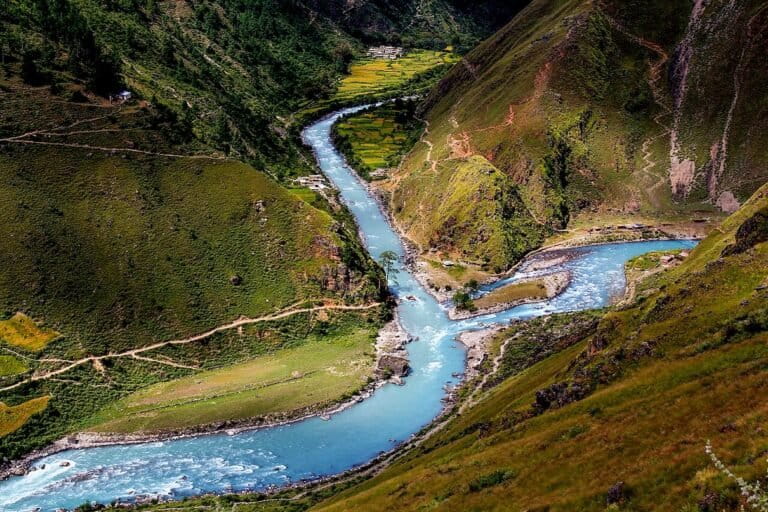
The Karnali, renowned for its status as one of the world's premier whitewater rafting rivers, is un-dammed and boasts numerous class 5 rapids. Its pristine condition makes it a stark contrast to the rivers being dammed across Nepal. This article, originally published on Mongabay, aims to shed light on this critical situation and advocate for the preservation of Nepal's unexplored rivers, particularly the Karnali River, as a vital natural resource for both the country and the global rafting community.
Written by urgent.news from Mongabay's reporting — not their text. Machine-written — may contain errors; check the original before relying on it.