Delhi Court Sets Aside Order Refusing FIR Against Sonia Gandhi, Directs Fresh Hearing
A Delhi sessions court on Monday set aside a magistrate’s order refusing to direct the registration of an FIR against Congress leader Sonia Gandhi over allegations that her name was included in the electoral roll before she acquired Indian citizenship. Special Judge Vishal Gogne directed the magistrate to consider the complaint afresh and pass a reasoned order after hearing complainant Vikas…
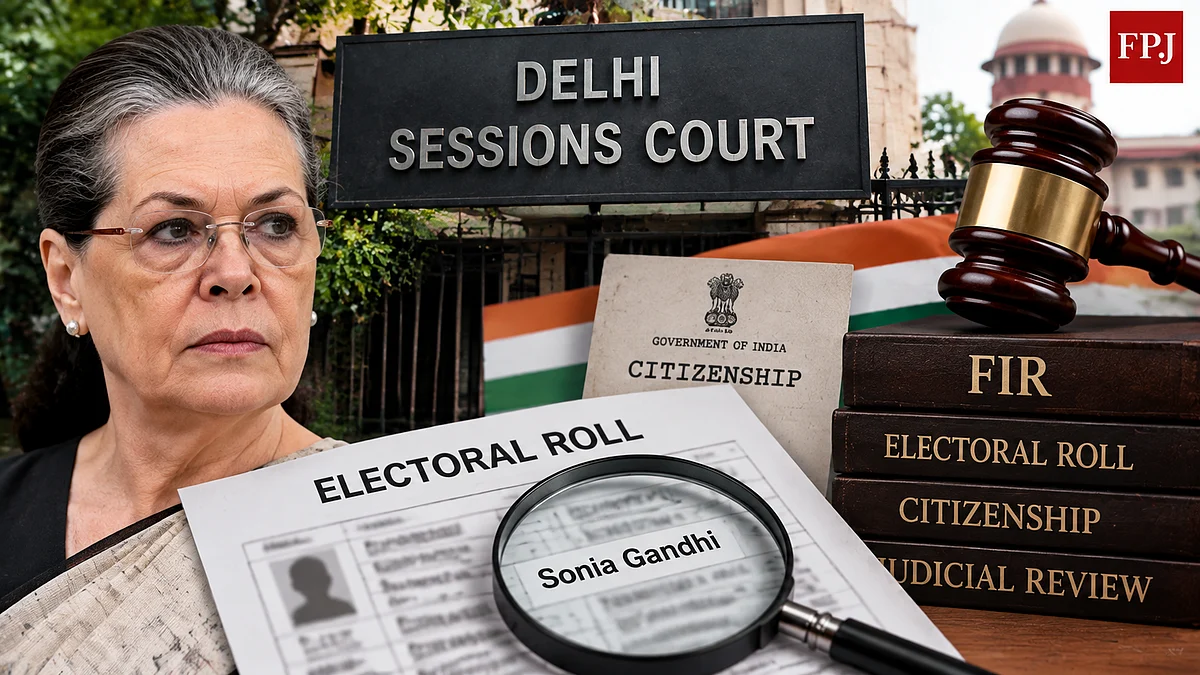
On Monday, a Delhi sessions court overturned a magistrate's decision to refuse registering a First Information Report (FIR) against Congress leader Sonia Gandhi. The court directed Special Judge Vishal Gogne to re-examine the complaint and make a reasoned decision after hearing from complainant Vikas Tripathi and the involved police officer. The matter will be reassessed by Additional Chief Judicial Magistrate (ACJM) on September 29.
The sessions court found that the initial order was "non-speaking," lacking proper reasoning. It noted that the magistrate did not adequately consider whether the allegations in the complaint constituted a cognizable offence, such as tampering with an electoral roll, fraudulent voter inclusion, or false declarations. The court pointed out that allegations involving cheating and forgery required a thorough examination, especially when Gandhi's name appeared, was deleted, and reappeared on electoral rolls in 1980, 1982, and 1983.
Judge Gogne also criticized the magistrate for not hearing the police officer's arguments and not calling for a status report from the police station. The court ruled that the magistrate's reasoning about the Central Government's authority over citizenship and the Election Commission's jurisdiction over electoral rolls was improper.
Importantly, the sessions court did not order the FIR registration itself. Instead, it directed a revisional court to decide whether to register the FIR under Section 175(3) of the Bharatiya Nagarik Suraksha Sanhita (BNSS), a task reserved for the magistrate.
The complaint alleges that Gandhi's name appeared on the electoral roll of the New Delhi constituency in 1980, despite her becoming an Indian citizen only in April 1983. Tripathi claims forged documents were used to secure her inclusion in the electoral roll. The allegations remain unproven, and the court's order does not determine whether Gandhi committed any offense.
Gandhi has denied the allegations, calling the case "wholly misconceived, frivolous, politically motivated, and an abuse of the process of law." She argued that Tripathi had not provided supporting documents, such as copies of voter registration applications, citizenship-related records, or purported forged documents.
The complaint was initially dismissed by Additional Chief Judicial Magistrate Vaibhav Chaurasiya on September 11, 2025, who held that the court could not interfere with the Election Commission of India's jurisdiction by seeking an FIR against Gandhi. Tripathi later challenged that decision through a criminal revision petition, leading to the current situation.
The court's decision sends the case back for a fresh examination, where the ACJM will consider the complaint, hear relevant parties, conduct an inquiry, and provide clear reasons for the final decision.
Written by urgent.news from Free Press Journal's reporting — not their text. Machine-written — may contain errors; check the original before relying on it.