Cross-border crises test Indonesia’s regional credibility
When environmental crises cross borders, government communication becomes crucial to managing their impacts and protecting Indonesia’s international reputation.
Environmental crises spanning borders tested Indonesia's regional standing in early September when Mount Anak Krakatau erupted, spewing volcanic ash high into the atmosphere. This eruption, reaching heights of 15,000 meters, produced rumbling sounds audible from up to 700 kilometers away. Eight airports halted their operations, leading to widespread flight disruptions and the stranding of over 270,000 passengers.
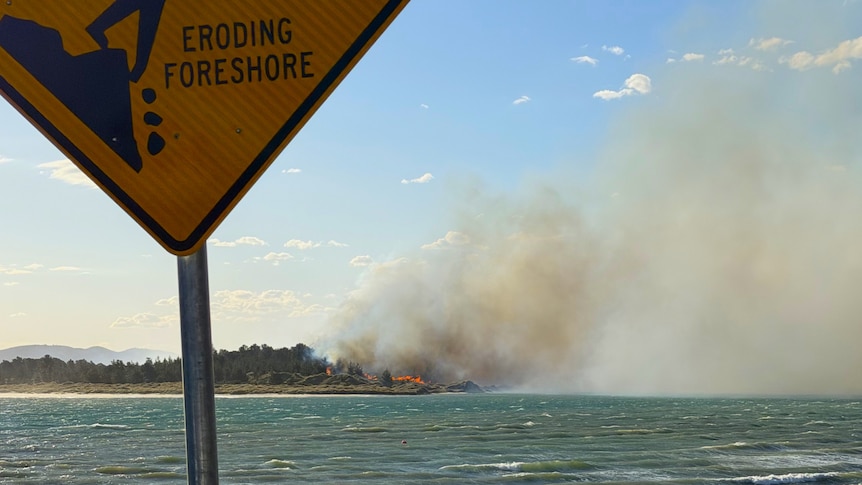
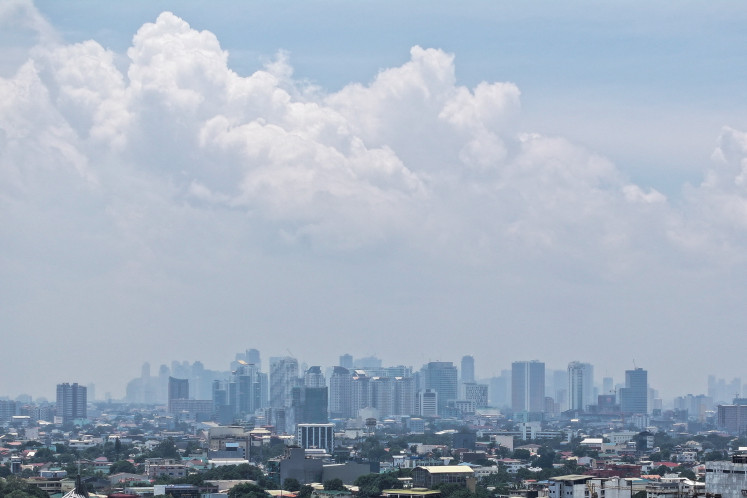
Concurrently, smoke from forest fires in Kalimantan crossed national borders, prompting a surge in asthma cases in Sarawak, Malaysia, up by 259 percent. In Manila, pollution levels exceeded four times the World Health Organization's safe limit. These incidents underscore a significant hurdle for Indonesia: when a domestic crisis escalates into an international issue, its ramifications transcend mere physical destruction.
Such events can tarnish diplomatic ties, regional trust, and Indonesia's standing as a responsible global player. Locally, the volcanic ash caused eye irritation and prompted schools to shift to remote learning. Globally, an eruption can throw a wrench into regional aviation, tourism, and travel sectors, necessitating swift coordination and information exchange with neighboring nations.
Transboundary haze introduces yet another layer of complexity. Smoke from Indonesian forest fires drifts into neighboring countries, affecting communities whose land is often owned by companies with ties to Singapore, Japan, and Malaysia. This issue is not just environmental but also a matter of cross-border corporate accountability and diplomacy.
Indonesia's vulnerability to climate hazards and a surge in wildfires in recent years may further solidify perceptions of Indonesia and its regional neighbors as potential sources of environmental risks. For a nation aspiring to assume a greater role in regional and global affairs, this raises a critical question: can Indonesia prove its capability to manage risks that extend beyond its own borders?
This query gains particular relevance within ASEAN, a region where the ASEAN Disaster Risk Communication Framework emphasizes the importance of timely, accurate, and trustworthy information sharing among national agencies, ASEAN centers, regional entities, and international partners. Indonesia must demonstrate its proficiency in disaster communication both at home and abroad, encompassing three key types of information: physical coping, psychological coping, and reputational repair.
Physical coping information encompasses guidance on risk reduction, such as updates on air quality, details on affected areas, health risks, protective measures during forest fires or volcanic eruptions, and information on ash, gases, visibility, and restricted zones. Psychological coping information aims to alleviate fear and uncertainty, for instance, through assurances from Indonesia's National Disaster Mitigation Agency (BNPB) and the meteorological agency BMKG that the Anak Krakatau eruption posed no tsunami risk.
These initial layers of communication have an international dimension that can be easily overlooked. Timely and consistent information enables neighboring governments to gauge risks and coordinate their own responses, while a lack of information, contradiction, or delay can compel other countries to make decisions based on incomplete data, a situation that is likely to leave a lasting impression.
The third layer, reputational repair, presents a distinct challenge, as reputational damage varies depending on the nature of the disaster. Reputation repair involves strategic communication aimed at restoring a country's image, especially when a crisis involves culpable acts, negligence, or inadequate handling that leaves the country bearing responsibility and facing criticism.
The Anak Krakatau eruption, in this context, can be viewed as a no-fault crisis, as Indonesia did not instigate the volcanic eruption. Consequently, its reputation hinges largely on the government's response, communication of risks, and efforts to shield affected communities. In contrast, forest fires, often a result of human activity, negligence, and insufficient legal enforcement, present a different scenario.
Attributing these fires to factors like dry weather or the Super El Niño, while true, may still be perceived negatively by audiences in affected regions like Sarawak and Manila. To an international audience, attributing the fires to climatic conditions might serve as an alibi rather than a genuine explanation. Words, though powerful, cannot repair reputations when audiences are eagerly awaiting tangible action: enforcing environmental laws, investigating culpable parties, bolstering fire prevention measures, and addressing the underlying conditions that contribute to recurring fires.
This distinction matters diplomatically, as a natural disaster evaluates Indonesia's capacity to respond to an unavoidable hazard, while a recurring fire crisis can also test Indonesia's and its neighbors' willingness to openly communicate about shared responsibility for risks that traverse borders. For Indonesia, disaster communication extends beyond a mere public information exercise; it also serves as a vital public diplomacy endeavor.
When crises transcend borders, the government must deliver rapid, transparent, and consistent communication. However, communication cannot stand in for action. In the realm of natural hazards, this means showcasing preparedness, competence, and resilience.
Written by urgent.news from The Jakarta Post's reporting — not their text. Machine-written — may contain errors; check the original before relying on it.