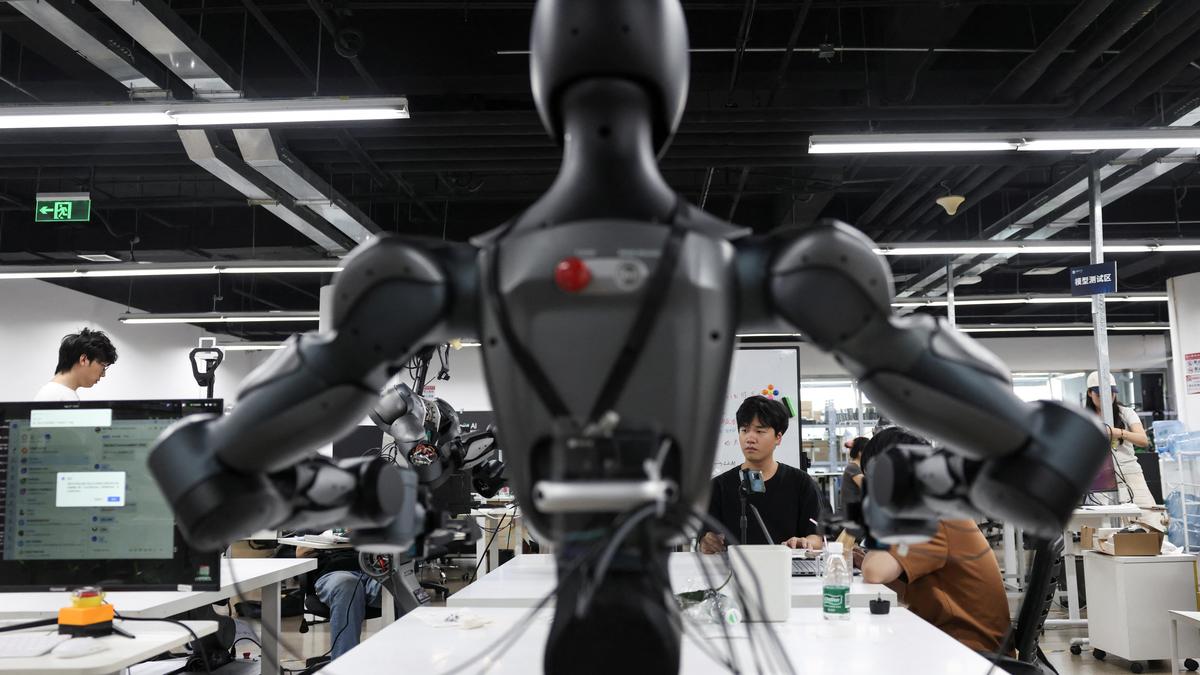
China, US fight for AI throne but they've concerns
The upcoming AI meeting between U.S. President Donald Trump and Chinese leader Xi Jinping will likely be influenced by growing concerns over the potential threats of rogue artificial intelligence to global safety. Amid the competition between the two nations, both countries are wary of how AI in each other's possession could negatively impact their interests.
During discussions with Chinese Vice Premier He Lifeng, U.S. Treasury Secretary Scott Bessent proposed the establishment of a mechanism for AI dialogue and a notification system for incidents impacting national security. Both nations expressed interest in addressing AI risks, such as cyberattacks, biological misuse, and loss of human control, which could harm both countries.
Chinese AI governance documents highlight sectors like finance, electricity, telecommunications, and transportation as potentially vulnerable to frontier-AI risks. Chinese officials have shown willingness to discuss AI-related incident information sharing with U.S. experts, which could help build technical confidence over time.
Despite the strong focus on AI competition, there is still potential for cooperation on safety issues. China is increasingly attentive to risks like loss of control, malicious use, and cyber threats posed by AI. The U.S. has emphasized the importance of shared goals and common threats, while China has accused the U.S. of pursuing an AI monopoly and restricting its growth.
AI development remains a contentious issue, with both sides placing significant importance on maintaining a technological edge. However, constraints on U.S. export controls on advanced technologies related to AI have not stopped China from developing frontier-competitive models at a lower cost. Despite these developments, the narrow space for collaboration between the two nations may limit the potential for fruitful discussions on AI during their upcoming meeting.
Written by urgent.news from Global News's reporting — not their text. Machine-written — may contain errors; check the original before relying on it.
This story
This is one outlet's version. Read the fullest account.