CFTC Examines Agentic AI’s Growing Role in Finance
The Commodity Futures Trading Commission (CFTC) is hosting a series of roundtables devoted to new technologies in U.S. financial markets. The Frontier Forum series, hosted by the CFTC’s Innovation Task Force, will kick off next month with a discussion of artificial intelligence and agentic finance, the regulator announced Monday (Sept. 21). “The technologies transforming our […] The post CFTC…
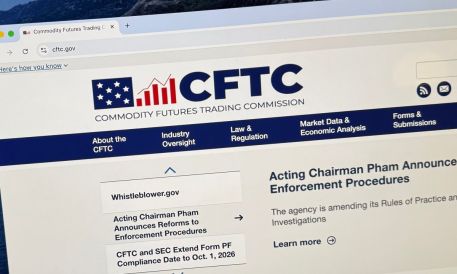
The Commodity Futures Trading Commission (CFTC) is hosting a series of roundtables to discuss new technologies in U.S. financial markets. The Frontier Forum series, led by the CFTC's Innovation Task Force, will begin next month with a focus on artificial intelligence and agentic finance, the regulator announced on September 21. CFTC Chairman Michael S. Selig emphasized the need for the Commission to engage directly with those building, using, and studying these technologies.
The inaugural forum is set for October 28, aiming to foster public dialogue on new financial technology. The CFTC seeks to promote responsible innovation while safeguarding market participants and maintaining the integrity and resilience of U.S. financial markets. The public can submit speaker nominations to Innovation@CFTC.gov.
Meanwhile, PYMNTS reported that as states and local governments explore AI systems capable of acting autonomously, the Urban Institute recommends establishing governance structures before deploying such systems in public services. The institute's agentic AI playbook aims to assist officials in responsibly implementing these technologies, which can independently plan and act towards goals.
Unlike conventional generative AI, agentic systems can autonomously make decisions. Christopher Phillips, director of financial crime industry engagement at Flagright, discussed the role of agentic systems in financial compliance during an interview with PYMNTS. He highlighted the benefits of these agents, who can provide banks with a consistent and thorough approach to investigating financial crimes.
Unlike human investigators, agentic AI systems do not get bored, fatigued, or forgetful, resulting in a more robust and easily auditable output. This shift in the risk equation implies that increased automation does not necessarily lead to reduced control. Well-designed agentic AI could provide enhanced visibility into financial crime decision-making processes.
Traditional financial crime quality assurance typically involves sampling a percentage of cases to extrapolate findings across the broader program. However, with agentic AI, it is possible to conduct a thorough audit of every single case.
Written by urgent.news from PYMNTS's reporting — not their text. Machine-written — may contain errors; check the original before relying on it.