Cathay calls on Hong Kong to map out long-term sustainable fuel plan beyond 2030
Hong Kong flag carrier Cathay Pacific Airways has called on the government to map out a longer-term plan for sustainable aviation fuel (SAF) beyond 2030, including mandatory targets and consistent policies to enable the industry to scale up and meet the city’s goal. The airline made the call as a mainland Chinese official also proposed on Monday that authorities in the Greater Bay Area could…
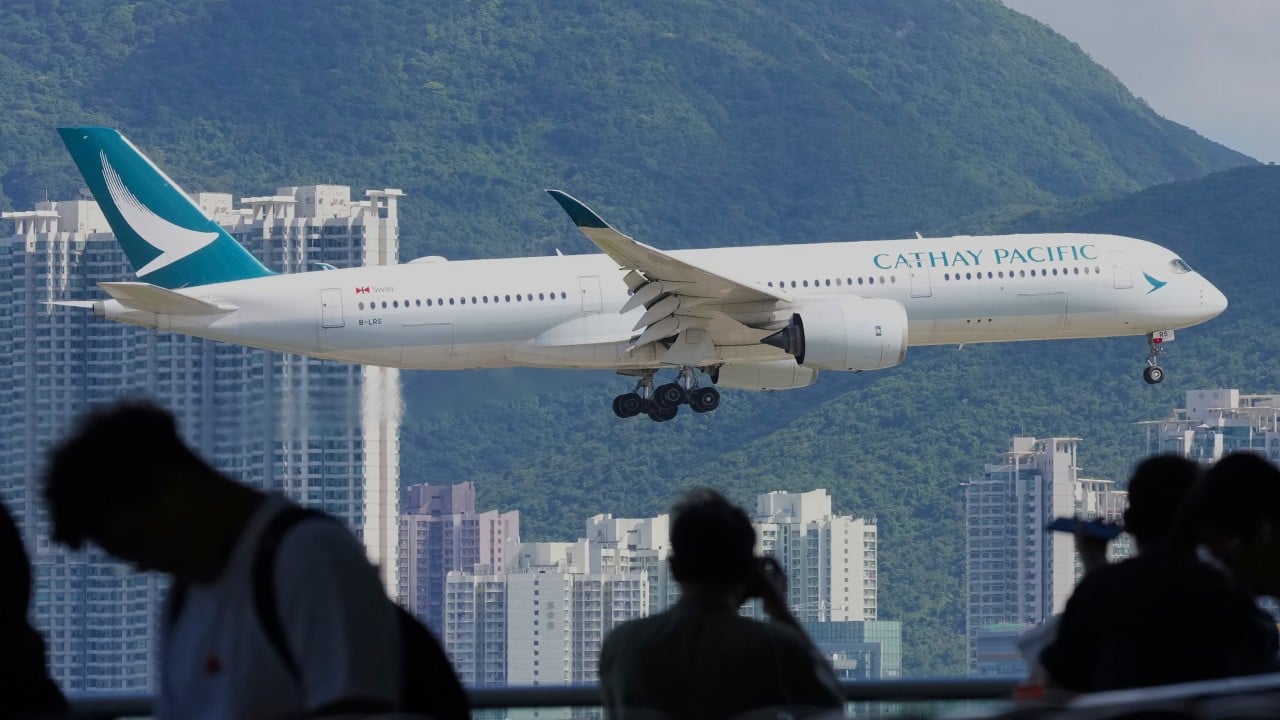
Cathay Pacific Airways has urged Hong Kong's government to outline a long-term strategy for sustainable aviation fuel (SAF) exceeding 2030, encompassing mandatory targets and steady policies to facilitate industry expansion and achieve the city's objectives. A mainland Chinese official also suggested on Monday that the Greater Bay Area authorities could introduce more advantageous policies, such as subsidies, to boost sustainable fuel market sales.
Cathay Group CEO Ronald Lam Siu-por emphasized that scalability remains the challenge, as SAF currently accounts for "well under 1 per cent" of global jet fuel consumption. He stressed that both supply and demand, along with policy and finance, must align. Cathay Group already supports the market by purchasing and utilizing SAF, investing in future supply and advanced technologies, collaborating with corporate and cargo customers through its corporate SAF program, and joining the Hong Kong Sustainable Aviation Fuel Coalition.
The airline's general manager for sustainability, Grace Cheung, requested the government to provide a longer-term roadmap to enable companies to prepare accordingly, citing the European Union's 2050 SAF road map as an example. Cheung also advocated for consistent policies between Hong Kong and mainland authorities, including tax considerations for SAF produced in the mainland.
Cathay Pacific's SAF usage in 2025 reached around 0.7 per cent, a significant share globally, but scaling up further depends on market and policy developments. Yong Qu, head of Guangzhou's energy division, proposed financial subsidies and policy incentives to convert production capacity into actual sales, as increasing production is relatively easy, but transforming that capacity into real-world applications demands more effort.
Written by urgent.news from South China Morning Post - Hong Kong's reporting — not their text. Machine-written — may contain errors; check the original before relying on it.
This story
This is one outlet's version. Read the fullest account.
- ‘Cantonese is strictly forbidden’: Hong Kong school principal apologises after unapproved language ban sparks outrage hongkongfp.com
- 14 Malaysians held in Hong Kong over suspected drug smuggling nst.com.my
- Cathay calls on Hong Kong to map out long-term sustainable fuel plan beyond 2030 scmp.com
- F-35 parts diversion to Hong Kong under probe in U.S. Congress japantimes.co.jp