Buipe Hausa Festival: National President Tafida calls for vigilance, unity, and youth reform
The ancient town of Buipe in the Savannah Region came alive over the weekend as the Hausa community gathered for their annual cultural festival, a vibrant celebration of language, tradition, and economic heritage that drew chiefs, community leaders, and diaspora members from across Ghana and beyond.
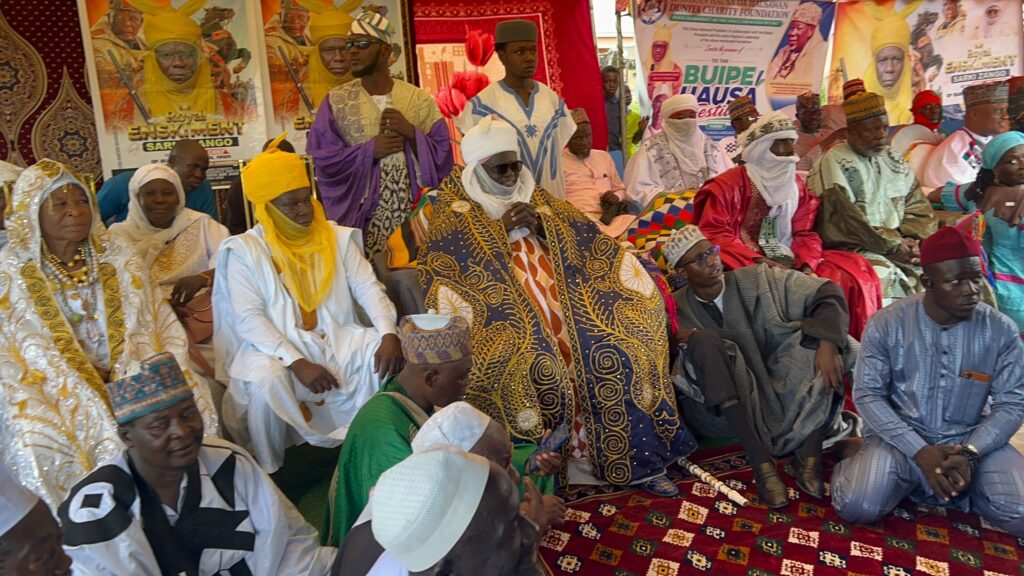
Over the weekend, the ancient town of Buipe, located in Ghana's Savannah Region, buzzed with excitement as the Hausa community came together for their annual cultural festival. This event showcased the richness of Hausa heritage, featuring traditional attire, horsemanship displays, and kalangu drumming, while also sending an important message about the people's pivotal role in Ghana's national story.
During the festival, Alhaji Ahmed Tijani Abubakari Ali, the National President of the Hadinkan Hausa da Hausawa, delivered a powerful address. Known widely as Tafida, he emphasized the need for vigilance, urging Zongo communities across Ghana to be cautious when welcoming strangers—particularly those arriving from neighboring countries without proper background checks.
Tafida reminded the community of their trade, faith, and hospitality, but warned against naivety in allowing individuals who may not share their values to enter their communities.
Tafida also addressed what he referred to as a "quiet injustice" faced by Hausa people in Ghana—the difficulty in obtaining a Ghanaian passport despite their long-standing citizenship. He argued passionately that a passport is not a favor, but a fundamental right for Ghanaians, regardless of their ethnic background. His remarks struck a chord with many attendees—families who have lived in Ghana for generations but continue to face bureaucratic obstacles questioning their legitimacy.
Perhaps the most pressing concern Tafida voiced was the escalating issue of drug abuse among Zongo youth. Sarki Abdullahi Mohammed, the Zongo Chief of Buipe, highlighted the alarming state of affairs, stating that the youth were being consumed by addiction. He called for parents to take responsibility as first educators, chiefs to enforce accountability, and the community to create alternatives such as skills training, education, and economic opportunities to divert young people away from drug abuse.
General Secretary Suhail Abdul Mumin, in his keynote speech, reframed the Hausa narrative from that of marginalized migrants to economic architects. He highlighted the historic significance of Zongo settlements as Ghana's earliest Special Economic Zones, dating back centuries before the formal establishment of regional economic blocs.
Suhail pointed out that Hausa trading networks had been instrumental in linking the Sahel to the coast, pioneering livestock supply chains, textile trade, and leather craftsmanship. These activities laid the foundation for cities like Kumasi, Salaga, Tamale, and Accra. He emphasized the language's strategic value in contemporary trade, noting that Hausa serves as a lingua franca that bridged ethnic differences in markets across Ghana, connecting traders from diverse ethnic groups.
As the festival concluded, Tafida reminded the Hausa people of their strength and capability. He asserted that the community is not merely a beneficiary but a builder of Ghana's progress. Tafida emphasized that the Hausa people have historically built markets, trade routes, and infrastructures. He encouraged them to continue this legacy by first building themselves through education, economic empowerment, and community unity.
His call to order, unity, and pride echoed throughout the event, leaving a lasting impact on the community long after the final drumbeat had faded.
Written by urgent.news from MyJoyOnline Ghana's reporting — not their text. Machine-written — may contain errors; check the original before relying on it.