Aboard the Lake Guardian, Scientists Search for Clues About the Great Lakes’ Health
One of the longest-running lake monitoring programs provides data critical for researchers and resource managers.
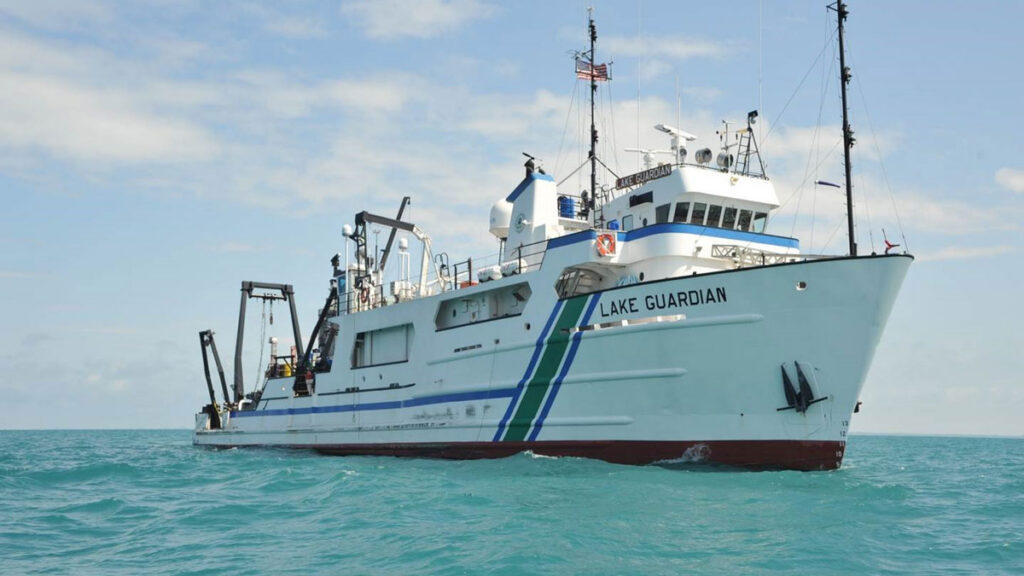
On the EPA research vessel Lake Guardian, scientists embark on a 12-hour shift, surveying the Great Lakes to gather data on water quality and food web conditions. Physical scientist Anne Scofield, part of the EPA's Great Lakes National Program Office, leads the 43rd annual summer survey, which spans all five Great Lakes and takes about a month to complete.
The vessel has already traveled over 12,500 nautical miles and sampled 282 locations since April. Scofield compares the vastness of the lakes to being in the ocean, describing it as a foundational dataset used by scientists and natural resource managers to track the impact of stressors like nutrient pollution, chemical contaminants, and invasive species on the Great Lakes' ecology.
At night, scientists deploy nets to collect mysids, the largest zooplankton in the Great Lakes and an essential food source for fish. They also measure various physical characteristics and drill sediment cores to understand changes in water chemistry and contaminants over time. An in-depth study of lake bed invertebrate communities is conducted annually, providing insights into changes to populations of invasive mussels.
The data collected by the Lake Guardian team is used to update the EPA's State of the Great Lakes reports, which are crucial for fishery managers and other resource decision-makers.
Written by urgent.news from Eos's reporting — not their text. Machine-written — may contain errors; check the original before relying on it.