Why are world leaders at the UN next week and what will they talk about?
WORLD leaders gather in New York every September for several days of high-level debate starting on Tuesday at the United Nations General Assembly.
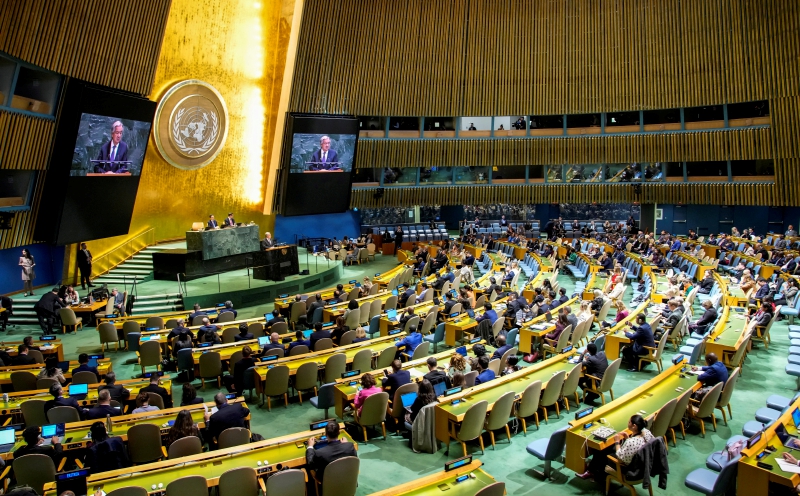
World leaders will convene at the United Nations General Assembly next week to discuss various global issues. The 81st session of the assembly begins on Tuesday, marking the start of tradition for Brazil to speak first, followed by other members based on hierarchy. Leaders are asked to keep their speeches to 15 minutes, with Fidel Castro holding the record for the longest opening speech at about 4-1/2 hours in 1960. This year's theme is "Restoring Trust, Managing Transformation: A United Nations That Delivers for All."
Topics likely to be discussed include artificial intelligence, with UN Secretary-General Antonio Guterres emphasizing the need for common guardrails to prevent a race to disaster. The UN Security Council may hold an informal meeting with Arab leaders, with Iran expected to be a key topic, as Iranian President Masoud Pezeshkian's travel to New York is uncertain.
Ukrainian President Volodymyr Zelenskyy will address the assembly, seeking global support for Ukraine amid the ongoing war, while Russian Foreign Minister Sergei Lavrov will also speak.
Israel's Benjamin Netanyahu will address the assembly on Thursday, despite being wanted by the International Criminal Court for alleged war crimes. Palestinian President Mahmoud Abbas is unlikely to attend in person but may appear via video. The UN Security Council may hold a meeting on the sidelines to promote a two-state solution between Israel and Palestine, but progress is uncertain.
Lastly, there is a process underway to choose a new UN secretary-general, with Guterres set to finish his term in December 2026, and the five veto powers in the Security Council needing to agree on a candidate.
Written by urgent.news from New Straits Times's reporting — not their text. Machine-written — may contain errors; check the original before relying on it.