Wahl in Mecklenburg-Vorpommern: AfD im Nordosten leicht vor SPD - CDU nur knapp im Landtag
Die AfD liegt an Ostseeküste und Seenplatte knapp vor der SPD. Die CDU ist nach den ersten Hochrechnungen nur hauchdünn im Parlament und muss zittern. Wer kann am Ende regieren?
In the Mecklenburg-Western Pomerania state election, the Social Democratic Party (SPD) did not fully catch up to the Alternative for Germany (AfD), but Minister-President Manuela Schwesig is expected to continue governing. The CDU is facing another setback and may end up with only a slim presence in parliament for the first time since the founding of the Federal Republic.
The left party has seen a significant decline in support, but remains a potential partner for Schwesig. The Greens and the CDU could remain nearly tied in the Landtag, but initially worried. The FDP failed to surpass the five-percent hurdle. The SPD could not completely match the AfD, and Schwesig's party is now likely to need a third partner to retain power.
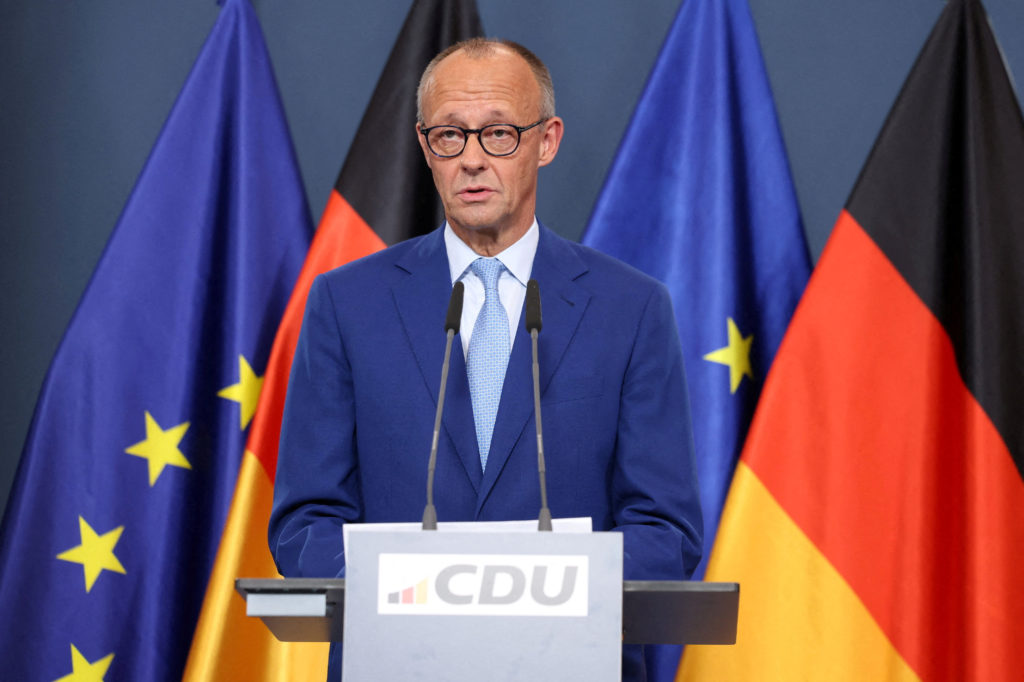
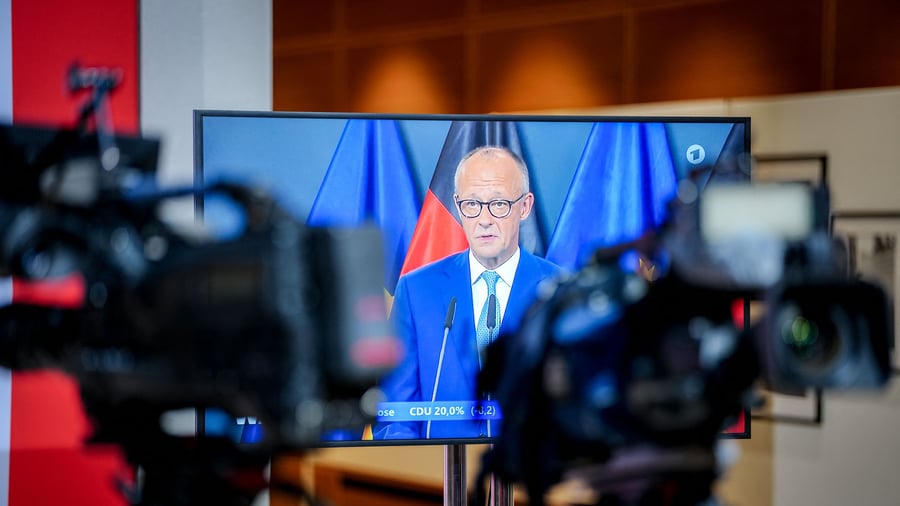
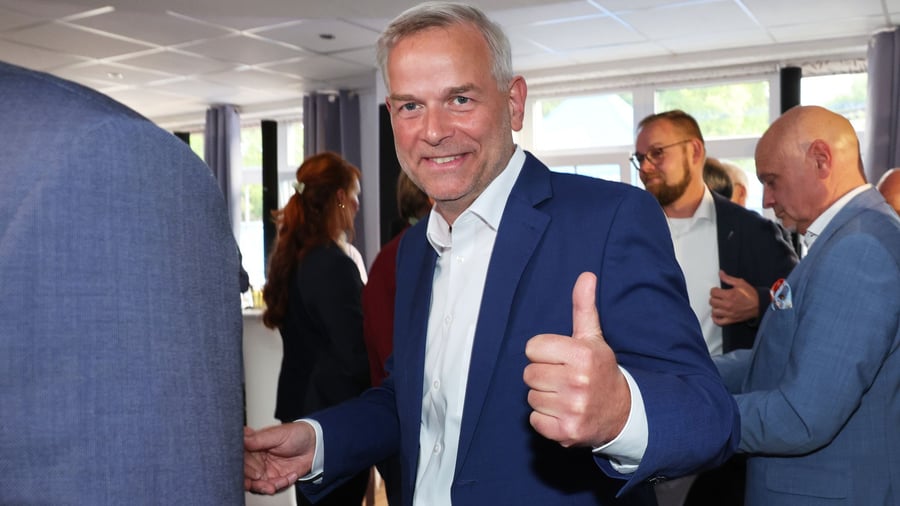
The AfD, led by candidate Leif-Erik Holm, doubled its result (16.7 percent) from the previous election, but still lacks a partner to form a government, as no other party is willing to coalition with them. They are now the strongest force in their third Landtag, following Thuringia and Saxony-Anhalt. The CDU suffered a major defeat within two weeks, losing more than half of its votes (13.3 percent).
The left party remains far below expectations, at 6.2 to 7.4 percent. The Greens also slipped to 5.5 percent (6.3 percent). The FDP saw a dramatic fall to 1 to 1.1 percent (5.8 percent), now only represented in four state parliaments nationwide. The BSW faces uncertainty with the lowest turnout since the election. The seat distribution in the Schwerin Castle could be: SPD 26 to 28 seats (2021: 34), AfD 27 to 30 (14), Left 5 to 6 (9), CDU 4 (12), Greens 4 (5).
The majority is 36 seats. Around 1.3 million people were eligible to vote, including 16- and 17-year-olds for the first time. Voter turnout is projected to be 75.5 percent (70.8 percent). Pressure is growing on Merkel once again, following the CDU's failure in Saxony-Anhalt. She spoke of a "disaster" after her party's eight ministers pledged their support to her.
The discussion is likely to flare up again, putting pressure on the coalition. Schwesig stated this was the toughest state election so far, saying "what a chase." She declared her claim to the position of government chief. However, the AfD also declared their intention to govern. "We have the mandate to lead Mecklenburg-Western Pomerania," Holm said.
He invited all parties, stating that the issue is not about any one party or person, but about restoring the country. Despite the triumph, forming a government for Schwesig may not be easy, as it cannot be done with the left party alone. Therefore, she requires additional support, such as the Greens. The CDU, if present in parliament, is unlikely to join a coalition with the left, as they are bound by an internal decision to avoid being the successor to the SED, the East German state party.
An alternative all-but-possible scenario is a minority right-left alliance, similar to the partnerships in Saxony and Thuringia. The formation of the government remains tight - unlike in Saxony-Anhalt. The new Landtag must convene within 30 days of the election and choose a government chief within four weeks, by November 17th at the latest.
Failure to do so could result in a vote to dissolve the parliament and an immediate election, or a single-day appointment of a government chief with a simple majority. Polarization between the AfD and SPD dominated the campaign, with the AfD's victory in Saxony-Anhalt heightening the debate. The right-wing party advertised with Holm as Minister-President, while the SPD was portrayed as "The Woman Against Blue."
This failed to gain much ground for the non-AfD side, merely redistributing votes towards the SPD. Issues such as education policy and the unpopular federal government reforms weighed heavily on the campaign. Schwesig responded with sharp distance from the Berlin coalition, which advises her party. She distanced herself from the federal government's stabilization plans for rent and care insurance, demanding loudly for a reduction in federal burden.
Written by urgent.news from Handelsblatt's reporting — not their text. Machine-written — may contain errors; check the original before relying on it.