Supreme Court wants law to safeguard multi-crore court deposits
Supreme Court highlights the absence of uniform rules governing court-ordered deposits; it says asymmetry in treating such deposits is causing further pendency and wants these sums protected from ad-hoc management
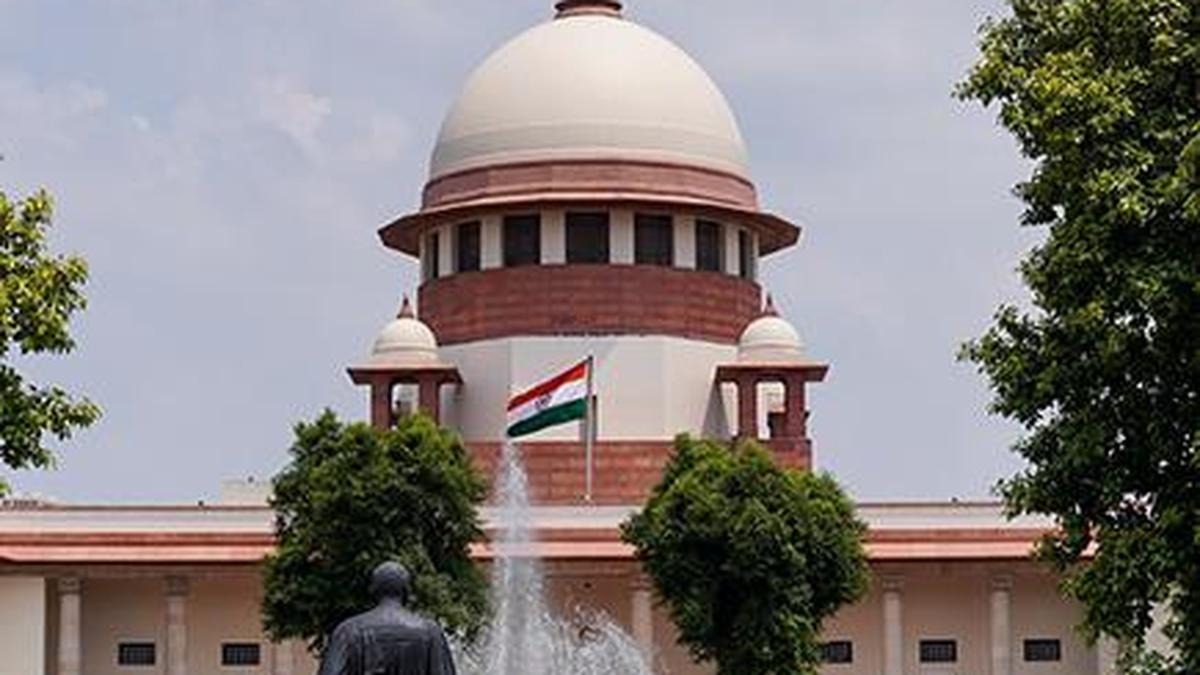
The Supreme Court has emphasized the need for a law to safeguard multi-crore deposits made by litigants across courts and tribunals in India during pending appeals. In a recent judgment, Justices P.S. Narasimha and Alok Aradhe pointed out the lack of uniform rules governing court-ordered deposits, leading to inconsistent interest rates and post-judgment litigation over the interest accounting of these deposits.
The absence of standardisation in the process of handling deposits undermines the principle of the time value of money and the accrual of interest in a clear manner. The court suggested the U.S. model of a common platform where deposits made in courts and tribunals are pooled into one unified scheme and invested in the most beneficial financial instrument for litigating parties.
This would create certainty in interest rates, increase accessibility for litigants, and ease the burden on courts/tribunals regarding investment and handling of these deposits. The apex court recommended a statutory framework modeled after international precedents, specifically pointing to the U.S. Court Registry Investment System (CRIS).
Written by urgent.news from The Hindu's reporting — not their text. Machine-written — may contain errors; check the original before relying on it.
This story
This is one outlet's version. Read the fullest account.