Santander afina la estrategia en México para crecer sin elevar el riesgo
Junto con España, es el mercado donde más incrementa el préstamo. El banco cree que hay una oportunidad y pone el foco en las grandes corporaciones y las empresas medianas. Leer
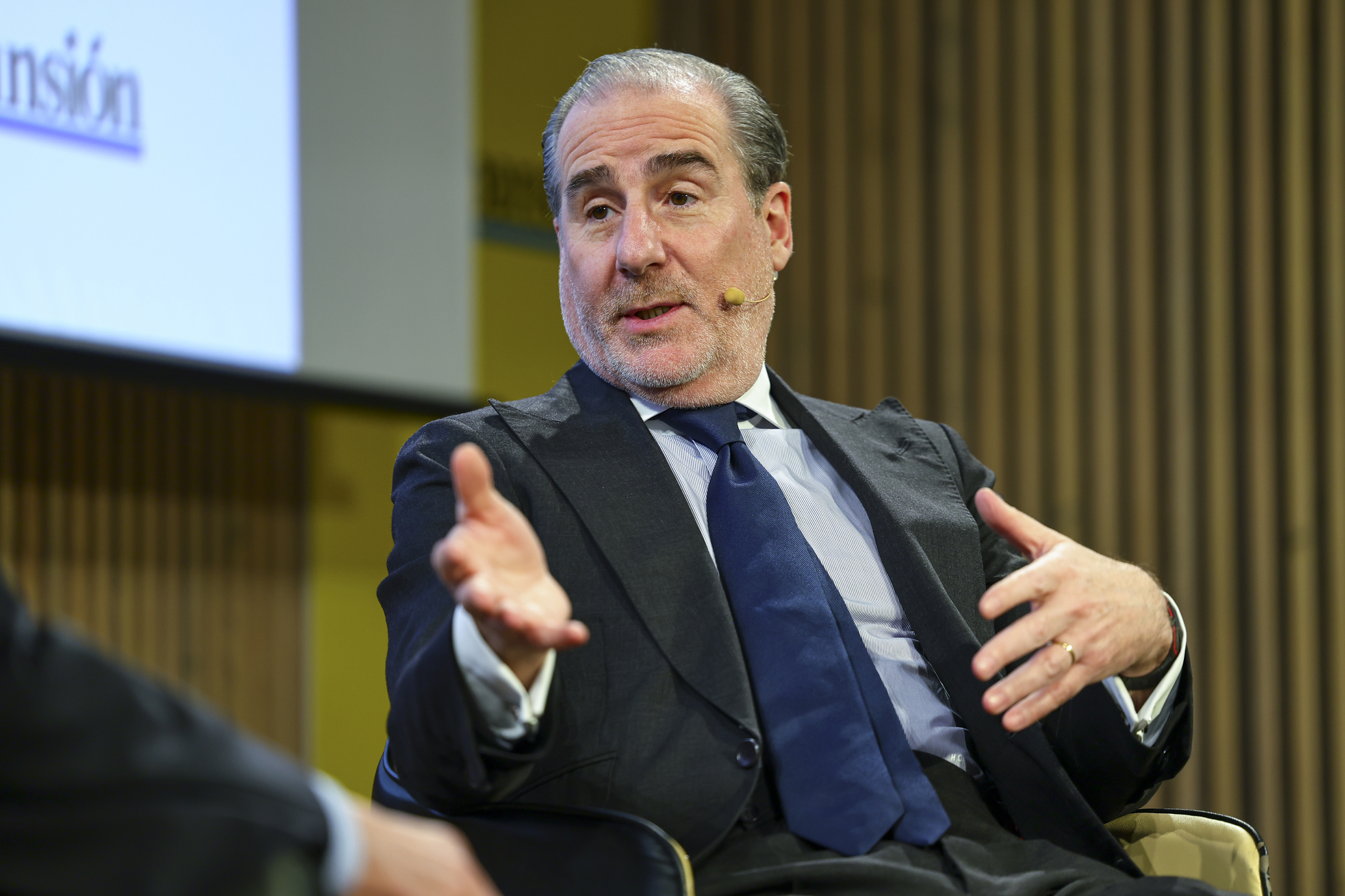
Santander has refined its strategy in Mexico to grow without increasing risk. The bank believes it has a significant growth opportunity in the country, but it does not want to assume a risk that could backfire. The goal is to strike a balance and keep the bank afloat. Large and medium-sized enterprises are the main targets. Santander has kept the credit spigot open and is now accelerating its lending, according to its deputy chairman, Hector Grisi.
Other parts of the credit universe will exercise caution, with strict capital discipline and caution if any danger is detected. The ultimate goal is for Mexico to remain the engine of lending that it has proven to be in the first half of the year. This growth is growing at 8%, the highest among the group's markets, excluding Argentina and tied with Spain.
Credit cards and personal loans are part of this policy that has already had consequences. Santander has reduced its appetite for credit card and personal loan businesses, considering them less profitable due to higher risk costs. However, the labor market has improved and shown greater solidity. If this continues, Santander does not rule out resuming growth in credit cards and personal loans.
It will be done gradually and with known clients to test their strength and avoid any damage if they need to retreat. Financing for car purchases and mortgages has followed a different path. The bank is perceiving greater security in this field, with a corresponding increase in profitability. It has also opened its doors, albeit with more caution, in employer-backed loans.
Competition is not an obstacle. Mexico is one of the countries with the most players in the business, both traditional banks and fintechs. There are more than half a dozen. The latest move has been made by Nubank, a Brazilian entity backed until last year by Warren Buffett, which obtained a banking license in Mexico, where it has been the largest neobank.
Grisi does not consider this a problem; it is positive that some of our competitors are becoming banks. This makes the competition conditions the same for everyone, he signals. Deposits have become the main battlefield of rivalry, and Santander has grown by 4% even with an active policy of reducing its financing cost. The medium interest rate it paid in the second quarter was 3.31%, more than 100 basis points below the 4.36% in the same period last year.
The short-term uncertainty is the renegotiation of the treaty between the United States, Mexico, and Canada. Grisi believes it will be a complicated conversation, but there is a clause that allows it to be automatically extended if there is no consensus among the parties. He also assures that Mexico needs the United States as much as the latter needs Mexico.
Santander is third in the Mexican ranking, with 17.5% of mortgages and 12% of credit. The strategy of Santander in the Mexican market directly reflects the evolution of the different loan products. The volume of lending grows by nearly 8% in the last twelve months, but the distribution is very different depending on the type of product, according to data published by the central bank and cited by UBS in a report.
Santander has accelerated its growth in business lending, with an increase of 11.3% from July 2025 to July 2026, far ahead of the 6.1% in consumer credit. Medium-sized loans remain in the middle, with an 8.5% increase in this business where Santander has the largest market share. It now holds 17.5% of this segment, after adding more than a quarter of a percentage point of market share in the last year.
This percentage makes Santander the third bank in the ranking, behind BBVA, which has the absolute lead with 26.6% in mortgages, and Banorte, which has 19.6%. The podium remains the same if we look at the total credit portfolio. Santander has 11.9% of this market, behind BBVA with 26% and Banorte with 14.9%. The same is true for deposits, with BBVA at 24.3%, Banorte at 13.9%, and Santander at 11.4%.
Other major competitors in the Mexican market are far behind the three leaders. Banamex, Inbursa, and HSBC are the most active, but their loan shares are 6.4%, 5.9%, and 5.3%, respectively, far behind BBVA, Banorte, and Santander.
Written by urgent.news from Expansion ES's reporting — not their text. Machine-written — may contain errors; check the original before relying on it.