People with low implicit self-worth are quicker to notice subtle facial cues of anger and disgust
People with hidden doubts about their self-worth are quicker to spot subtle facial expressions of anger and disgust. New research shows that unconscious self-esteem strongly influences how we perceive social cues and navigate relationships.
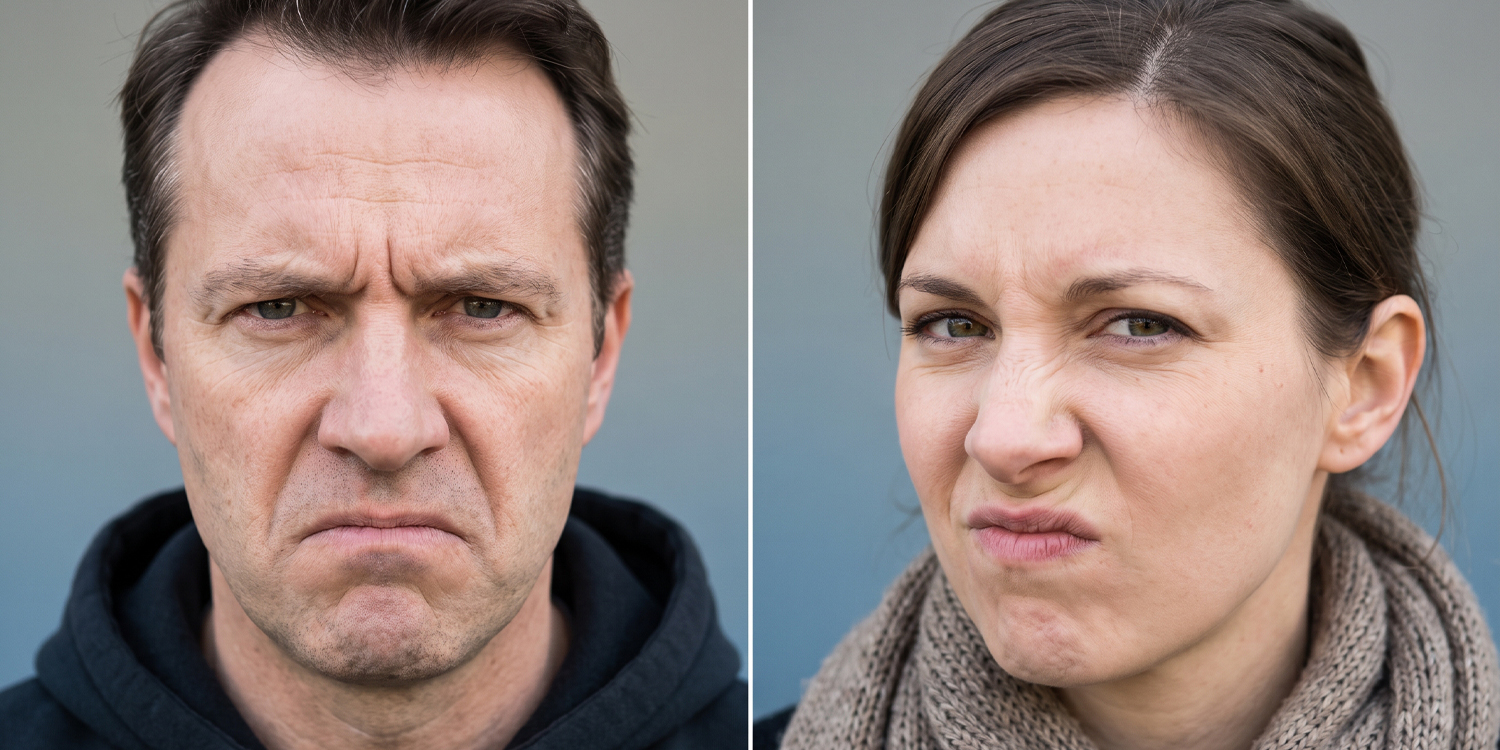
People with diminished implicit self-worth, or a gap between conscious and unconscious self-esteem, tend to notice subtle facial expressions of anger and disgust earlier than others. This heightened sensitivity to potential social rejection is linked to poorer interpersonal well-being, according to research published in Personality and Individual Differences.
Self-esteem is understood as how much a person values themselves, but psychologists separate this into two layers: explicit, which is conscious feelings of self-worth, and implicit, which refers to automatic, unconscious evaluations of the self. These two layers can sometimes be at odds, a phenomenon known as self-esteem discrepancy.
Researchers led by Patrycja Korzeniowska of the University of Lincoln aimed to understand how these layers of self-evaluation shape people's perception of the social world. They found that participants with lower implicit self-esteem were able to detect expressions of anger and disgust at lower intensities, and were faster to detect fear.
The gap between conscious and unconscious self-esteem also played a role, with larger discrepancies requiring less emotional intensity to spot anger and disgust, regardless of whether it was due to low conscious or high unconscious self-worth. While conscious self-esteem initially predicted quicker anger detection, this effect diminished when accounting for unconscious self-esteem, suggesting that different aspects of self-esteem influence rapid social-perceptual processes.
Written by urgent.news from PsyPost's reporting — not their text. Machine-written — may contain errors; check the original before relying on it.