Parlamentswahl in Kriegszeiten: Wahl in Russland endet - wie schneidet Putins Partei ab?
Präsident Putin will seinen Kriegskurs bestätigen lassen. Bei der dreitägigen Wahl zur Staatsduma stehen auch nur kremlnahe Parteien auf dem Stimmzettel. Wahlbeobachter melden einige Auffälligkeiten.
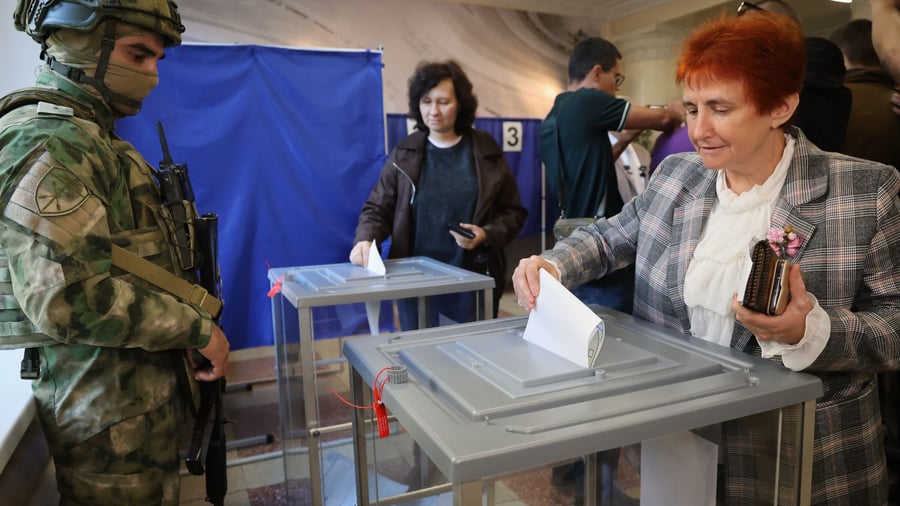
Today marks the end of a three-day parliamentary election in Russia, which aims to solidify President Vladimir Putin's ongoing war against Ukraine. Despite challenges such as economic turmoil, war weariness, and widespread discontent among the populace, the Kremlin-backed United Russia party is expected to secure a two-thirds majority. This is the party's 20th consecutive term in power.
Unlike previous elections, this vote took place in the Russian-controlled territories of Luhansk, Donetsk, Saporischschja, and Crimea, as well as the Crimean peninsula. The Ukrainian government warned that the polls were conducted under threat of armed assault and does not recognize the official results from these annexed regions. Critics have cast doubt on the fairness and democracy of the election, given that all ten parties on the ballot are seen as Kremlin-aligned and support Putin's 2022 invasion.
Opposition forces advocating for peace were not permitted to participate in the election. Independent election observers reported various forms of manipulation and other irregularities, or were arrested outright. Higher voter turnout was anticipated, with the central election commission in Moscow having already reported a turnout of nearly 45% by the second day of voting.
This is a stark contrast to the 51.7% turnout in the 2021 election. Independent observers have noted discrepancies in the published data, particularly in the southern Russian Caucasus regions of Dagestan and Kabardino-Balkarija, as well as in central Russia's Ivanov region. Some observers were reportedly prevented from monitoring the voting process, with Jabloko, the party excluded from voting, reporting police arrest of some of its members.
In St. Petersburg, election protocols did not match the number of voters recorded at the polls. Reports also suggest that pre-marked ballots were thrown into voting boxes at several locations.
The Russian state-run BBC service reported that government employees were pressured to cast their votes. Soldiers were patrolling the ballot drop-off process. The head of the Central Election Commission promised to investigate the allegations but claimed the election proceeded mostly adequately. Cyberattacks on the electronic voting system in Moscow were thwarted, and Russian authorities argued that armed soldiers in the annexed region of Donetsk were protecting voters.
Overall, more than 110 million Russian citizens were eligible to vote. Apart from the State Duma election, eight regional parliaments were also up for grabs. These elections serve as a referendum on Putin's war, with the Kremlin urging Russians to use their votes to contribute to the country's victory in the ongoing invasion. Five years into the war, challenges are mounting.
Western sanctions have made life in Russia extremely expensive, causing high inflation, fuel shortages, and rationing. Combined with Ukrainian drone strikes on Russian oil refineries, many Russians are facing a fuel crisis.
Written by urgent.news from Handelsblatt's reporting — not their text. Machine-written — may contain errors; check the original before relying on it.