New education project aims to support Syria’s rebuild
Dubai: A communications and education advisory group is expanding its work into Syria, seeking to apply lessons from the UAE’s public-private education model to a country facing a major shortage of schools, teachers and job-ready skills. Saaba Communications says its focus in Syria will extend beyond rebuilding classrooms to developing an education system aligned with the skills needed by a…
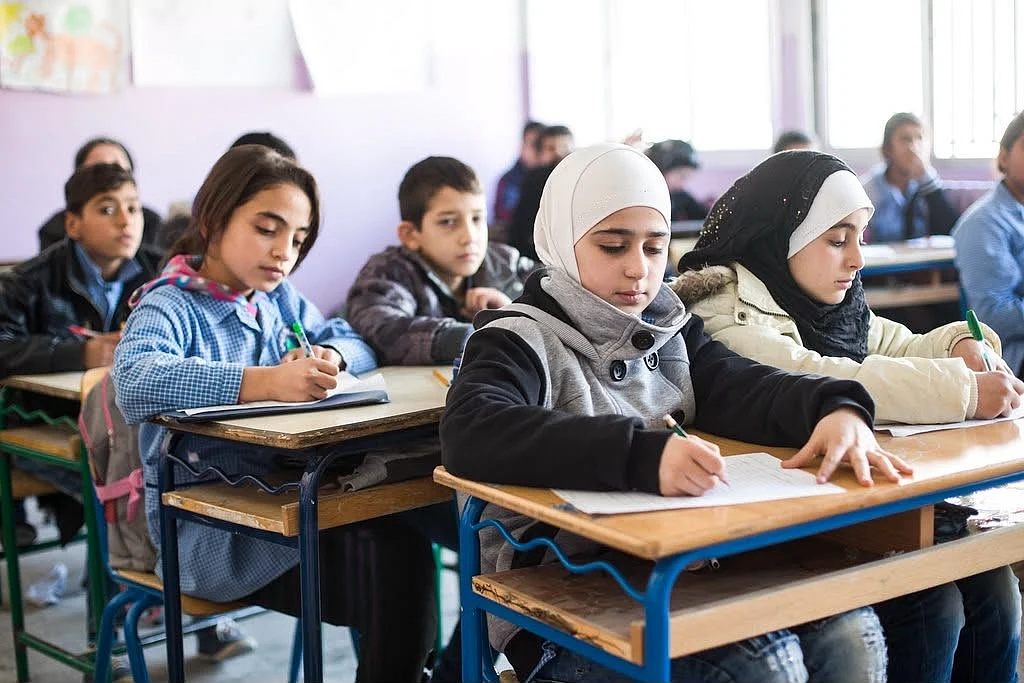
Dubai: A communications and education advisory firm is broadening its operations to Syria, aiming to employ the UAE's public-private education model to tackle the country's critical shortage of schools, teachers, and job-ready skills. Saaba Communications, the company leading this initiative, intends to focus not only on rebuilding classrooms but also on creating an education system that aligns with the evolving demands of the economy, encompassing digital technology, artificial intelligence, hospitality, construction, and mechanical trades.
The move follows the revelation of Syria's significant education deficit. UNICEF data, cited by the organization, indicates that approximately 2.45 million children were out of school in 2025, with around 8,000 schools no longer operational. While some progress has been made, with 78 schools rehabilitated, 126 prefabricated classrooms constructed, two million textbooks distributed, and over 20,000 people trained in education, the magnitude of the task remains considerable.
Dr. Ruwayda Mustafah, the head of Saaba Communications, emphasized that repairing classrooms and distributing textbooks are insufficient solutions. She stressed that the core challenge lies in the fact that a large segment of the Syrian population has missed out on their conventional schooling period, making them too old to re-enter the traditional education system. Many lack employable skills and are urgently seeking opportunities in a rapidly modernizing, globalized, and competitive labor market.
Saaba identifies vocational education as a crucial component of the response, especially for individuals who have missed formal schooling and require a route into employment. The Dubai experience serves as a reference point for the group's approach. Dubai, a city in the UAE, boasts a thriving private-school sector catering to students from diverse nationalities and curricula, while also fostering collaboration between government entities, educational institutions, and the private sector.
As of 2025, Dubai had 227 private schools, serving students from 185 nationalities and 17 curricula, according to UAE national statistics.
The UAE has also increasingly integrated education and skills development with the needs of a knowledge-based economy. Public-private initiatives in areas such as artificial intelligence, vocational education, and teacher training are designed to ensure that education remains aligned with changing labor-market requirements. Saaba believes that certain lessons from Dubai's experience can be adapted to Syria, acknowledging the vastly different circumstances facing the nation.
Dr. Mustafah emphasized that rebuilding the Syrian education system necessitates a deep understanding of the skills required by Syria's emerging economy and avoiding decisions based on pre-war conditions.
The advisory firm has assembled an advisory board comprising former Scottish education minister Raymond Robertson and academics from UAE University, Drs. Negmeldin Alsheikh and Al-Mothana Gasaymeh, among others. The group plans to support teacher training, digital education, AI-related skills, and curriculum development, while facilitating connections between public-sector education systems and private-sector expertise.
For Syria, the goal is to build an education system that not only reintegrates children into classrooms but also equips adults and young people with the skills necessary for employment. This expansion represents an effort to transfer regional education expertise beyond the Gulf to one of the region's most pressing education-rebuilding challenges.
Written by urgent.news from Gulf News's reporting — not their text. Machine-written — may contain errors; check the original before relying on it.