Missing measure in India’s magnet mission
The strategic question is not simply whether India possesses rare-earth resources or whether imports from China can be reduced. The real policy challenge is understanding what happens in between
The paradox of India's technological aspirations is reminiscent of the fable of blind men describing an elephant. While each touch reveals a part of the truth, none grasp the whole creature. This aptly describes India's approach to developing cutting-edge technologies deemed essential for becoming a global manufacturing powerhouse.
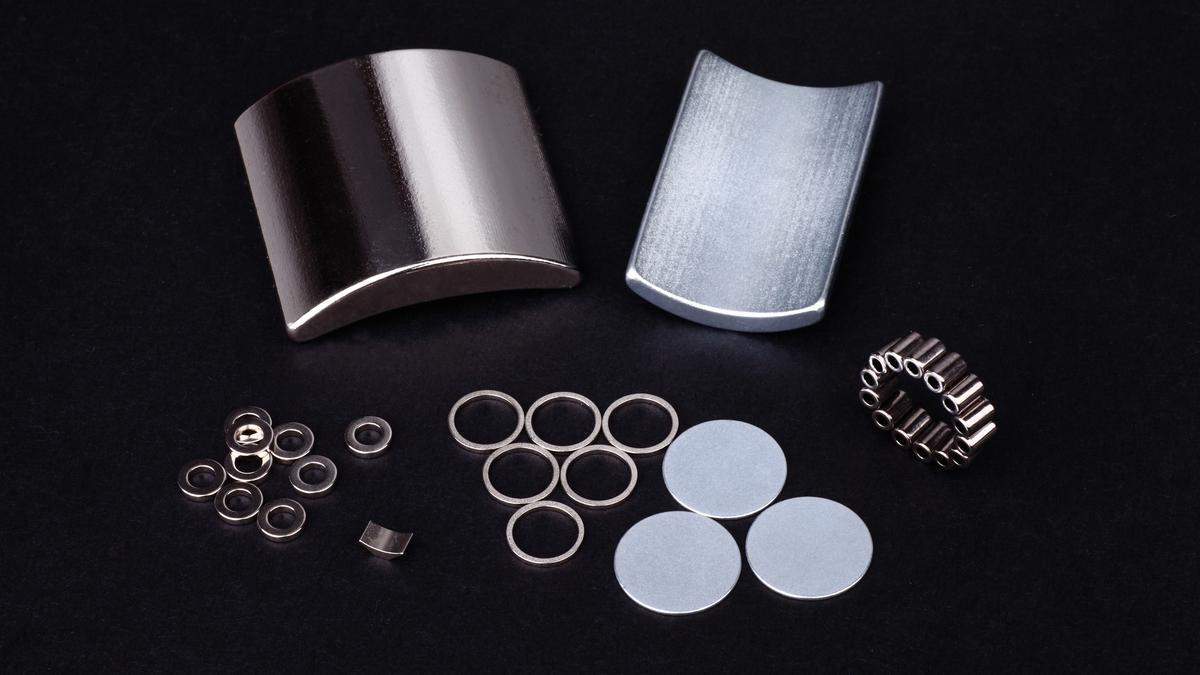
Central to this endeavor are high-performance permanent magnets, serving as the 'silent operating system' of industrial acceleration. They are not monolithic in nature; they range from Ferrite to Alnico and Samarium-Cobalt magnets, each with their unique properties. However, Neodymium-Iron-Boron (NdFeB) magnets have emerged as the linchpin of energy transition and advanced manufacturing due to their exceptional magnetic strength and high power-to-weight ratio.
India, recognizing the significance of these magnets, is proactively bolstering its critical minerals and rare earth element strategy through various initiatives like the National Critical Mineral Mission, strategic mineral acquisitions, geological exploration, and Production-Linked Incentive (PLI) schemes. However, China's stringent export controls on rare-earth magnets and materials in April 2025 have exposed the vulnerabilities in global industrial value chains and highlighted India's lack of a comprehensive framework to understand the strategic technological dependence cultivated throughout the permanent magnet value chain.
A pertinent illustration is the discrepancy between the country's estimated ₹750 crore domestic permanent magnet market and the import values, several times larger, as per international trade statistics. This gap underscores the uncertainty in tracing the movement of magnets through the economy, essentially indicating that parts of India's permanent magnet economy remain invisible in official statistics.
The manufacturing journey of permanent magnets is intricate, spanning geological exploration, mining, mineral processing, chemical separation, oxide refinement, metal transformation, alloy engineering, magnetic material production, and final magnet manufacturing. Each stage necessitates distinct scientific knowledge, industrial capability, and technological maturity.
Consequently, a prevalent discourse on critical minerals fails to address the most critical question: the understanding of the entire value chain. The real policy dilemma is not about India's possession of rare-earth resources or curtailing imports from China; rather, it lies in comprehending the processes that occur between these stages.
Although India has developed competencies in several stages of permanent magnet manufacturing, it still lacks a systematic structure to identify globally competitive capabilities, pinpoint critical gaps, and understand how dependence accumulates across production stages. Presently, India's statistical system offers only a partial perspective on mining, imports, and manufacturing activities, necessitating the integration of engineering and economic measurements through an Integrated Techno-Economic Mapping (ITEM) framework.
This framework would illustrate how a permanent magnet is built—from minerals to finished products powering advanced manufacturing—while identifying where industrial capability should be developed, where technological partnerships are essential, and where domestic investment would yield the highest strategic returns. While securing mineral resources is crucial, it remains insufficient if the country lacks processing and manufacturing capabilities. Bridging this measurement gap is not merely an academic exercise; it is an industrial imperative.
Written by urgent.news from The Hindu's reporting — not their text. Machine-written — may contain errors; check the original before relying on it.