Landtagswahlen: Kann die Fünf-Prozent-Hürde Merz zu Fall bringen?
Es ist ein Schicksalstag für den Kanzler: Hält die Rückendeckung der mächtigen CDU-Ministerpräsidenten für Merz, wenn es zu einer weiteren Katastrophe für die Partei bei den Landtagswahlen kommt?

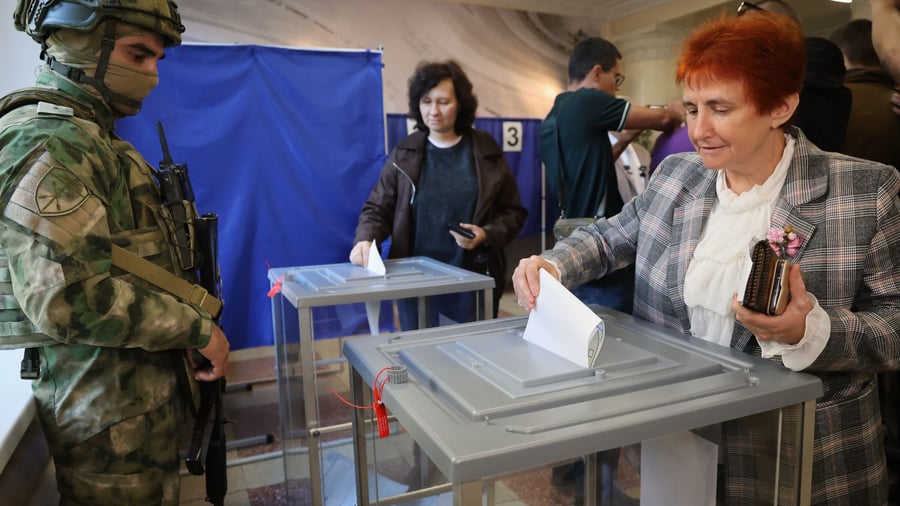
The Fünf-Prozent-Hürde, or five-percent threshold, has never been a topic for the CDU in its 80-year history of federal and state elections. However, this year, the party faces the possibility of failing to meet the mark in Mecklenburg-Vorpommern for the first time. This would be unprecedented for the party, and the shockwaves could still be felt in the federal government led by Chancellor Friedrich Merz.
The eight powerful CDU state premiers have backed the chancellor with a joint statement, but it remains to be seen if they can withstand another debacle following the brutal defeat in Saxony-Anhalt two weeks ago. The CDU's position in Mecklenburg-Vorpommern is dire, with the party trailing at 6 percent in the latest pre-election poll.
This has pushed the CDU into the "demographic death zone" just above the five-percent threshold. While any result below five percent would be the worst in post-war CDU history, 6, 7 or 8 percent would still be a poor outcome. The negative record belongs to 9.0 percent in Bremen in 1951, the sole time the CDU achieved a single-digit result in a state election.
The party's survival hinges on whether they can form a government with the SPD and Greens, or if the left could surpass them and create a red-red-green coalition. The worst-case scenario would be the CDU leaving the state parliament and the government in Berlin. The consequences of such a catastrophic result are unpredictable. The backlash from the party base could become overwhelming, leading state premiers to question their endorsement of Chancellor Merz.
Some within the CDU leadership, including Merz himself, recall the dynamics that led to the resignation of Bundestag faction leader Jens Spahn in the summer, when base indignation over his involvement in an affair was too great to ignore. The question remains whether the CDU can find a successor who can unite the party. Potential candidates include state premiers Hendrik Wüst (CDU) and Markus Söder (CSU), but they have not shown strong unity.
Another option is Hess's state governor Boris Rhein (CDU), though Wüst is said to have little appetite for a chancellorship, as he has a state election in April that could be disastrous for the CDU. Wüst's concern is that selecting a CSU chancellor would make the already struggling CDU even weaker. Regardless, each successor would face the same challenges Merz currently faces: reform implementation is difficult, the risk of failure is high, and any chancellor who remains popular at home would likely refuse to take the position voluntarily.
Another candidate mentioned in the debate is Innenminister Alexander Dobrindt, known for his successful governorship and his role as an unofficial second deputy chancellor. While he is not being considered as a permanent chancellor, he could temporarily step in while the CDU sorts itself out and reaches a consensus with CSU leader Söder.
Merz has committed to fighting to retain his position, stating that resigning is not an option. He has summoned the CDU's Präsidium to a formal meeting in Berlin, followed by a larger Bundestag faction meeting and then the Bundestag faction. If Merz manages to unite the party, he would initially serve as a chancellor on probation, needing to win back trust and push through the already-approved reform package against SPD opposition.
The fate of Merz will depend on whether he can secure the party's support and implement his reform agenda.
Written by urgent.news from Handelsblatt's reporting — not their text. Machine-written — may contain errors; check the original before relying on it.