La extrema derecha se dispara en las elecciones regionales alemanas y profundiza la crisis de la CDU del canciller Merz
AfD ganaría en Mecklemburgo Pomerania y los poscomunistas de Die Linke en Berlín, según los sondeos
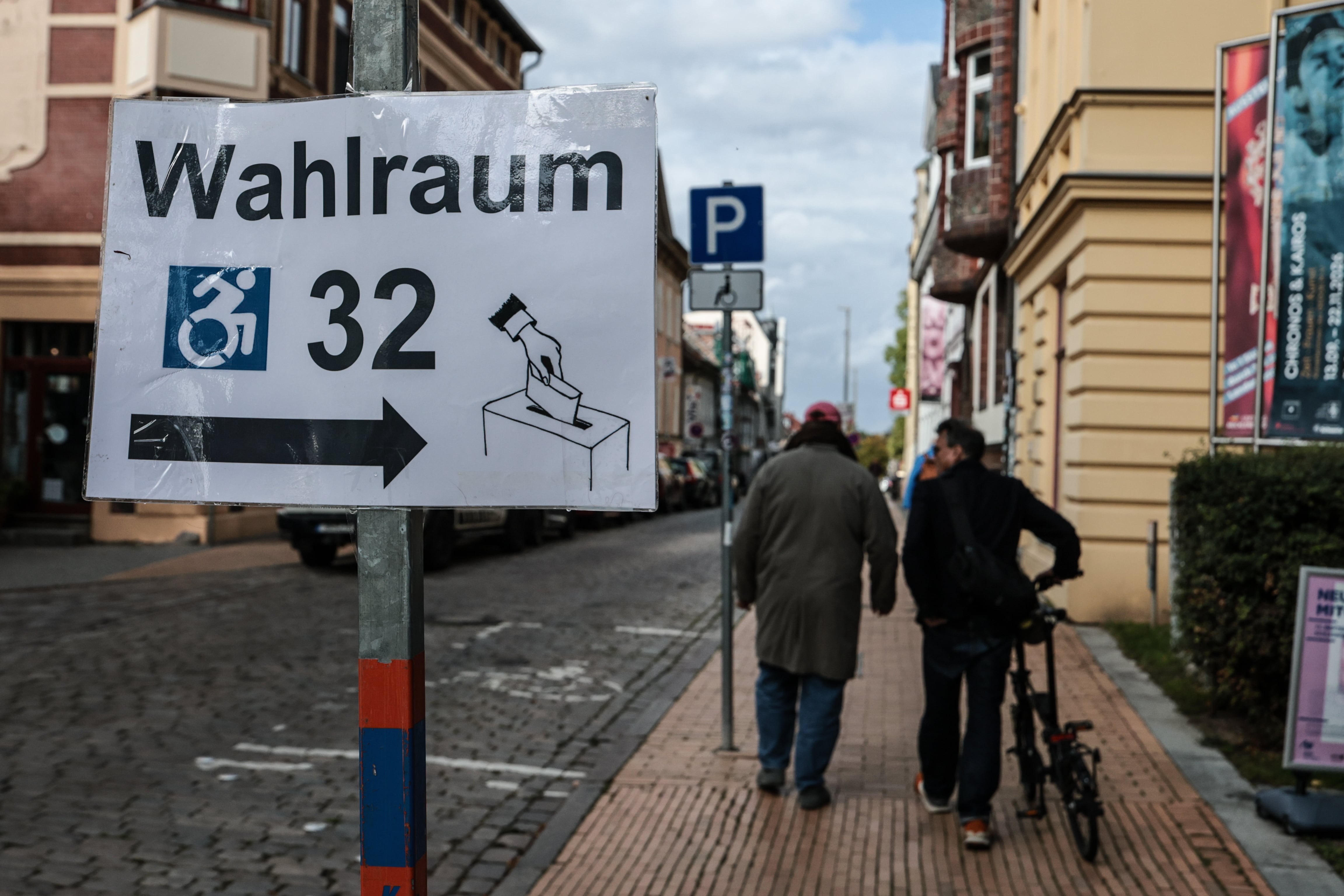
Extremist right-wing parties surged in regional German elections, deepening Chancellor Merz's CDU crisis. According to ARD and ZDF's exit polls, the far-right AfD won Mecklenburg-West Pomerania, followed closely by the Social Democrats (SPD). Berlin's Green Left (Die Linke) led the vote, with CDU in second and AfD in third. The Christian Democrats would hold a slim edge in Mecklenburg-West Pomerania's parliament, losing the Berlin government.
The Sunday elections followed AfD's crushing 2023 Saxon-Anhalt results, where they narrowly missed an absolute majority with nearly 44% support. If AfD manages a historic first executive position in Germany, they would fall short of surpassing the other parties' threshold. Although AfD's vote surged in both elections, it's insufficient for government chances due to the popularity of two left-wing candidates: Mecklenburg-West Pomerania's Social Democratic leader Manuela Schwesig and Die Linke's Berlin representative Elif Eralp.
Schwesig could form an absolute majority coalition with Die Linke and The Greens. AfD won 37% of Mecklenburg-West Pomerania's votes, compared to 35.5% for the SPD. AfD's chairman Tino Chrupalla boasted their electoral success in the state, claiming they're legitimate to form a government. The other parties confirmed the far-right wouldn't have a majority in the Mecklenburg-West Pomerania parliament.
In Berlin, the three left-wing parties (SPD, Die Linke, and The Greens) would oust the CDU from the Senate. The capital, currently governed by the Christian Democrats and Social Democrats, would likely see a transformation, according to Eralp. AfD performed better in Berlin than in the 2023 elections, obtaining nearly 14% of the vote, five points more.
The SPD suffered an unexpected setback during Berlin's campaign after the Hanover prosecutor's office registered the home of their candidate Steffen Krach for alleged bribery in a public contract. The SPD would lose six points, down to 12% of the vote, according to ARD and ZDF exit polls. "These are catastrophic results," Krach admitted.
However, the main loser is Merz's CDU. The Christian Democrats would garner just 5.5% support in Mecklenburg-West Pomerania, above the threshold to be excluded from the parliament. Merz acknowledged the worst CDU results in history during a brief media appearance. The chancellor and CDU leader expressed disappointment despite difficult circumstances and unfavorable winds, but praised Berlin's 20% support, eight points lower than previous elections.
The chancellor gathered at 5 PM in the party headquarters in Berlin for an emergency meeting with CDU's regional leaders to analyze results and discuss potential measures to curb their unpopularity and overall decline. Merz stated the priority must be reversing "a growing fascination in society for authoritarian options," implicitly referencing AfD and Die Linke.
The rise of extremist parties mobilized increased voter turnout, with 40% of Mecklenburg-West Pomerania's 1.3 million eligible voters casting ballots in 2023, up from 32.5% in 2021. In Berlin, the turnout was nearly 28%, five points higher than 2023, with 2.5 million people eligible to vote.
Written by urgent.news from El Pais's reporting — not their text. Machine-written — may contain errors; check the original before relying on it.