Indian Customer Service Testing Your Patience? Here’s How To Get Your Problem Solved
There are few experiences more character-building than trying to solve a simple problem through Indian customer service. You may begin with a straightforward request— “I would like to cancel my broadband connection”—and, two hours later, find yourself explaining your childhood, your billing history, and possibly the meaning of life to six different people. Customer service in India is not merely…
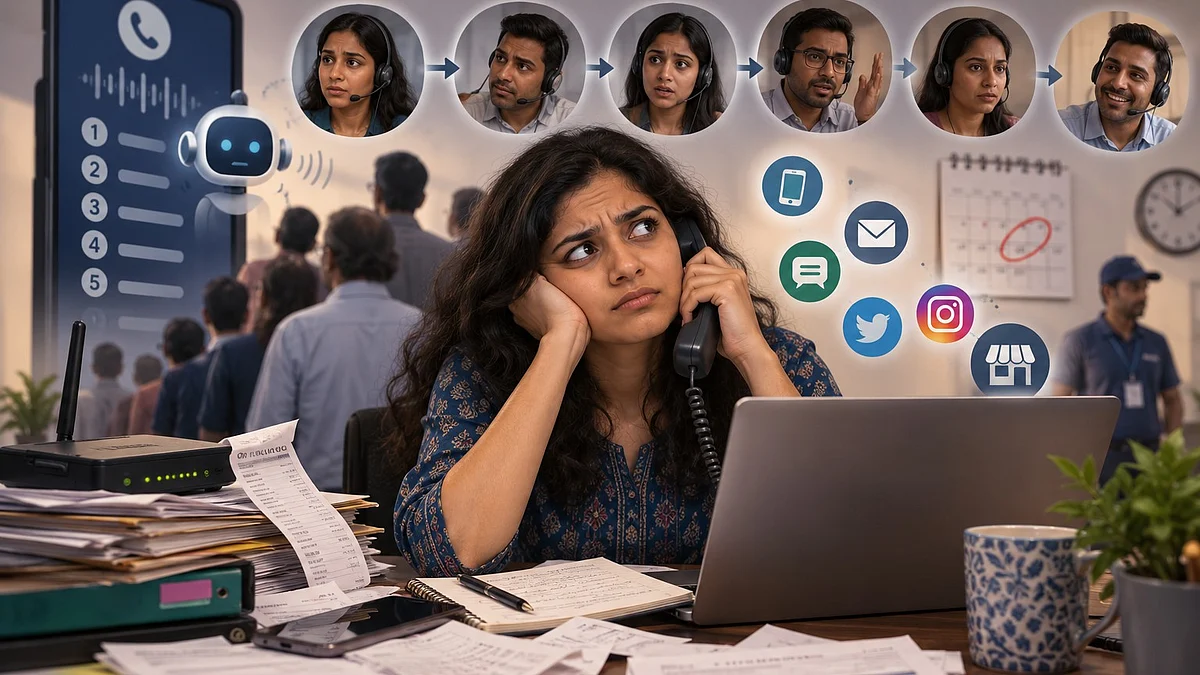
Solving issues with Indian customer service can feel like an endless challenge. You might start with a simple request, like canceling your internet connection, only to find yourself speaking to six different people over the course of two hours. This system is not just a service, but an experience that tests your patience and negotiation skills. However, there are strategies you can use to emerge victorious, even if only with a ticket number.
Before calling, gather all relevant details: your customer ID, mobile number, order number, invoices, screenshots, payment references, and the exact date the issue began. You may feel this is excessive, but customer service agents often request documents you've not saved. Keep a notebook handy to record names, ticket numbers, promises, case IDs, escalation codes, and the time they promise a resolution within 24 hours.
The Interactive Voice Response (IVR) system can be frustrating. It starts politely, asking you to press numbers for your preferred language, then presents you with seventeen options that rarely match your issue. Stay calm and listen carefully, resisting the urge to press random numbers in frustration. Some systems hide human assistance under headings like "complaints," "other services," or "existing customer."
If the system says, "Your call is important to us," take it as a polite delay, not a sign of priority. Your call may be important, but it may also mean waiting behind many others.
When you finally speak to a real person, remain calm and precise. State your problem in one or two sentences, avoiding the temptation to deliver your entire life story. Be polite and direct, such as saying, "My internet has disconnected five times since 9 a.m., and the complaint number is 4582." Write down the representative's name, ask for a specific time frame and a complaint number. Remember to ask for confirmation on the refund amount, cancellation date, and any additional charges.
If the initial interaction doesn't resolve your issue, do not repeat the same conversation endlessly. Politely ask to escalate the issue to a supervisor, grievance officer, or nodal officer. Use phrases like "supervisor," "grievance officer," "nodal officer," and remember to provide a short, chronological account of what happened, when, what you've already tried, and what you want. These concise statements are easier for systems to track and act upon.
If phone calls don't work, try other channels like the company’s app, email, website chat, social media, or even a physical store. Different channels may feel like separate companies, but they all share the same logo. Email is particularly helpful as it creates a written record. Include your complaint number in the subject line and attach relevant screenshots.
Once your issue is resolved, celebrate, but also verify your next bill. Many victories are temporary. Keep all confirmation messages until the matter is completely closed, and never forget that the person on the other end may not have caused the problem. Firmness is useful, but cruelty is not. The goal is to resolve the issue, not to win an argument.
Remember, Indian customer service may test your patience, but it also rewards preparation, persistence, and thorough documentation. Stay calm, document everything, ask precise questions, and never accept "it will be done" without asking when. If all else fails, take a deep breath, return to the app, and prepare to explain your story to another representative.
Written by urgent.news from Free Press Journal's reporting — not their text. Machine-written — may contain errors; check the original before relying on it.