From an IIT Bombay lab to a Rs 1,000 Cr IPO
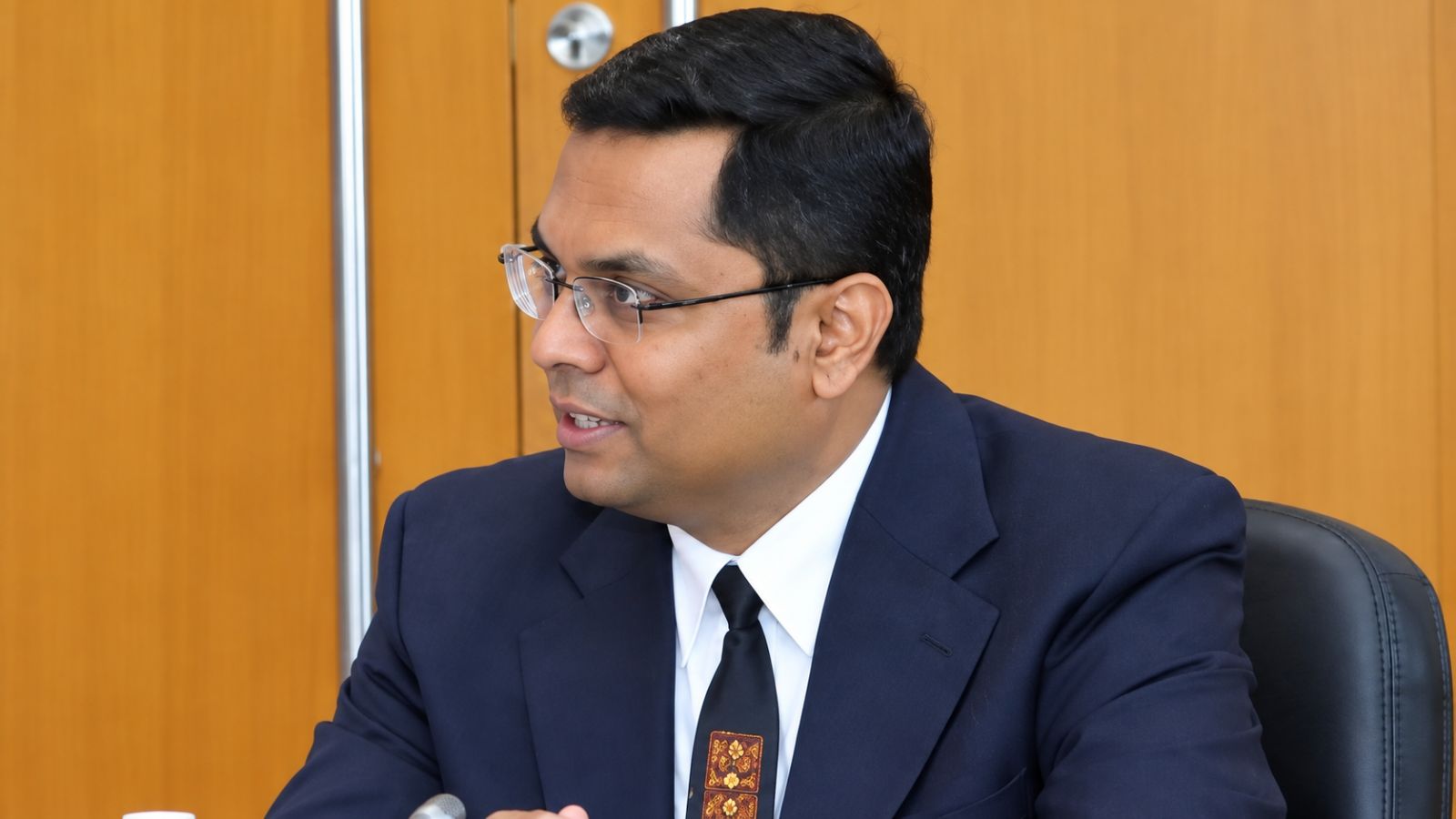
In this episode, Professor Shashikanth (IIT Bombay) shares his journey of building SEDEMAC, a deeptech startup that has crossed Rs 1,000 crore in annual revenue, Rs 1,087 crore IPO earlier this year and the stock growing over a 100% since.
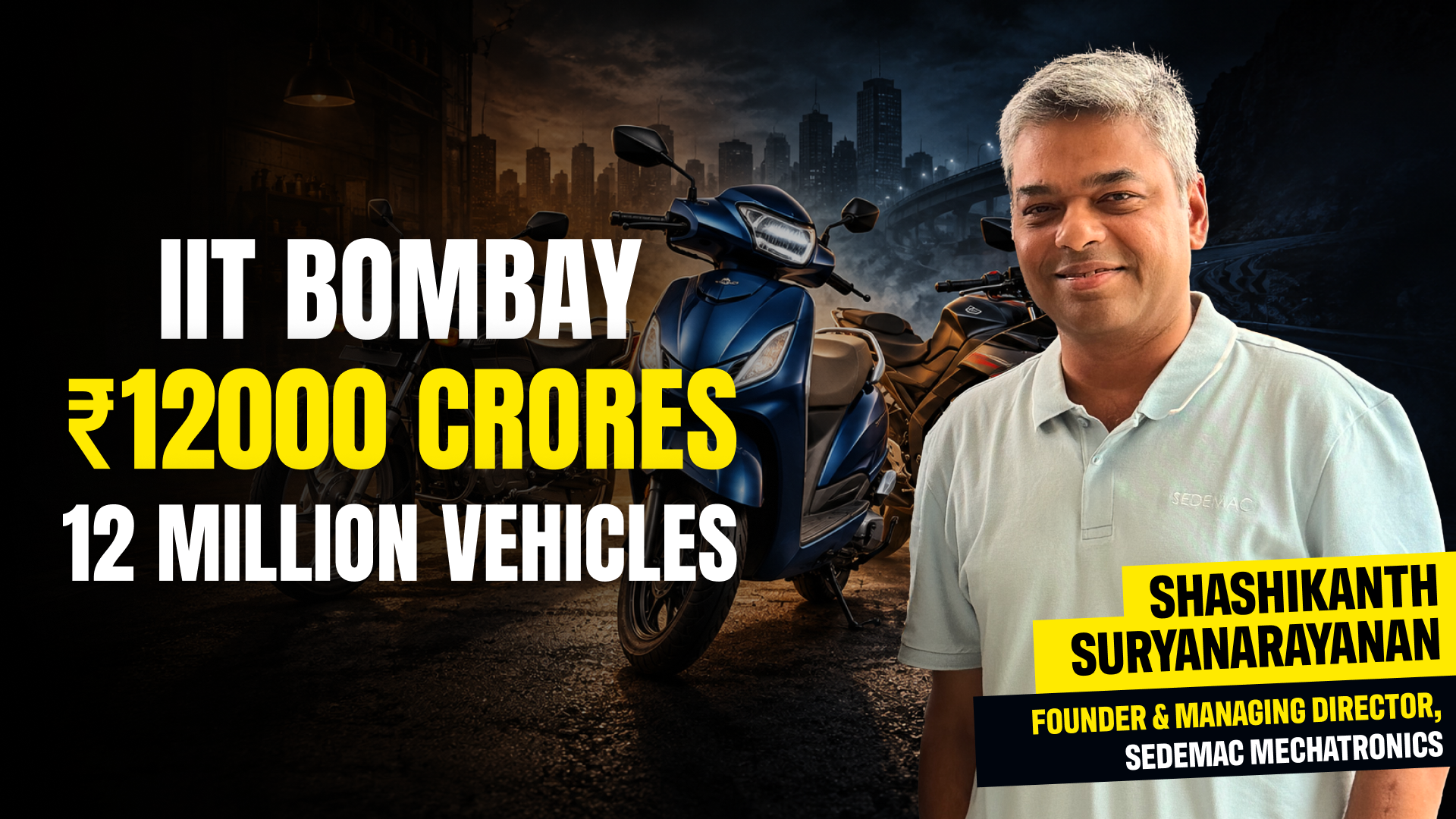
India's startup scene has become adept at rapidly launching companies. Professor Shashikanth, however, cautions that building truly novel technology is a distinct challenge. Two decades ago, a group departing from IIT Bombay founded Sedemac with a straightforward objective: to develop groundbreaking control technologies and ensure their widespread use.
Today, Sedemac boasts an impressive revenue of Rs 1,000 crore annually, generating Rs 200 crore in EBITDA, Rs 150 crore in profit before tax, and Rs 100 crore in profit after tax. The firm operates with an impressive 40% return on capital employed, dispatching one million motor controllers per quarter, and its technology is integrated into millions of two-wheelers traversing Indian roads.
Professor Shashikanth's narrative extends beyond Sedemac's growth trajectory; it illustrates how engineers daring to tackle previously unaddressed market needs can shape industry evolution. "Creators of technology are market creators," he asserts. "You don't start with, 'Oh, this market is going to grow big.' Therefore, it will grow big or not because of you."
The cornerstone of Sedemac's success lies in its development of motor controllers and sensorless commutation technologies. Motor controllers govern the power flow between a source like a battery and an electric machine. To make a motor function, the controller must determine which coils to energize based on the rotor's position.
Traditionally, a physical sensor provides this information. However, sensorless commutation seeks to achieve this without a physical sensor, estimating the rotor's position via alternative means. At high speeds, this technique has been well-understood for decades. Yet, at low speeds, the physics becomes considerably more complex, as the back EMF, crucial for estimation, diminishes with speed and vanishes at zero speed.
Professor Shashikanth emphasizes that Sedemac is the first globally to achieve significant progress in sensorless commutation. However, the company did not initially set out to solve this problem. The opportunity emerged around 2014-15 when the team was working on an Integrated Starter Generator (ISG). They discovered that optimizing the ISG system would benefit from advancements in sensorless commutation.
In 2018, a TVS moped became the first vehicle to utilize Sedemac's technology, marking the world's first sensorless ISG application.
This transformation was not instantaneous. Sedemac estimates that 12 to 13 million vehicles now feature its ISG, with five of the top ten two-wheeler models in India incorporating it in at least one variant. Notably, major players such as TVS, Bajaj, and Hero incorporate Sedemac's technology in several models. Another Sedemac innovation has already been integrated into approximately 50 million vehicles.
This scale is crucial as Sedemac initially entered an industry dominated by four major suppliers – Honda, Hero, TVS, and Bajaj, collectively commanding around 85% of the Indian two-wheeler market. Sedemac now supplies three of these four leaders. Shashikanth underscores that breaking into such a market requires offering something unique.
The company's approach to customer acquisition has been surprisingly straightforward: develop something novel, create a functional demonstration, and directly engage with industry leaders. Typically, this process yields a response. However, convincing customers to adopt the technology, ensuring it fits within their budget, and guaranteeing its durability in real-world applications are subsequent critical steps.
For Sedemac, transitioning from a demonstration to a commercial introduction could span three to four years if everything proceeds smoothly, though sometimes the timeline stretches indefinitely. Sedemac attributes this journey to two key factors: exceptional technical capability and the presence of large, sophisticated customers capable of adopting the engineers' creations.
While capital played a role, Professor Shashikanth emphasizes that investors cannot create a business; they can only support it. He also highlights that while funding can provide necessary infrastructure and support experimentation, it alone cannot nurture technical excellence. The best engineers are drawn to the quality of work and fair compensation, rather than the company's vision statement.
Today, Sedemac employs around 250 engineers, with the majority holding degrees from prestigious institutions like IITs, NITs, and BITS. Shashikanth employs a pragmatic strategy to attract these top talents – focusing on the caliber of work and fair remuneration over lofty vision statements.
Written by urgent.news from YourStory's reporting — not their text. Machine-written — may contain errors; check the original before relying on it.