Federal Reserve rate hike reflects new world of sticky inflation and faster growth
The low interest-rate, low-inflation world that lasted for nearly 15 years after the Great Recession is over and a higher-priced, higher-rate world is taking its place.
President Donald Trump recently criticized the Federal Reserve after it increased its benchmark interest rate on Wednesday. However, economists argue that the Fed's actions are less significant than broader economic trends when it comes to longer-term borrowing costs. The economy is expanding rapidly, despite facing various shocks, and inflation remains high.
Big tech companies are investing heavily in data centers, while the federal government continues to run large budget deficits. These factors suggest that higher interest rates are inevitable, regardless of the Fed's decisions.
The era of low interest rates and low inflation, which lasted for nearly 15 years following the Great Recession, has come to an end. The shift to a higher-rate world is driven by a change in the pre-pandemic economy, where weak consumer and business demand collided with supply shocks and bottlenecks. The current economy is experiencing a structural transformation, with higher oil and gas prices due to the Iran war, and a shortage of computer chips, electronic equipment, and workers to produce them.
This shift in interest rates and inflation mirrors the situation before the financial crisis in December 2007, which ended in June 2009. However, the post-crisis period saw weak consumer and business spending, with many Americans focusing on paying off debt instead of investing. Big tech firms, like Google and Meta, have amassed vast cash reserves and are now using them to construct AI data centers, further fueling borrowing.
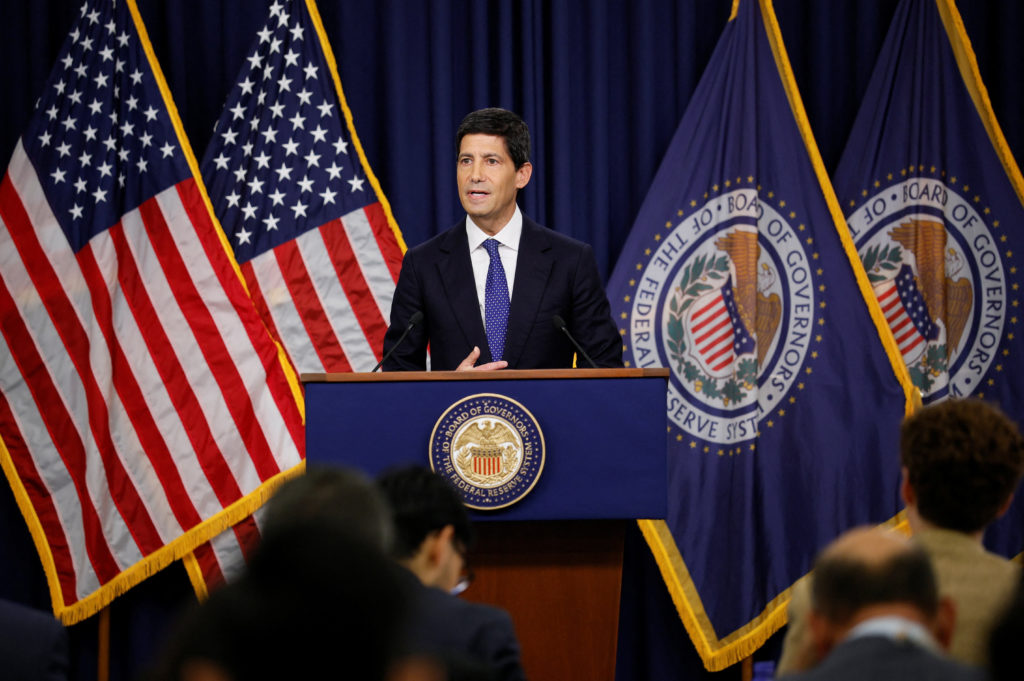
Federal Reserve Chairman Kevin Warsh highlighted this change in a speech at the central bank's annual conference. He noted that after the 2008 crisis, it was widely believed that excess capital would remain idle due to a lack of compelling investment opportunities. However, the reality has been quite different, with expanding pools of capital flowing into AI-related infrastructure.
This increased spending and investment has contributed to the rise in longer-term interest rates, even before the Fed raised its benchmark short-term rate.
Despite the economic expansion, inflation has consistently outpaced annual wage growth for the past five months. Imbalanced growth, driven largely by the AI buildout and strong spending by wealthier consumers, is currently reliant on rising stock prices. Trump has proposed a lower rate of 1%, but many of his policies have contributed to the increased borrowing costs. As long as inflation persists, investors will demand higher interest rates on longer-term Treasury bonds.
Written by urgent.news from Winnipeg Free Press's reporting — not their text. Machine-written — may contain errors; check the original before relying on it.
This story
This is one outlet's version. Read the fullest account.
- Federal Reserve rate hike reflects new world of sticky inflation and faster growth winnipegfreepress.com