Falling rice prices bring losses in summer-autumn crop
Farmers are reporting losses in the 2026 summer-autumn rice crop as soaring input costs and falling rice prices squeeze already thin profit margins. Vietnam enhances rice export position in Canadian market Vietnam’s rice export prices rebound after prolonged decline Vietnam confronts rice price slump as leaders push for US$74 billion export goal Vietnam seeks to expand rice export markets
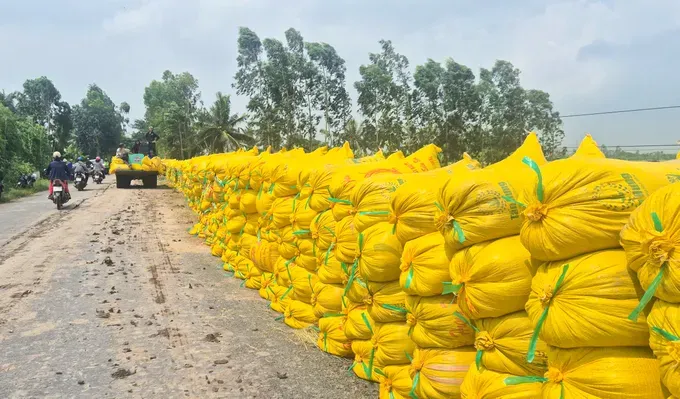
Farmers are encountering financial losses in the 2026 summer-autumn rice crop due to dwindling prices and rising input costs. The heavy expenses on fuel, fertilizer, and pesticides have squeezed already narrow profit margins, enveloping many households in losses. In Thanh Thoi An Commune, located in Can Tho City, the summer-autumn rice harvest is ongoing.
Harvesting crews work continuously, transporting harvested rice to Provincial Road 935. There, awaiting purchase, long rows of stacked rice bags stand tall. Elderly farmer Hong Van Lu from Thanh Thoi An Commune expressed disappointment, lamenting that despite his high hopes, the depressed rice prices leave little to no profit. He cultivated 6 hectares of Japanese rice (DS1 - Japonica) this season, yet sold it at only VND6,500 per kg, a substantial VND1,000 a kg decrease compared to last year.
Some neighboring households that received deposits later managed to sell at around VND6,000 per kg. With such low prices, after subtracting all expenses, profits fall below VND2 million per large plot (1,300 square meters). The primary reason for these losses is the 30 percent surge in input costs driven by fluctuating fuel prices.
Meanwhile, a somber expression can be seen on the face of farmer Bui Tran Son in Nga Bay Ward, Can Tho City. He has 1.5 hectares of rice to report, having yielded 700 kg per plot. Initially, Son accepted a deposit of VND6,000 per kg for OM18 rice, but as prices plummeted, traders reduced their purchase price to VND5,850 per kg. After accounting for all seasonal expenses, Son's household incurred a loss of nearly VND10 million.
Low rice prices have been attributed to factors like market oversupply during peak harvest times and the export market's reliance on foreign partners, which keep buying prices low. Director Nguyen Van Thanh of Phuoc Thanh IV Company revealed that Vietnam's primary rice export market, the Philippines, has implemented barriers to protect its domestic farmers.
These barriers, such as occasional restrictions on 5 percent broken rice imports, contribute to market volatility, imposing risks on rice farmers despite the short-term nature of these fluctuations.
Written by urgent.news from SGGP English Edition Business's reporting — not their text. Machine-written — may contain errors; check the original before relying on it.