Europe gave Russia years to perfect its aerial killing. Ukraine is paying the price. Europe may be next.
Russia has spent four years adapting its drones, missiles and tactics against Ukraine. As Russian attacks become harder to stop, Ukrainian civilians are paying the price – while Europe is increasingly worried about a threat it has had years to prepare for.
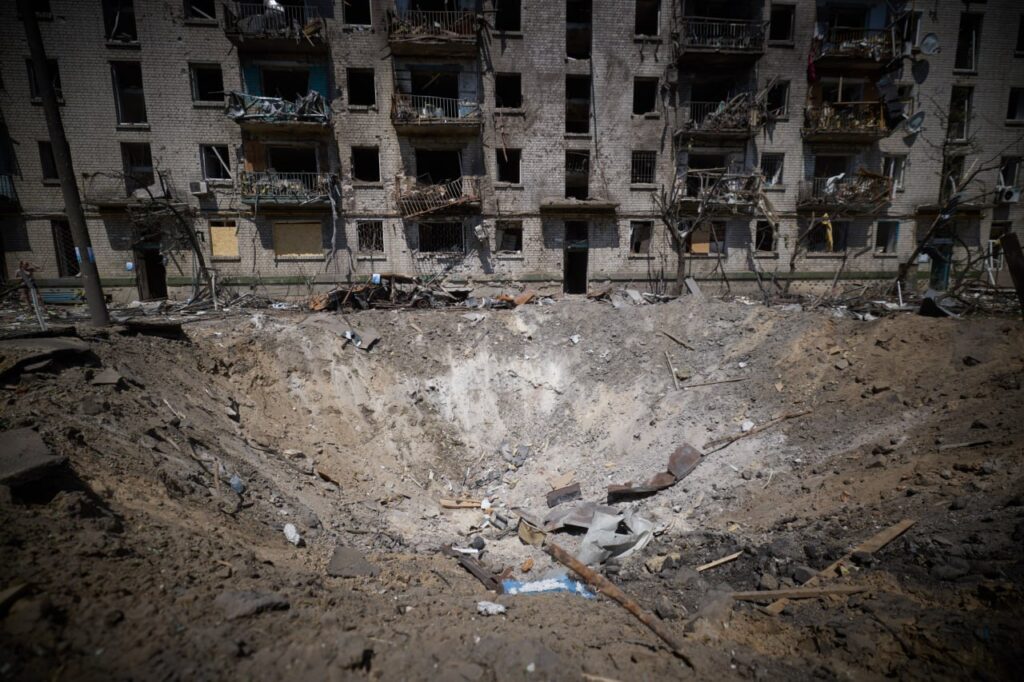
Europe permitted Russia ample time to hone its aerial assault capabilities throughout the conflict with Ukraine. Four years of Russia's adaptation has seen the nation deploy faster drones, arm a greater number of ballistic missiles, and employ novel tactics to breach Ukraine's limited air-defense resources. The nation's aerial campaign is proving increasingly difficult to manage as the death toll of Ukrainian civilians mounts.
July saw at least 437 civilian fatalities, marking the highest monthly toll since the conflict's full-scale commencement, with UN observers attributing a significant share of the harm to Russian missile and drone strikes. This escalation is evident in Russia's burgeoning use of jet-powered Geran drones, which can reach speeds surpassing 400 km/h, making them far more challenging to neutralize compared to the slower, propeller-driven Shaheds that Ukraine has been striving to counter for years.
Russia reportedly launched up to 2,850 jet-powered drones in August alone. Ukrainian President Volodymyr Zelenskyy has cautioned that Russia's escalation with these new drones is assuming "increasingly terrorist" undertones and has urged urgent efforts to devise defenses against them. Despite Western partners offering support to bolster Ukraine's air defenses, Russia has concurrently refined and broadened its aerial offensive capabilities, a gap becoming more apparent in Ukrainian skies.
Ukrainian civilians are already experiencing the consequences of Russia's growing capacity to strike deep within Ukraine, targeting residential districts, fuel depots, rail networks, energy infrastructure, and other civilian sites dispersed across cities far removed from the front lines. Since late August, Kyiv has been under persistent Russian drone assaults, with Russia increasingly dispatching swarms of drones across the day and night, rendering air-raid warnings, explosions, and daily disruption an incessant ordeal.
For Ukrainians, Russia's evolving aerial warfare is quantifiable in demolished homes, injuries, fatalities, and lives irrevocably altered. In Kyiv, this transformation is felt in the form of shattered homes, sporadic explosions, and an omnipresent threat of further attacks. The threat extends beyond Kyiv. Kharkiv, Odesa, Sumy, and Zaporizhzhia are all grappling with increasingly sophisticated amalgamations of drones and missiles, with the danger not merely stemming from Russia launching more weapons, but from Moscow's years of expertise in selecting weapons capable of circumventing Ukraine's defenses, combining them, and pressuring Ukraine to conserve its most vital interceptors.
Zelenskyy's plea underscores the urgency: "You cannot simply wait for Russia to perfect its arsenal of destruction." Emergency responders rush to a Russian strike on a shopping center in Kharkiv, Ukraine, on 28 August 2026. Photo: Ukraine’s State Emergency Service Russia has outpaced Ukraine in fortifying its defense against aerial attacks.
The Geran drone is but one facet of the burgeoning problem. Russia has also significantly escalated its utilization of ballistic missiles. Reuters has reported that 228 ballistic and hypersonic missiles were launched in July and the initial eight days of August, with over half of them being inaccurate RM48U training missiles repurposed for combat.
Ukraine has virtually depleted its stockpile of US-made Patriot interceptors, the sole systems in its arsenal capable of reliably countering Russia's ballistic missiles, while Moscow continues to unleash them at an alarming rate. The outcome is a more intricate aerial threat: swift drones hard to intercept, ballistic missiles nearly impossible to halt, and vast quantities of less expensive munitions that compel Ukraine to squander scarce defensive ammunition.
Ukraine is devising novel methods to counter these threats, including interceptor drones specifically tailored to track the jet-powered Gerans. However, Ukraine is forging these technologies as Russia is simultaneously deploying its new arsenal at scale. Russia's new "Geran-4 Seeker" jet-powered Shahed drone variant is a testament to this development.
Western nations have persistently supplied air-defense support. Canada, for example, announced a C$350 million package for interceptors recently. Yet, Ukrainian officials continue to stress that deliveries fall short of the necessary quantity to shield the nation from Russia's expanding aerial campaign. Russia has invested years in expanding the armaments it can wield against Ukraine, while Ukraine and its allies are still striving to develop and provide the requisite systems to thwart them.
The threat Europe inadvertently empowered Russia to develop Some of Ukraine's Western allies are now grappling with a threat that Russia has been cultivating over Ukraine: an increasingly sophisticated aerial arsenal that could potentially be turned against them. European officials and defense experts are growing apprehensive that NATO countries might lack sufficient air and missile defenses to counter a formidable Russian attack.
Latvia's President Edgars Rinkēvičs recently cautioned that Europe is insufficiently prepared for the kind of drone and aerial warfare Russia has developed in Ukraine, citing delays in supplying Ukraine with essential air-defense systems as a contributing factor. These apprehensions are no longer speculative. On 14 September, an Italian NATO fighter jet successfully shot down a Russian-made Geran-2 drone over Lithuania after it entered the country from Belarus. Poland and Romania have also encountered Russian drone incursions since.
Written by urgent.news from Euromaidan Press's reporting — not their text. Machine-written — may contain errors; check the original before relying on it.