Don't call it an SUV: The Ferrari Purosangue review
Unlike previous Ferrari four-seaters, this one is better for humans than cargo.
Ferrari, known for its two-seat sports cars, has traditionally offered vehicles with back seats. The 1960s saw the introduction of the 250 GT 2+2, with the second row being more for occasional use. The brand's first true four-seater, the all-wheel drive FF, featured Breadvan styling. Even the hatchback version was slightly more practical for cargo due to its rear doors.
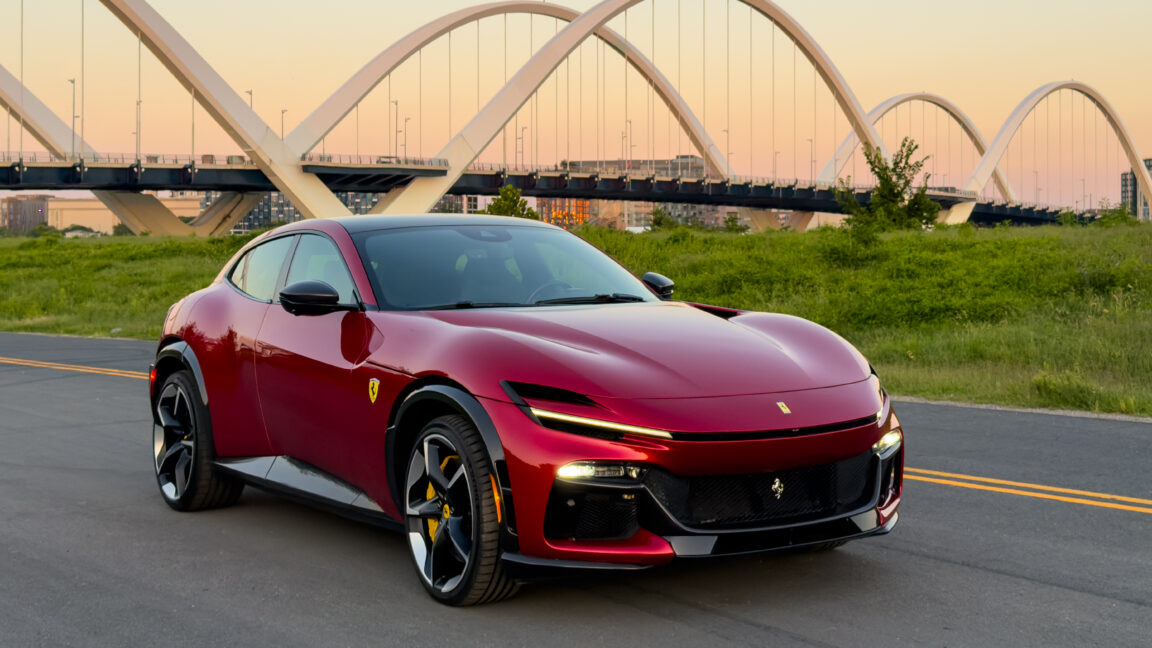
The GTC4 followed suit, maintaining three doors for cargo accessibility. However, the Purosangue marks a significant upgrade for rear passengers. It introduces rear-hinged doors, providing direct access to rear bucket seats. The rear hatch remains, making it a five-door vehicle. Unlike typical breadvans, the Purosangue features an immovable firewall between the cargo area and passenger cabin, and the rear seats cannot fold flat.
This design prevents the vehicle from being easily converted into a practical cargo carrier, though a roof rack might still be helpful for bulky equipment like skis or bicycles. Ferrari refers to the Purosangue as an FUV, or Ferrari Utility Vehicle, rather than an SUV. The car houses a 6.5 L naturally aspirated V12 engine, positioned at the front of the chassis to achieve a front-mid engine layout.
This configuration results in a 49:51 front-to-rear weight ratio and an eight-speed, dual-clutch gearbox for the rear wheels. The front wheels are driven by a separate power transfer unit at the engine's front. Despite its massive 715 hp (533 kW) engine, the Purosangue measures 195.8 inches (4,973 mm) in length, 79.8 inches (2,028 mm) in width, and 62.6 inches (1,589 mm) in height, with a 118.1-inch (3,018 mm) wheelbase and a curb weight of 4,784 lbs (2,170 kg).
Written by urgent.news from Ars Technica's reporting — not their text. Machine-written — may contain errors; check the original before relying on it.