Decoding GDP growth: The good, the bad & the data
ET drew up a longlist of more than five dozen indicators across all key themes of the economy— from the external sector and markets to farm health and jobs. We then applied one filter to each to narrow it down: does an indicator say something that others don’t already say?
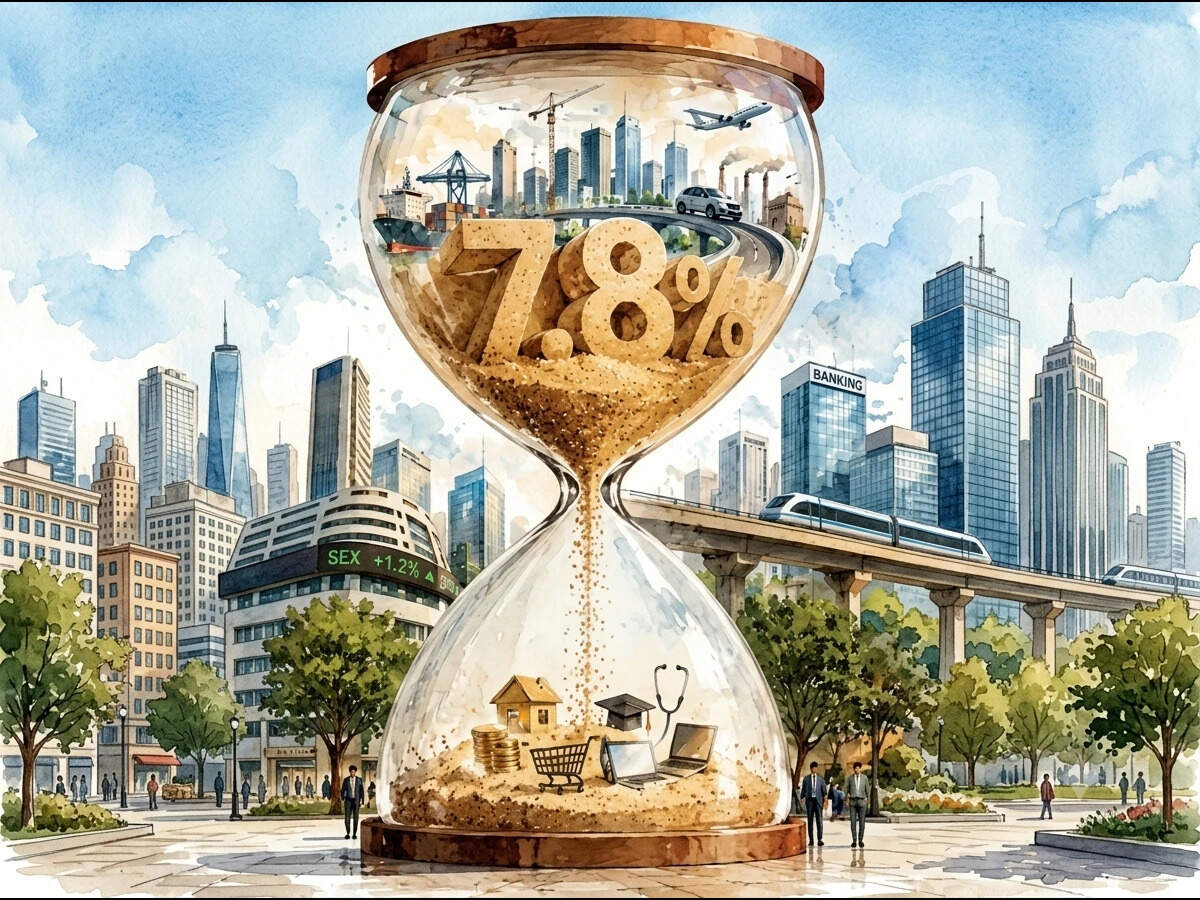
India's economy showcased a robust first quarter performance in fiscal year 2027, with a GDP growth rate of 7.8%, surpassing market expectations. However, the narrative surrounding this growth has been a blend of optimism and skepticism. While some argue that the robust data from high-frequency proxy datasets validate the growth claim, others claim that these gains are not trickling down to the masses.
The Indian economy consists of numerous interconnected components, and tracking these components requires a myriad of indicators. The Economic Times (ET) compiled a list of over fifty indicators, narrowing it down to twenty key indicators across five segments. These indicators, ranging from industry and business activity to consumption and demand, paint a comprehensive picture of the economy's health.
The selection of these indicators aimed to provide a unique perspective that others might not capture, such as subindices that reveal more detailed information than broader indices.
Despite the strong GDP growth, there are concerns about whether this growth is being felt across the economy. Some argue that the high growth rate is not evident in everyday consumer sentiment, particularly in the wake of geopolitical tensions. Trade momentum remains healthy, with exports growing, but foreign inflows' volatility and increased imports pose challenges.
The business sector has remained strong, with accelerating credit demand, high capacity utilization, and robust corporate sales. However, wage growth is lagging due to high inflation, and labor conditions are improving but remain uneven.
On the consumption front, positive indicators include a rise in car and two-wheeler sales, as well as tractor sales as a rural demand proxy. However, industrial output of consumer non-durables, which is crucial for understanding rural demand and household buying power, has seen a slowdown. Credit-led spending remains strong, yet some critics argue that the benefits are not reaching everyone equally.
Broadly, the economy is showing signs of growth in non-farm sectors, while agriculture, the largest employment sector, is underperforming. The poor monsoon rains further complicate the picture, adding to the challenges faced by the agricultural sector. Overall, the story of India's economy in Q1FY27 is a mix of strong growth figures and underlying concerns about equitable distribution and the quality of growth.
Written by urgent.news from The Economic Times - Economy's reporting — not their text. Machine-written — may contain errors; check the original before relying on it.

