Commentary: BRICS found consensus in New Delhi but that also showed its limits
The watered-down language in the joint declaration showed less a resolution of differences than the narrowing ground on which consensus can be found, says RSIS’ Nazia Hussain.
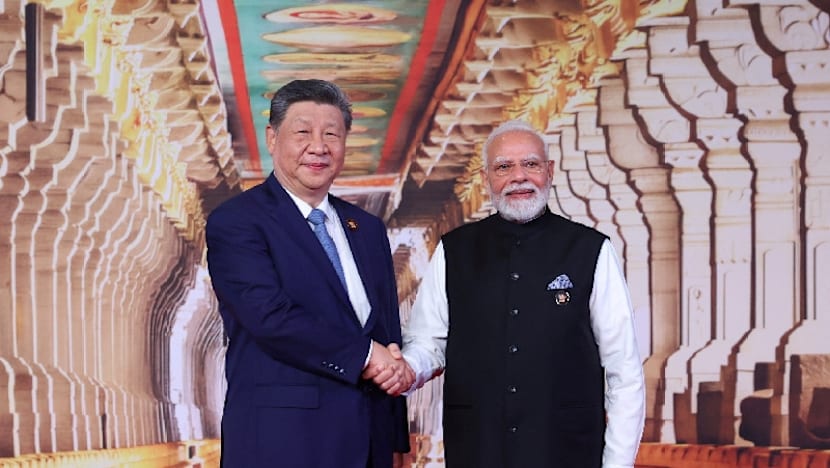
The recent BRICS summit held in New Delhi showcased both the value and limitations of a diverse grouping coming together. The 20-paragraph joint declaration and a brief handshake between Indian Prime Minister Narendra Modi and Chinese President Xi Jinping marked the event's key outcomes. The summit, marking the 20th anniversary of the BRICS grouping and the first with 11 members and 10 partner countries, took place against the backdrop of a war in the Middle East that drew in several member states on opposing sides.
The Iran-UAE rift, along with India-China disagreements over a Himalayan border dispute and a broader contest over BRICS, made consensus difficult. However, leaders ultimately called for "maximum restraint" in the Middle East without assigning blame. This allowed all 11 member states to sign the declaration while preserving their individual positions.
Despite forging consensus on the Middle East issue, the language of the declaration was watered down, suggesting the limits of finding common ground. The most consequential developments occurred outside the plenary, with Chinese President Xi Jinping and Indian Prime Minister Modi holding their first bilateral meeting since a 2020 border clash. They agreed that the two countries should be partners rather than rivals.
The Iranian president also met the Crown Prince of Abu Dhabi, marking their highest-level contact since the war began. Such interactions between states with conflicts and different interests were possible due to the BRICS' expansion in recent years, with Saudi Arabia and Iran joining in 2023.
The joint declaration focused on the New Development Bank (NDB) expanding local currency financing for developing countries, a modest but important fix for recurring crises. BRICS also noted progress on the Multilateral Guarantees initiative, which aims to attract private capital to struggling projects. While the scale remains modest, the bank points to BRICS' usefulness as an additional source of finance.
When it came to wars and trade disputes, the BRICS declaration required delicate balancing and careful phrasing. The UAE, which Iran has attacked, is now a party to the war, and the Delhi statement no longer mentioned the Ukraine war. The grouping tended to voice concerns over unilateral measures and condemnations without naming specific adversaries. This restraint suited members who sought to avoid being seen as an anti-Western bloc.
Written by urgent.news from Channel News Asia's reporting — not their text. Machine-written — may contain errors; check the original before relying on it.