China needs US-style immigration policy to win tech rivalry with Washington: expert
China can learn from US immigration strategies to attract foreign talent and stay competitive in the intensifying global tech race, a Chinese public policy analyst has said. Li Mingbo, deputy dean of the Guangzhou Institute of the Greater Bay Area (GIG), said China must be more efficient in promoting its new K visas for young science and technology specialists from overseas, noting that the…
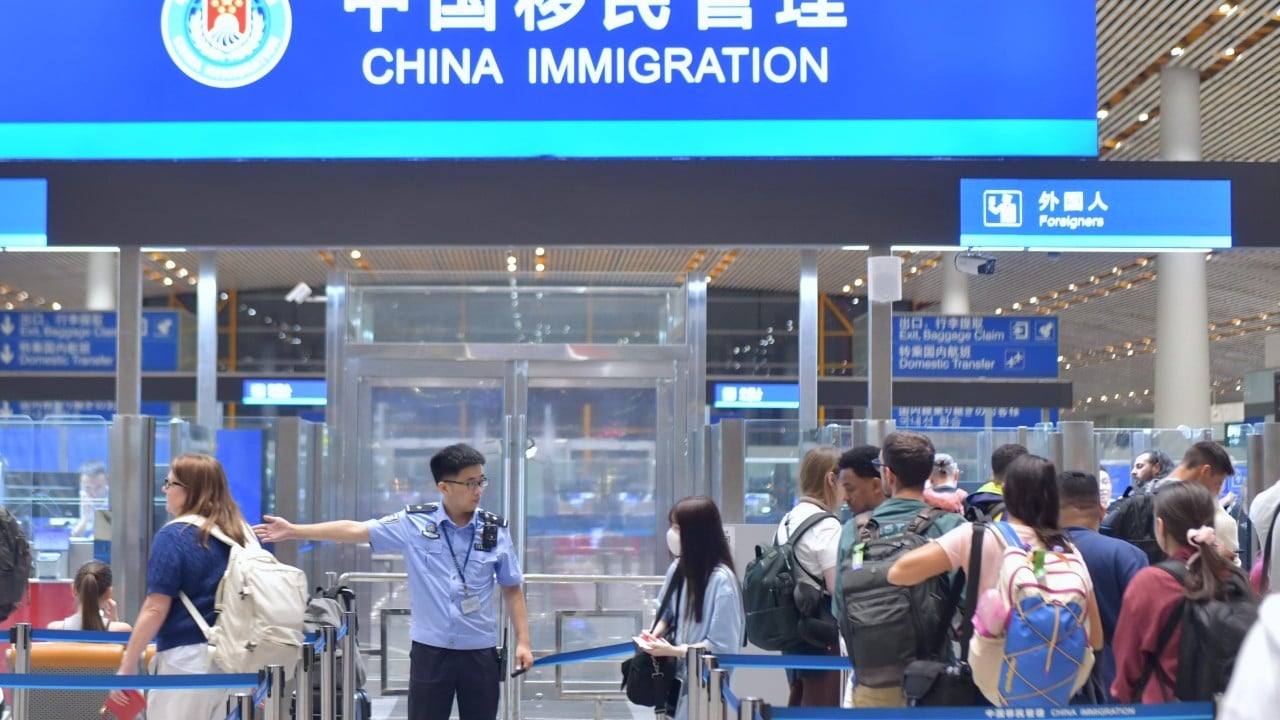
Chinese public policy analyst Li Mingbo argues that China needs to adopt US-style immigration policies to attract world-class tech talent and bolster its competitiveness in the global tech race. Li points out that Beijing's lack of an immigration system tailored for hi-tech professionals is a major weakness, noting that countries like Ukraine, Russia, and Iran house considerable tech talent looking for safer and better living conditions.
China aims to become a tech superpower by 2035, and Li believes that young talent is crucial to achieving that vision. The country has pledged to establish an immigration system for hi-tech talent in its latest five-year plan (2026-2030) and introduced a K-visa category last year to draw STEM professionals overseas. The US, China's primary geopolitical rival, benefits from a robust immigration system, particularly its H-1B visas, which serve as a major gateway to permanent residency for tech professionals.
Data from the 2020 census shows that only 845,000 foreign nationals live in mainland China, making up just 0.06% of its population, while the US hosts 52 million immigrants, accounting for about 15% of its residents. Despite the US tightening visa policies for highly skilled foreign workers, Li argues that China still has much to learn from the US in attracting international hi-tech talent, which remains relatively weak and overly conservative in China.
While Li and a fellow researcher proposed a unified identity authentication system and a single identity framework for the visitors' entire stay in China, he acknowledges that the proposal's progress is unknown. Simplifying work permits, residence visas, and identity authentication systems, as well as creating an English-friendly environment, are also essential to attract more foreign talent, Li emphasizes.
However, he warns that top-level efforts to attract foreign talent could face resistance from domestic public opinion, urging people to be more open-minded on increased immigration.
Written by urgent.news from South China Morning Post's reporting — not their text. Machine-written — may contain errors; check the original before relying on it.
This story
This is one outlet's version. Read the fullest account.