Agricultural exports to energy transition: States, Finance Minister discuss Viksit Bharat goal
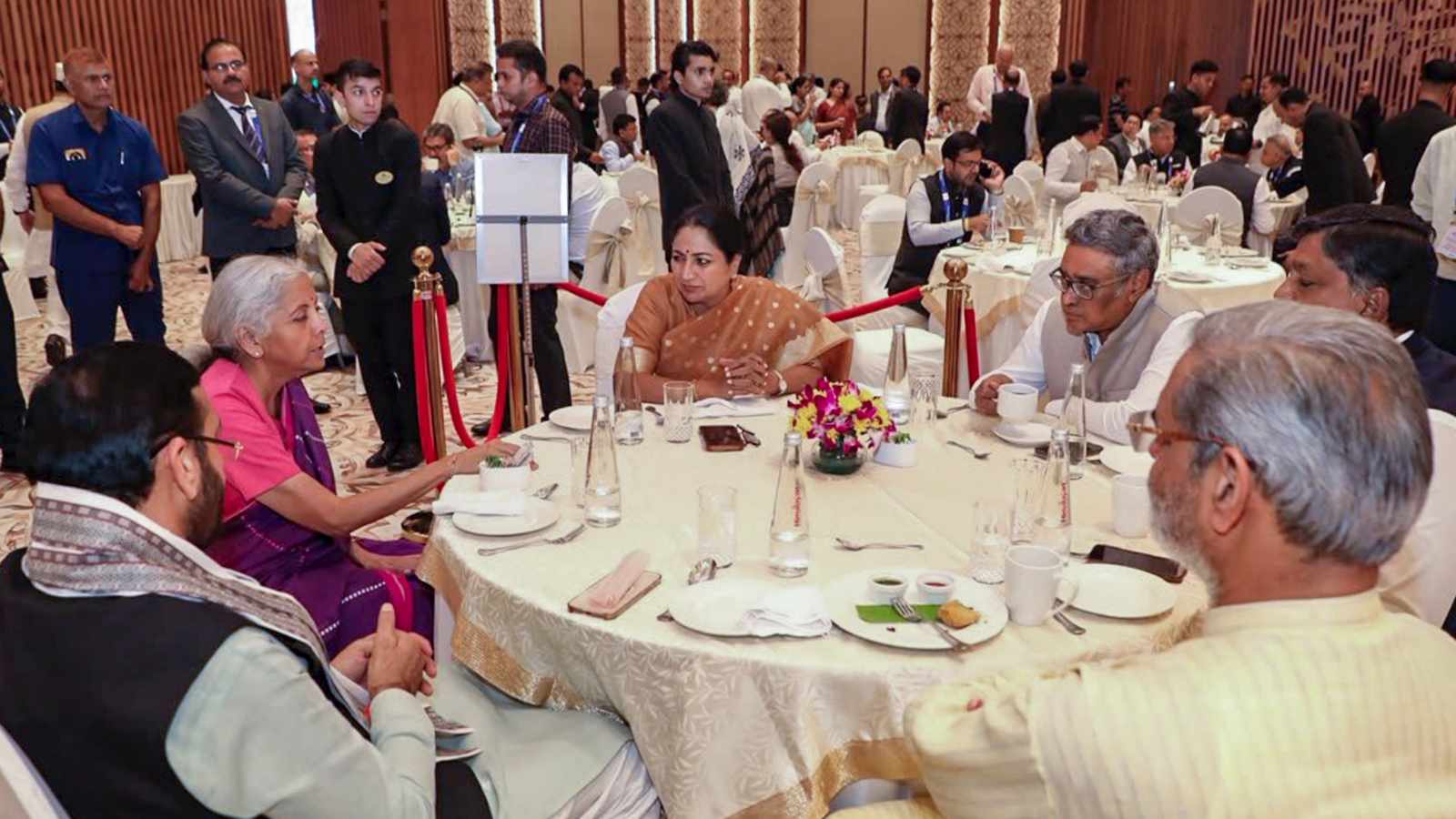
During the two-day conference of the Union Ministry of Finance with state finance ministers and finance secretaries, known as ‘Financing India’s Journey towards Viksit Bharat’ in Delhi, various topics were discussed. Meghalaya, for instance, grows flowers similar to Vietnam but imports them due to logistical gaps within the state, forcing traders to provide estimated delivery times instead of precise schedules.
India is a significant producer of sesame seeds, yet Japan exports more sesame oil, emphasizing the importance of value addition.
The discussions covered segmented land holdings, potential for higher agricultural exports, challenges from gold holdings and imports, logistical connectivity issues, state-specific data collection, supply-chain constraints, and the focus on speciality products and quality in exports. Uttar Pradesh has raised concerns about the high costs of transitioning to renewable energy and the need for additional funds, while West Bengal, relying primarily on thermal power, is concerned about electricity tariff rates that may not be as favorable for industries as neighboring states with lower operational costs.
The conference also highlighted the substantial potential for increasing farmer incomes and generating employment opportunities. For instance, French-fry potato farmers in Mehsana, Gujarat, earn between Rs 1-3 lakh per hectare, while shrimp farmers earn between Rs 5-8 lakh per hectare. There is an opportunity to generate more low-skill jobs for packers, sorters, graders, and transport workers, particularly for young individuals from villages within a 50-100 km radius of factories.
The emphasis during the conference was on financing key infrastructure projects in states through private sector capital, recognizing that government spending alone cannot cover India's massive financing requirements for Viksit Bharat. Economic Affairs Secretary Anuradha Thakur emphasized the need for substantial private sector investment, stating that government budgets alone are insufficient to meet the country's transformational goals.
Chief Economic Adviser V Anantha Nageswaran acknowledged the substantial savings base available in India, which needs to grow further, while also stressing the critical role of private capital in mobilizing the necessary investment. NK Singh, President and Life Trustee of the Institute of Economic Growth and Fifteenth Finance Commission Chairman, called for a significant increase in India's gross domestic savings rate, targeting 38-40% of GDP to sustain the 7-8% growth required for Viksit Bharat.
He also advocated for state-wise debt sustainability assessments and greater fiscal transparency, including accounting for off-budget borrowings, guarantees, arrears, and borrowings through state-owned entities.
Written by urgent.news from The Indian Express's reporting — not their text. Machine-written — may contain errors; check the original before relying on it.