Why Ladakh’s autonomy debate is also about land and ecology
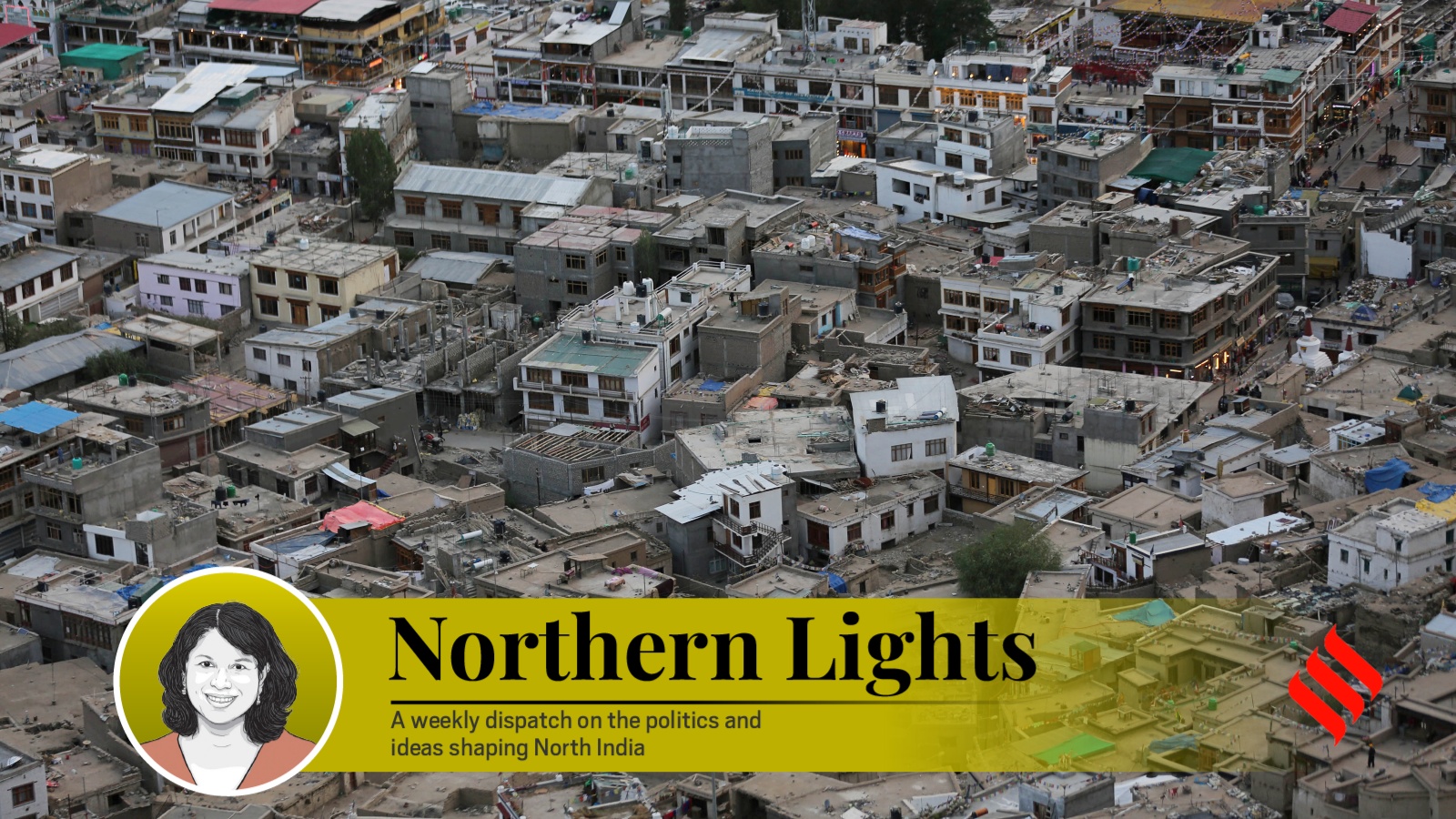
The latest discussions surrounding Ladakh's political future have unveiled a deeper issue at hand - the land and ecological concerns that transcend the region's borders. The central government has proposed a new constitutional article, 371(K), along with a separate governance framework for the Union Territory, while local leaders continue to advocate for enhanced political representation, land security, job protection, and greater administrative accountability.
However, the precise powers and makeup of the proposed institution remain up for debate. Trust levels are currently low, and another round of negotiations is anticipated in October. Yet, this political wrangling masks a more substantial narrative that links Ladakh's future to the history, ecology, and water security of the plains.
The roots of this story stretch back nearly two centuries when a ruler from Punjab sought to expand his empire towards Ladakh in 1834. Maharaja Ranjit Singh's conquest led to the installation of the Zorawar Fort near Leh Palace. Following Ranjit Singh's death in 1839, Raja Gulab Singh Dogra signed the Treaty of Amritsar with the British in 1846, formally ceding Ladakh to him, thereby solidifying the transfer of power from the plains to the mountains. This historical pattern continues to reverberate in contemporary discussions.
Beyond its geographical isolation, Ladakh plays a pivotal role in sustaining agriculture in the northern plains through its glaciers and snowfields. The region's water resources are crucial for Punjab and Haryana, making Ladakh more than a remote frontier or a mere constitutional matter. The consequences of any decisions made by the authorities in Ladakh reverberate throughout the region, extending to issues of glacial melt and hydrological patterns in the Himalayas.
The Indus Waters Treaty of 1960, mediated with the assistance of the World Bank, divides the Indus river system between India and Pakistan. This treaty allocates the eastern rivers (Ravi, Beas, and Sutlej) to India and the western rivers (Indus, Jhelum, and Chenab) to Pakistan, with both nations granted specified uses. In April 2025, India temporarily suspended the treaty following a terror attack in Pahalgam.
This context underscores that Ladakh's pursuit of autonomy is not solely about identity and representation; it is also fundamentally tied to the control over development and resource allocation in a challenging environment where arable land is limited and water is scarce.
One of the contentious issues is Ailan No. 38, a regulation from the Dogra-Maharaja era governing the cultivation and ownership of barren land, or nautor. Recent attempts to impose limits on the land individuals can claim have sparked outrage among locals. The impact of outsiders has been particularly stark, as Leh Apex Body co-chairman Chering Dorjay Lakruk pointed out that land prices in Leh town have skyrocketed due to development driven by outsiders.
This development frenzy raises concerns not only about changing ownership patterns but also about the potential erosion of the region's social and ecological equilibrium.
The tension is palpable among younger Ladakhis, who express concerns about the influence of "money power" wielded by influential political factions. These young individuals lament the allure of land, government jobs, and contractorship offers that entice villagers, highlighting the socio-economic dynamics at play. For Ladakh's political factions, the ultimate goal remains unmet: direct elections through separate constituencies, accountability of the bureaucracy to the elected body, and a freeze on significant decisions, particularly those concerning land, until a robust governance framework is established.
Written by urgent.news from The Indian Express's reporting — not their text. Machine-written — may contain errors; check the original before relying on it.